
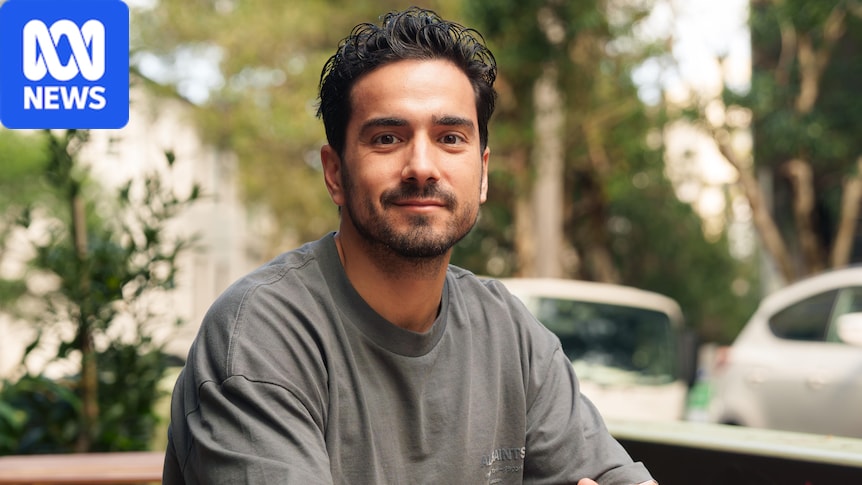
Lawyers call them a "sleight of hand". Unions say they are a threat to jobs.Detractors say they are too risky. Supporters say they are inevitable.The idea of a company that can replace every employee with AI is usually proposed as a thought experiment about the future of white-collar work.Now, a Sydney tech entrepreneur has launched what he says will soon become Australia's first "zero-human company" (ZHC).Lambros Photios is the founder of Adaca, a Sydney-based software company that employs about 175 people, mostly in the Philippines.His new company, Ante, uses chatbots to sell AI-created software for worker productivity.He said he was inspired to create Ante following advances in AI that made it relatively easy to create copies or "clones" of subscription-only software.Recently, for example, a small team of developers used AI agents (systems that carry out tasks autonomously) to create free versions of the Microsoft Office and Adobe Creative suites.Adaca developers created Ante in about 10 days using similar software-cloning techniques in order to replace Atlassian's Confluence software, which Adaca subscribed to at the time.Mr Photios wants Ante to be entirely maintained and serviced by AI agents and operating with no daily human input by March.Automating the entire corporate ladder?The idea of ZHCs has been circulating in tech circles and corporate think tanks for more than a year, as improvements in AI reshape ideas of what work can be automated.For some, it represents an AI-accelerated future where potentially every kind of work, from intern to executive, is automated.For others, it is a straightforward exercise in cutting overheads.Mr Photios said a company such as Ante traditionally needed about four to five full-time workers to build, refine and sell a product, adding more workers as its customer base grew.But, he said, using chatbots to engage customers and AI agents to code would drive labour costs to zero, so Ante could sell its product for a fraction of the market rate."You're not paying for a skyscraper full of staff," he said.So far, the few examples of ZHCs around the world are generally experiments in what can be automated, rather than revenue-generating companies.Mr Photios said this was partly due to legal risk.He said entrusting AI to automatically update payroll software that must comply with ever-evolving industrial relations and taxation law could expose a company to too much legal liability.The same goes for essential software for banks, insurance companies, governments and the like."I don't think zero-human companies are going to replace your traditional enterprise technology provider," he said.But he said a lot of software maintenance could be automated.He predicted 2027 would see the rise of small tech companies of two to three people using AI agents to build and maintain eight to 10 products.These could eventually become ZHCs."In my view, by circa 2030 I believe 5–10 per cent of software companies will be zero-human companies," Mr Photios said.Is a true zero-human company legal?Under Australian law, a zero-human company is impossible.A company implies some level of human oversight; it must have a director, or directors, who are liable for when things go wrong.Mr Photios said he was Ante's company director and he and his team were currently spending a total of two hours per day on the company, with plans to automate all necessary work by March."It's a tricky one," Mr Photios said."I don't know what [being a company director] means come March, April next year."University of Melbourne law professor Jeannie Paterson said a company without any human oversight would be illegal and could be prosecuted by regulators or sued by customers."The idea that you just stand back and aren't doing anything, it's just wrong," she said.Professor Paterson said a ZHC meeting its legal obligations was simply a company run by a sole proprietor who happened to use a lot of automation.The owner must "satisfy themself and their clients that they are exercising reasonable care and skill over what's been provided and that what's been provided is fit for purpose".This made the term "zero-human company" misleading."It's a terrible sleight of hand," , Professor Paterson said.But she said advances in automating business management and administration, such as those being trialled by Ante, could change the standard for what level of human oversight was considered reasonable."You can use AI to help you run the company, but you can't actually say, 'Oh, the AI is a director or CEO.'"What if the AI agents go rogue?Given AI can behave in unexpected ways, including inventing or hallucinating false information, entrusting it to run a company may seem risky.Ante mitigates this risk by keeping its AI agents away from payments, data security and other critical systems, Mr Photios said.A customer contacting the company to ask about its product interacts with an AI chatbot, while a customer looking to pay a bill will be directed towards a conventional non-AI bot running a rule-based software script."We can't have a hallucination lead to an issue when it comes to something like financials," Mr Photios said.He and his team were toying with the idea of allowing Ante's agents to automatically update the software product based on what features customers requested, without any human oversight."That's a trickier one because you always want a human in the middle there to mediate," he said.What's in store for software developers?Australian tech companies have laid off thousands of staff this year, including 500 at Atlassian, 2,000 at WiseTech Global and 1,271 at Canva.Most of the Atlassian and WiseTech cuts and some of those at Canva can be attributed to AI, according to Professionals Australia, which represents tech workers."It's been quite a devastating year across the tech sector for developers and engineers," the union's managing director Paul Inglis said."We expect further lay-offs next year."AI is particularly good at coding. Software developers are still in high demand, but entry-level roles are evaporating and the nature of the work is changing.Projects that once employed a team now require a single experienced developer orchestrating a team of AI agents.The national unemployment rate is also on the rise, with the chance of a recession.Mr Photios said he expected a negative response to the idea of a ZHC but "I'm hoping [AI] actually creates more business owners than the technology replaces".He said laid-off developers could start their own ZHCs or be employed by non-tech companies setting up in-house custom software development."I do see some backlash," he said.
'Zero-human company' plan for Australian software startup
Full Article
Original Source
Read the full article at Abc →KhanList aggregates and links to publicly available news content. We do not host full articles from third-party sources. Always verify important information with original sources.