
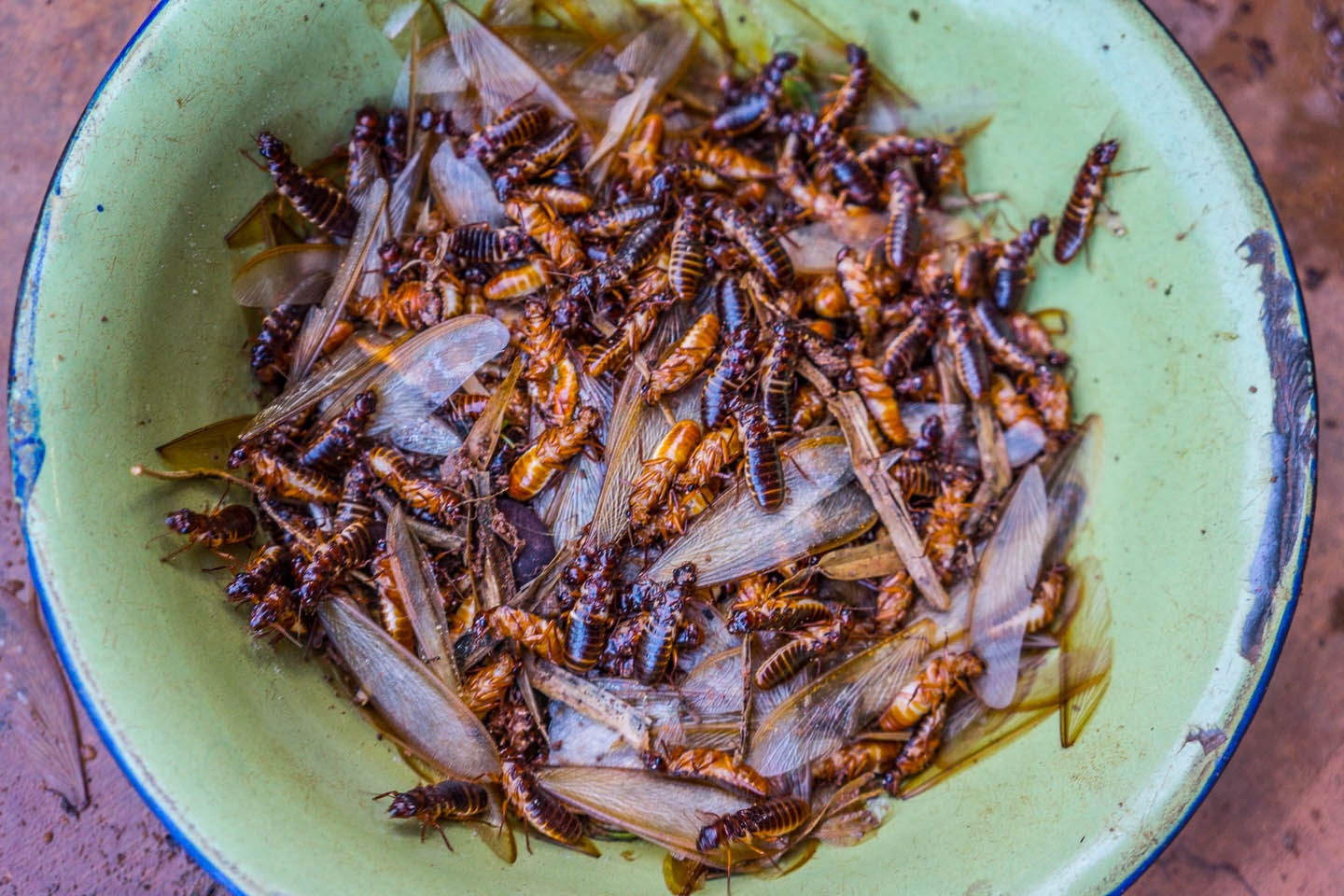
In a rural area of Zambia, where eating insects has long been a part of local food culture, reviving the practice could help households improve food security — though its potential would depend on how widely insect-eating is embraced by the mainstream, a new study suggests. Researchers John Nyawali and Jasper Knight, from the University of the Witwatersrand in South Africa, surveyed 139 rural households in Zambia’s Central province to understand the types and quantities of insects eaten by people. They found that edible insects contribute to household food security and nutrition, but that the tradition of entomophagy, or the eating of insects as food, has declined in recent years, especially among younger people. The study notes that while insects have the potential to contribute to sustainable food systems, they aren’t well-integrated into mainstream economic and dietary practices, thus “limiting their potential to contribute to sustainable livelihoods, food security and wellbeing.” In some cultures, entomophagy is sometimes stigmatized as primitive or associated with poverty, the study notes. But in Zambia, the researchers found that households with higher levels of education consumed more insects compared to those with less education, suggesting that educated community leaders may be able to help communicate the economic and nutritional importance of entomophagy. In an email interview with Mongabay, co-author Knight said another great way for entomophagy to gain traction in communities is to link it more closely with existing community-based public health initiatives, such as AIDS awareness, mother and baby health care, and primary school education. “All of these outreach activities in public health already exist, and the role of insects as part of a nutritious diet can be part of this,” he said. “Insects are healthy, nutritious and free! Alongside other food items, insects can make food systems more secure and can supplement household incomes.” The researchers emphasized that a push toward insect farming should stay small in scale to create sustainable incomes and improve food security in Africa. “If insect farming is just taken over by agribusinesses like all other types of farming has, then this just reinforces the status quo and does not help rural communities develop,” Knight said. But commercialization is precisely what insect farming needs to catch on more widely, said Arnold van Huis, an expert on entomophagy in Africa with Wageningen University & Research in the Netherlands, who wasn’t involved with the study. “Unless insect consumption is supported by commercialization, including the development of insect farming, this practice may gradually disappear,” he said. “However, insect farming does present some challenges. While farming methods have been developed for certain species, such as crickets, considerably more research may be needed to develop viable farming systems for caterpillars. Termites are particularly difficult to farm.” Banner image: Flying ats are eaten in Southern Africa. Image courtesy of Tim Cowley via Wikimedia (CC BY-SA 4.0) Credits Topics
Zambia’s edible insect tradition offers a potential boost to food security
Full Article
Original Source
Read the full article at News →KhanList aggregates and links to publicly available news content. We do not host full articles from third-party sources. Always verify important information with original sources.