
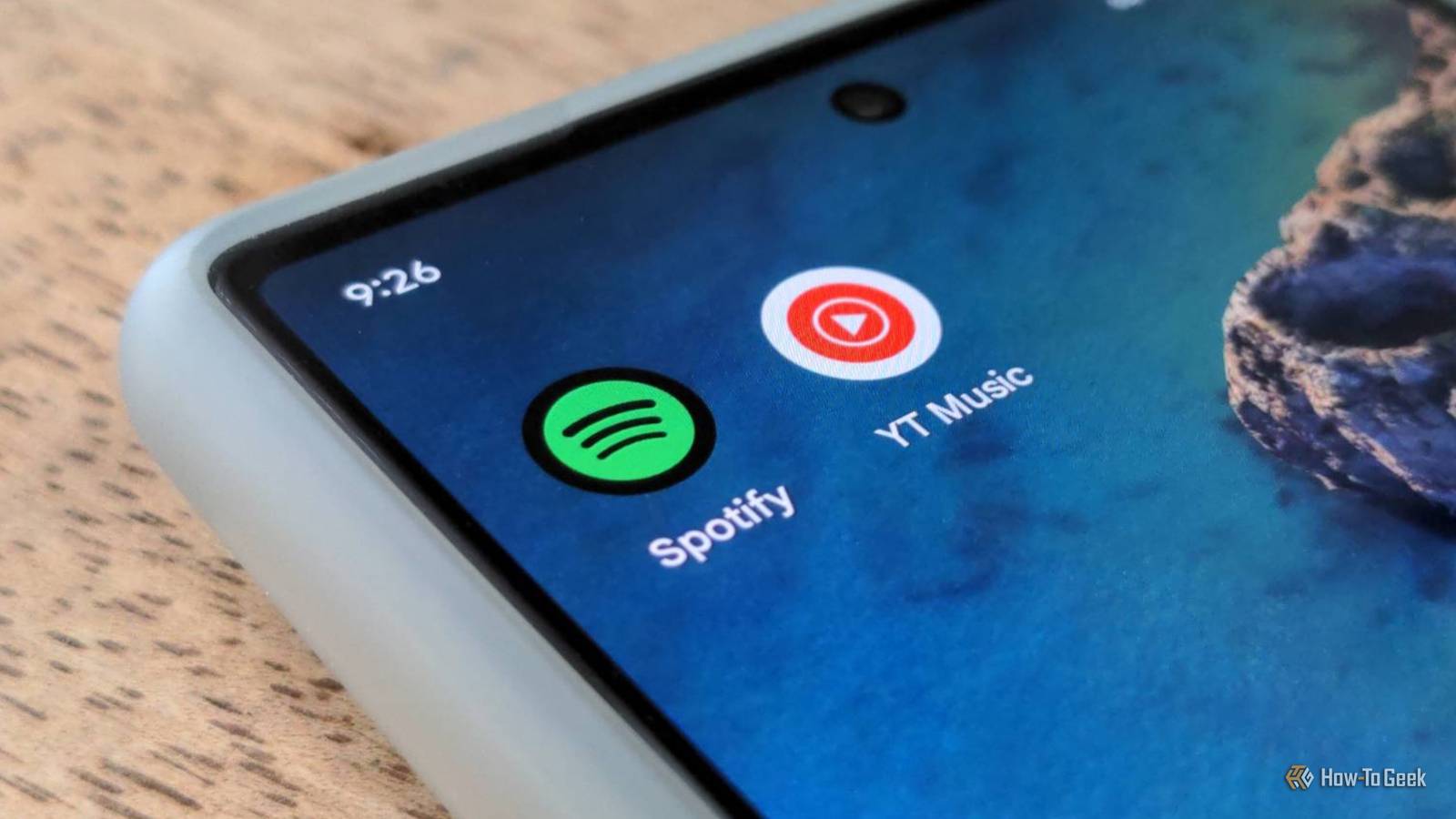
Published Sep 25, 2026, 12:45 PM EDT Viraj Gawde is a Tech Journalist with bylines at Travel+Leisure India & South Asia, Android Headlines, 91Mobiles, Croma Unboxed, etc. He has written thousands of news pieces, how-to guides, product comparisons, listicles, and op-eds on consumer tech. Currently, Viraj is obsessed with the fast-evolving world of artificial intelligence and how it is reshaping the way we work, create, and use tech. As a curious generalist, Viraj's work extends into a wide range of subjects, formats, and storytelling styles. When away from desk, he is a finance, sports, and travel geek with a constant curiosity for new experiences. Picking a music-streaming service can invite a little peer pressure, especially since I pay for YouTube Music Premium. I get it. Spotify and Apple Music dominate these conversations. My friends who use Spotify give me a look that says they feel slightly sorry for me, while the Apple crowd assumes I’m just defaulting to whatever Google bundles into Android. But here’s the thing — I use YouTube Music Premium because it does specific things that other streaming apps don’t. Some add genuine convenience, while others change how I discover and listen to music. And if you already pay for YouTube Premium, there’s even less reason to dismiss YouTube Music. So, at this point, I’ve stopped trying to convince people — I’m just going to show them what they’re missing without YouTube Music Premium. Give your old music library a home The best part is that it’s free If you remember the good old days of downloading songs from the internet and still have some tracks sitting around, this is the YouTube Music feature that sealed the deal for me. The platform allows me to upload up to 100,000 of my songs to the cloud at no cost. Old MP3 rips from the early 2000s, regional albums that never got a streaming license, tracks that disappeared due to rights disputes — these can be added to your YouTube Music library and played alongside streamed content. Even better, uploaded songs can be played in the background, ad-free, and offline without a YouTube Music Premium subscription. Apple Music offers a similar feature, but it requires an active subscription. Music videos are native, not an afterthought No need to switch apps Any track that features a video on YouTube surfaces that video inside YouTube Music Premium. It lets me switch easily between audio-only and full music-video modes mid-stream without leaving the app. I don't have to maintain separate listening and watching habits across two apps. I find this incredibly helpful because I can switch to the song-only version when I’m conserving data and switch to video when I actually want to watch it. No title, no artist. No problem Three ways to search for a song you half-remember Sometimes, I remember a random line from a song but have no idea what the track is called. YouTube Music Premium lets me search using lyrics, so I can type the words I remember and find matching songs. One of my favorite and most impressive tricks is called Sound Search, which skips lyrics entirely—when I know how a song sounds, I can hum, whistle, or sing the tune. YouTube Music then tries to identify it. Both features come in handy when I can’t remember the artist, album, or even the rest of the chorus. I’ve used them more times than I’d like to admit — and there’s nothing more frustrating when a song is stuck in your head, but its name isn’t. There’s also a built-in song identification feature where I can use the platform to tell me what track is playing instead of opening another music-recognition app. A music library beyond the standard catalog More than a conventional streaming service YouTube Music Premium benefits from the breadth of YouTube’s content library. It isn’t limited to a conventional streaming catalog. Alongside official tracks and albums, I can find official live performances, covers, remixes, and other music-related videos. I’ve found live recordings through YouTube Music that I’d been searching for on other platforms for years. Other times, it’s an older version of a song that has somehow survived on YouTube. This is the kind of feature that keeps me coming back. Synced lyrics Every word, right on time For me, lyrics are a major feature while listening to music or consuming video content. Instead of a static block of text, supported songs on YouTube Music Premium show them in sync with the track, making it much easier to follow along. The time-synced, scrolling lyrics are available to free-tier users with no strings attached — no ads and pop-up prompts. This is particularly useful when I know the chorus perfectly and absolutely none of the verses. Samples help you find your next favorite TikTok-style discovery to know if you like a song Samples is essentially a short-form-video approach to discovering music. I don’t have to play a five-minute song just to figure out whether I like it. Based on my personal taste, the feature gives me a stream of short music-video segments. I can swipe through them, add something to my library or playlist, or jump straight to the full track. Samples sits as a dedicated tab at the bottom menu bar inside the YouTube Music app. So, it’s just one tap away when you want to explore something new and know whether a track is worth my full attention. My friends can keep their jokes YouTube Music Premium alone costs $11.99 per month. It is included in the YouTube Premium bundle for $15.99, which makes it a strong value if you use both services regularly. I wouldn’t argue that everyone should abandon their current streaming service for YouTube Music. That’s exactly why I find jokes about it a little strange. But the next time my friends can’t find a live session from 2017 or an album that quietly disappeared from streaming, I’ll know exactly where to look.
YouTube Music has 6 features my friends won't admit are good
Full Article
Original Source
Read the full article at Howtogeek →KhanList aggregates and links to publicly available news content. We do not host full articles from third-party sources. Always verify important information with original sources.