
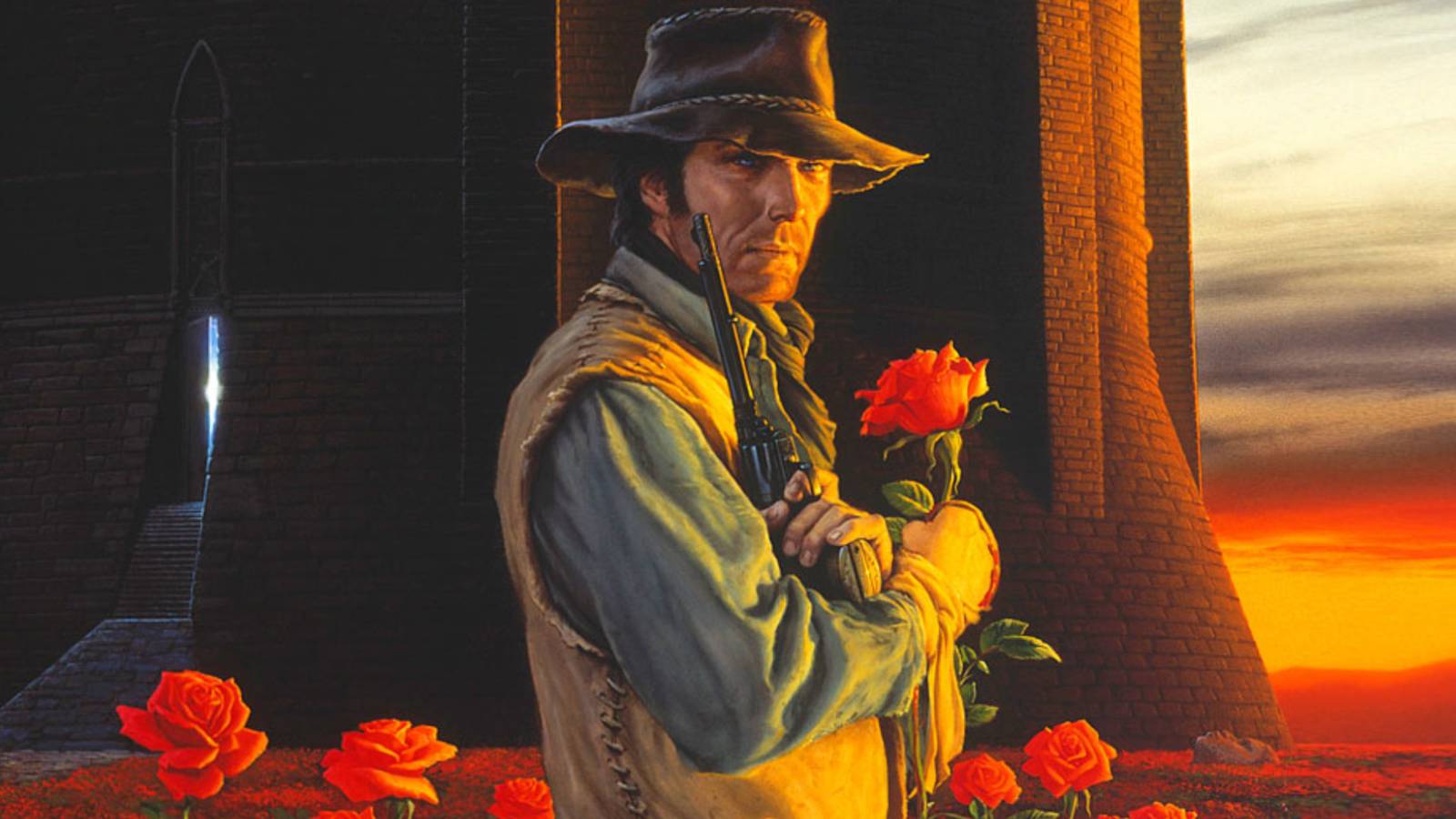
Image via Donald M. Grant, Publisher Published Sep 2, 2026, 6:22 PM EDT Jeremy has more than 2700 published articles on Collider to his name, and has been writing for the site since February 2022. He's an omnivore when it comes to his movie-watching diet, so will gladly watch and write about almost anything, from old Godzilla films to gangster flicks to samurai movies to classic musicals to the French New Wave to the MCU... well, maybe not the Disney+ shows. His favorite directors include Martin Scorsese, Sergio Leone, Akira Kurosawa, Quentin Tarantino, Werner Herzog, John Woo, Bob Fosse, Fritz Lang, Guillermo del Toro, and Yoji Yamada. He's also very proud of the fact that he's seen every single Nicolas Cage movie released before 2022, even though doing so often felt like a tremendous waste of time. He's plagued by the question of whether or not The Room is genuinely terrible or some kind of accidental masterpiece, and has been for more than 12 years (and a similar number of viewings). When he's not writing lists - and the occasional feature article - for Collider, he also likes to upload film reviews to his Letterboxd profile (username: Jeremy Urquhart) and Instagram account. He has achieved his 2025 goal of reading all 13,467 novels written by Stephen King, and plans to spend the next year or two getting through the author's 82,756 short stories and 105,433 novellas. Sign in to your Collider account The must-read Stephen King books are the sorts you might well even cautiously recommend to friends who don’t particularly like horror or long books. Some of them are just that good that they feel essential in that way. Maybe not IT, which is fairly upsetting at times, but a book like 11/22/63 is about as easy to recommend as a book that’s over 800 pages long can be. Other classics like The Shining, Carrie, and Salem’s Lot might well be books you wouldn’t be surprised to hear someone say they’ve read, despite not being a full-fledged Stephen King fan (one of his “Constant Readers,” in other words). In the interest of trying to define what makes you a big fan, or a Constant Reader, here's a collection of Stephen King books that only his most devoted fans can be relied on to have read. You won’t know everything, but if you’ve ticked off a few of his classics and then get familiar with these (and be in a position to understand some of these, it should be stressed), then you'll probably know a surprisingly large amount about everything King-related. 8 'Insomnia' (1994) Image via Signet Books Insomnia is stealthily one of the most important books within the whole multiverse that Stephen King has built and/or let grow over the past 50-ish years. It might not hold as many things together as that one series about a tower, but Insomnia is vital to that series, and then there are so many references throughout it to various other Stephen King books, some very obviously, and then some that are more like the book equivalent of a video game easter egg. As for what Insomnia is about… like, it’s a strange one, and that makes it potentially even more challenging. You need to know quite a lot about some other Stephen King stories to appreciate everything, and then you have to be cool with a very oddly-paced story that has some weird ideas and a page count that reaches nearly 800 all up. It’s about old people and a surreal battle for the fate of the world. And maybe some other worlds. Maybe. It’s pretty wild stuff, and maybe best tackled by Stephen King fanatics… though not after they’ve read the final book in The Dark Tower! Which was published a decade on from Insomnia, and incorporates some characters and ideas introduced in Insomnia. It gets complicated. But that is important. 7 'The Eyes of the Dragon' (1984) Image via Viking Press There’s a guy called Randall Flagg who shows up in The Eyes of the Dragon, albeit not for the first time, and then he continues making life messy for some other people in some other Stephen King stories post-The Eyes of the Dragon, too. There’s the Crimson King, and maybe he’s more of an overarching bad guy, but Flagg’s the one who makes the most appearances, and if you want to count potential appearances (like if a character has the initials “R.F.”), then he’s almost everywhere. The Eyes of the Dragon is the most obscure book he’s in, and it’s also a bit of a deep cut more generally speaking, with King, being his attempt at doing “normal” (or at least not dark) fantasy. He does so really well, and the book’s definitely better than some give it credit for. It makes it worth it, being a Stephen King fan, when you can dig into some of his less-popular stuff and then books as good as The Eyes of the Dragon sometimes pop up. 6 'The Long Walk' (1979) Image via Signet Books There’s a bit more attention on The Long Walk post-2025, since it got a surprisingly good movie adaptation that year. Still, it’s going on here to stand in for all the books that Stephen King wrote under the Richard Bachman pseudonym. If you're somehow not up to date with that whole saga, then you are missing out on a decent chunk of King’s body of work, since there are seven Bachman books all up, and they tend to foreground science fiction and/or psychological thriller elements over pure/supernatural horror. If you’ve at least read The Long Walk, and are in the know about the whole Bachman situation, you're good. Admittedly, Rage might be more niche, since it’s harder to find after going out of print, and then The Regulators and Blaze might be hard to get into if you're not already deep into King’s works. But you can be a big fan of the author without wasting time on The Regulators, honestly. If you’ve at least read The Long Walk, and are in the know about the whole Bachman situation, you're good, and that Bachman-related box is sufficiently ticked on the whole “Am I a real Stephen King fan?” questionnaire. 5 'Black House' (2001) Image via Hodder Paperbacks Black House is the sequel to The Talisman, with both being novels that King wrote alongside Peter Straub. He passed away in 2022, but there is a third book coming out in late 2026 that will still be credited to him, even if it’s King doing most of the writing and utilizing some material Straub had assembled before he passed. So, that’s another side of Stephen King: his collaborations. Like with The Long Walk, if you're aware there are books King’s co-authored, then that counts for something. The Talisman and Black House are definitely the two best, and Black House is the kind of thing you have to be quite invested to tackle, since The Talisman is dense, fairly long, and not for everyone, all the while being essential if you want a shot at (at least mostly) comprehending the rather bizarre Black House. As for the other collaborators, there’s Sleeping Beauties, which Stephen King wrote with his son, Owen King, and the Gwendy Trilogy, with two of those books being written by King and Richard Chizmar (while Chizmar was the sole author of the trilogy’s second installment). 4 'Everything's Eventual' (2002) Image via Scribner To continue talking about the different “types” of Stephen King books, here’s Everything’s Eventual, which is one of a dozen collections of the author’s that compile short stories and/or novellas. Again, avoiding these would mean missing out on some great stuff. And only reading Different Seasons and not digging further… well, you'd still get some great stuff, but not all the great stuff. Different Seasons is the collection that feels most essential, and you kind of know it’s going to be good when it contains the novellas that both The Shawshank Redemption and Stand by Me were based on. Everything’s Eventual, though, is a little more niche, but also surprisingly great, being a bit of a deep cut as far as King’s books go. You also have to be invested in a certain series about a dark tower (or something?) to appreciate the novella “The Little Sisters of Eluria” in this collection. And speaking of that series… 3 'The Dark Tower VII: The Dark Tower' (2004) The book in The Dark Tower series people are least likely to read would probably be 2012’s The Wind Through the Keyhole. That one’s not going here because you can be a big Stephen King fan without reading it. That might sound like sacrilege, but it’s not essential, and it’s also not particularly great, with it being one of King’s stories about stories, and the framing device involves the main characters of The Dark Tower (they have some downtime between books #4 and #5, essentially). So, the most meaningful book in the series that’s technically the hardest to get to is The Dark Tower VII, which concludes the main saga. Some might lose focus along the way, and it’s not the sort of book people will be able to skip to and feel like they might be able to follow. It is so directly linked to what came before, and what came before is quite the journey to get through. You need some dedication, in other words, and The Dark Tower – even if it is a great series – probably isn't the kind of thing you could easily recommend to beginners or more casual Stephen King fans. 2 'On Writing: A Memoir of the Craft' (2000) Image via Scribner Another genre or type of book tackled here, On Writing: A Memoir of the Craft is Stephen King’s best work of non-fiction, though it doesn’t have a ton of competition, since he’s written two non-fiction books solo (the other is Danse Macabre) and one as a co-author (Faithful, with Stewart O'Nan). You need a certain attachment to King, and a desire to learn about his life, if you want to tackle a memoir of his. Then again, there’s some good writing advice here, and On Writing does also have its humorous moments alongside some surprisingly moving ones, so it is a great read even if you're not the biggest Stephen King fan in the world. It’s probably more the case that more casual fans aren’t going to necessarily stumble onto this one until they’ve read quite a few books of his already. Further, it’s best to avoid On Writing if you really don’t want any Stephen King stories spoiled for you, since he does technically ruin the endings to some books of his while outlining his writing process and how parts of the process related to said books. 1 'Cycle of the Werewolf' (1983) Image via Land of Enchantment Cycle of the Werewolf is the closest Stephen King’s come to making a graphic novel or a picture book, since it is very short and illustrations are a big part of the overall book. It’s not a graphic novel in actuality, but the art is important. There are bits and pieces of artwork in some other Stephen King books, like the entries in The Dark Tower and a little in The Stand, but Cycle of the Werewolf just has a lot of illustrations. It’s another side of King, and it’s also fairly obscure generally, even if it did get a modestly well-regarded movie adaptation in the form of Silver Bullet… but there’s one of those title changes, so you could be aware of Silver Bullet without really knowing about Cycle of the Werewolf, and they're somewhat different takes on the same story, too. In any event, read Cycle of the Werewolf! It’s surprisingly good, and it packs a lot into something that might only take you about an hour or so to read. Silver Bullet Release Date October 11, 1985 Runtime 95 minutes Cast Everett McGill Reverend Lowe
You're Not a True Stephen King Fan Unless You've Read These 8 Books
Full Article
Original Source
Read the full article at Collider →KhanList aggregates and links to publicly available news content. We do not host full articles from third-party sources. Always verify important information with original sources.