
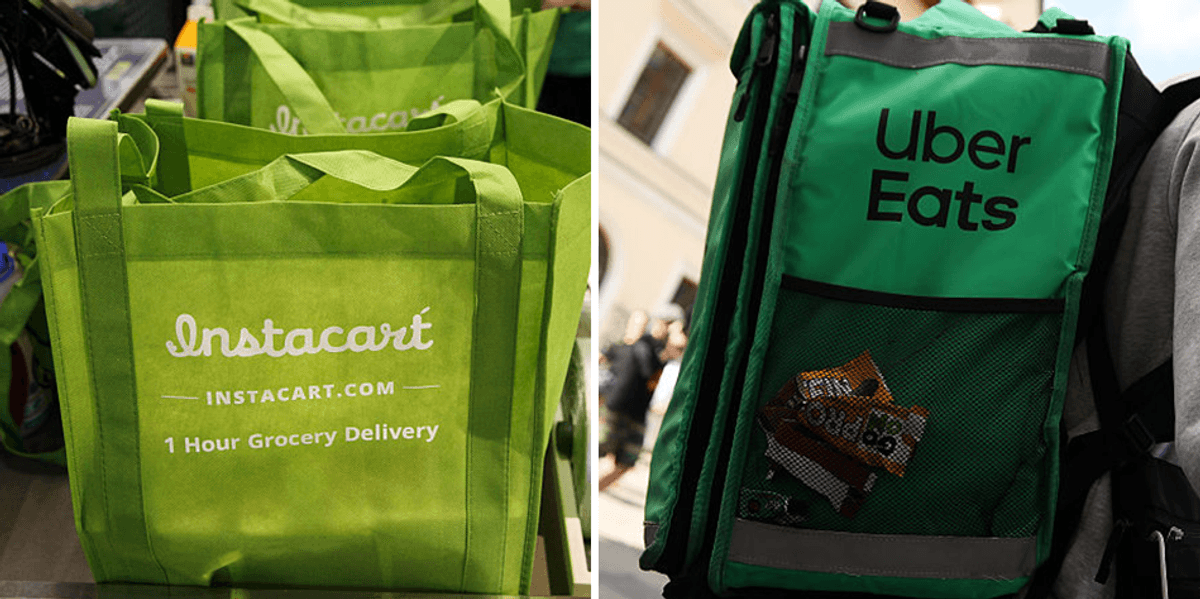
Companies have been charging consumers different prices based on their location and what kind of lifestyle they lead.Price fixing is illegal, but bulking customers into regions or basic categories isn't.'They pushed back and said it wasn't discrimination.'After an investigation into how McDonald's prices its Big Macs, for example, by the region where a restaurant is located, questions quickly arose as to whether or not companies were using AI algorithms to determine how much money customers are willing to shell out for any given food product or service.Although McDonald's said that "AI does not set the price of a Big Mac or any other menu item," it seems it doesn't need to.According to author Sarah Westall, sophisticated data sweeps figure out prices based on region and can help businesses set the max price they can charge for an item to consumers in a defined area.Westall, a computer scientist and systems design expert, told Blaze News exclusively that credit card use, browsing, and location data contribute to an "extensive" set of analytical data that has companies telling their franchisees exactly how to set their prices.Prices can be "personalized" and "tailored" to the user at a personal level too, especially on apps.For example, Westall cited another investigation that prompted grocery app Instacart to stop offering technology that allowed grocery retailers to charge shoppers different prices for the same groceries at the same time."Instacart was shown to differ the price on groceries depending on how much they think that you would pay for it," Westall claimed. "So they were seeing up to 23% difference in a groceries, eggs, milk, you know, basic needs. That's where it gets kind of, 'what are you doing here,' right? That you're really manipulating prices on basic needs. I don't think governments would appreciate that."RELATED: Lawsuit alleges McDonald's is rigging its prices based on location — and algorithm Cheng Xin/Getty Images Instacart said it was running short-term, randomized A/B pricing experiments that "were never based on supply or demand, personal data, demographics, or individual shopping behavior."Westall, though, thinks things are getting "pretty insidious" in terms of how companies are determining pricing based on consumer desperation, something she has been adamant about informing the public on."If 'they' decide that they want to charge you more because you're looking for a baby thermometer at midnight or if you're stranded on the side of the street ... things can get pretty ugly."To show just how bad things already are, Westall pointed to a 2012 Wall Street Journal investigation that found by simply using a Mac computer, consumers would be fed ads for luxury hotels.At the time, the WSJ found that a company called Orbitz was tracking online activity to figure out that Mac users would spend 30% more on hotels than Windows users.Moreover, Westall said, tutoring service Princeton Review knows that "Asians are 1.8 times more likely to spend more money on tutoring because they care about education."That data point was exposed by ProPublica, with Princeton Review replying that its pricing was based on the "costs of running its business and the competitive attributes of the given market."The company also argued that areas that had higher prices also had members of the "financial services industry, people who tend to vote Democratic, journalists and any other group that is more heavily concentrated in areas like New York City."RELATED: When your desperation becomes part of the price POOL PHILIP REYNAERS/BELGA MAG/Belga/AFP/Getty Images "They were charging them thousands of dollars more," Westall went on. "They pushed back and said it wasn't discrimination. They said we were basing it on zip code," but the fact remained that there were "more Asians in that zip code."That being said, Westall reiterated that the profit incentives when using AI to analyze data has become a "gold mine," reminding consumers that there is a ~50% increase in profit when companies price based off user data.The author urged readers to not give up their data so easily at stores or online, including their name, email, and zip code.Performing basic privacy protection — without even being too tech savvy — is the least anyone can do.Like Blaze News? Bypass the censors, sign up for our newsletters, and get stories like this direct to your inbox. Sign up here!
Your zip code or computer type can determine what you pay for groceries, deliveries, and services
Full Article
Original Source
Read the full article at Theblaze →KhanList aggregates and links to publicly available news content. We do not host full articles from third-party sources. Always verify important information with original sources.