
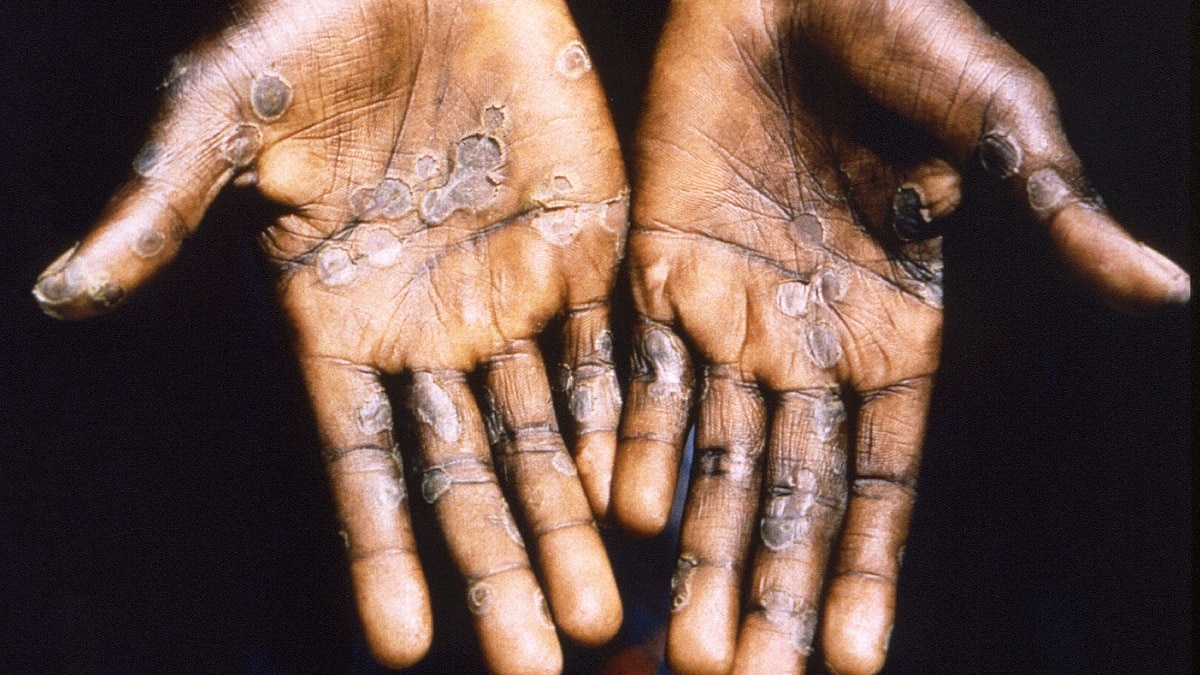
Rising heat, changing rainfall and extreme weather could be changing skin disease patterns worldwide. Here's what a new study found.An image of the palms of a patient with a case of monkey pox in a town in DR Congo. (Photo: Getty)New Delhi,Oct 1, 2026 15:30 ISTClimate change is increasingly showing up on the skin, with rising temperatures, changing rainfall and extreme weather linked to changes in the prevalence and severity of several skin diseases worldwide.A new international study presented at the European Academy of Dermatology and Venereology (EADV) Congress 2026 found that 42.6% of the 136 countries surveyed reported climate-related changes in the prevalence or severity of skin disease.“The most important finding from our study is that climate change is already associated with negative impacts on skin disease, and these effects disproportionately burden lower-income settings,” said study author Dr Esther Freeman. An image of a person's skin affected by hyperpigmentation. (Photo: Getty) HOW DOES CLIMATE CHANGE HARM OUR SKIN?The skin is the body's largest organ and its first line of defence against the outside environment. That also means it is directly exposed to changes in temperature, humidity, sunlight and other environmental conditions.Among the 58 countries that reported climate-associated effects on skin disease, 81% reported increases in heat rashes, while 75.9% reported changes in inflammatory skin diseases. Furthermore, changes in infectious skin diseases were reported by 62.1%, while half reported changes in vector-borne diseases. A dermatologist studies a patient's skin for signs of a disease. (Photo: Getty) “We often think about the effects of extreme weather on heatstroke, cardiovascular problems and respiratory diseases, but the skin is our front line to climate change,” Freeman said.Higher temperatures and humidity can increase sweating and irritation, while heat and air pollution can trigger or worsen inflammation.Changes in temperature and rainfall can also alter the habitats of mosquitoes, ticks and other disease-carrying organisms, potentially allowing them to survive in places where they were previously uncommon.POORER COUNTRIES FACE HEAVIER BURDENAs with most climate change impacts, this particular consequence of a warming planet was not evenly distributed either.More than half of low-income countries surveyed, about 55.6%, reported climate-related changes in skin disease. A woman's face is seen riddled with a skin condtion. (Photo: Getty) The figure was 52.5% for lower-middle-income countries, compared with 43.8% in upper-middle-income countries and 28.3% in high-income countries.The study also found substantial geographical differences.The harmful impacts on the skin were reported most frequently in the Western Pacific region, followed by the Eastern Mediterranean and Southeast Asia.In Africa, 42.9% of respondents were unsure about the impact of climate change on skin disease, pointing to gaps in surveillance and evidence. A woman uses a LED face mask for skin regeneration. (Photo: AP) The researchers are calling for stronger surveillance, greater education and climate-health strategies tailored to local conditions, particularly in resource-limited settings.“We need to start, Freeman said, "treating skin health as part of climate-health preparedness.”- Ends
Your skin is at high risk. Climate change is the culprit
Full Article
Original Source
Read the full article at Indiatoday →KhanList aggregates and links to publicly available news content. We do not host full articles from third-party sources. Always verify important information with original sources.