
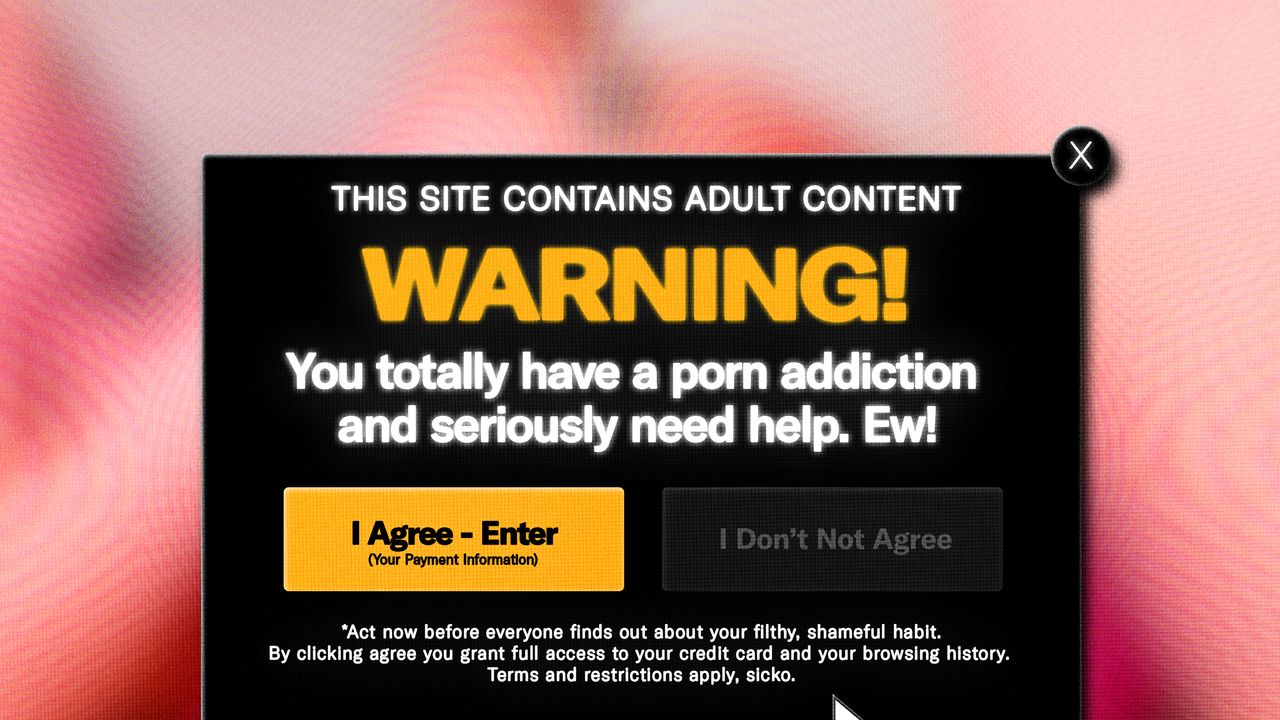
Sitting across from a client I’ll call Jacob,* it was clear to me that he’d barely slept. Jacob proceeded to tell me that his porn addiction was worse than ever, and that he’d stayed up late browsing x-rated sites before then clicking through a string of influencer videos talking about porn that left him convinced he was in the throes of addiction. Jacob was at once distressed by his behavior but also genuinely comforted by the idea that he was an addict. He described feeling powerless, victimized by porn itself. In my practice, I’ve seen the same line of thought among many of the men who come to therapy seeking support for their porn use. But I find that embracing the label of addiction tends to hurt my clients, rather than help them, even as an entire industry of profit-seeking podcasters, apps, and influencers are popping up to reinforce the label.To be clear, watching too much porn can absolutely cause harm. Relying on it to self-soothe can hurt relationships, encourage impulsivity, and deepen social isolation. Having easily accessible, unlimited, and often free access to x-rated videos—like pretty much every man with an internet connection and a decent income does—has the potential to make the problem even more extreme. (After all, the trend of gooning exists.) It’s only natural that men seek to understand why they binge-watch porn. What’s important is that we seek solutions that really help.Porn addiction is not a new concept. Back in the 1990s as the internet’s availability spread, a psychologist named Al Cooper published a paper outlining his concerns that such connectivity would lead to a spike in porn addiction, without providing any evidence that watching porn represented an addictive process. His ideas grew and spread, and over the following decades his work influenced the creation of an independent certification for “sex addiction therapists” and porn use continued to grow with popular “tube” sites launching in the mid 2000s.By 2010, the late Gary Wilson, a former anatomy and physiology teacher with no clinical training, launched yourbrainonporn.com, followed by a TEDx Talk and a book. In his book, Wilson claimed that porn use rewires the brain’s dopamine pathways the same way cocaine does. But key evidence he often cited was based on animal behavior about mating, not human studies about pornography. His ideas became fodder for a loose network of influencers, podcasters, and entrepreneurs who would eventually build their brands around this idea. As of July 2026, Wilson’s TEDx Talk has been viewed more than 17 million times. While the video is still easily watchable online, TED has since flagged it for containing claims that were “not supported by academically respected studies in medicine and psychology.”I hold enormous compassion for the men who struggle with their porn use. Dependence on any substance or habit to the point where it causes harm can feel overwhelming and frightening. Young people are also watching porn more than ever, and a generation of young men are being introduced to sexuality through a medium that does nothing to teach boys about healthy relationships, communication, or consent. The followers of Wilson may very well have positive intentions. However, the proliferation of algorithm-savvy self-help coaches, podcasters, and influencers offering “sobriety” tools doesn’t necessarily help address the real problems. My research and training has led me to believe that men are better served by sober conversations about where the real evidence is, not where the most compelling marketing is.Human-based research on watching porn paints a far more complicated picture than much of the hype around porn addiction would suggest. While there remains no peer reviewed evidence confirming that problematic porn use “rewires” dopamine pathways, there is conflicting evidence about the impacts of porn use on cue reactivity, a brain response that’s often a common marker in how we measure addictive processes. Some studies show that excessive porn use can lead to increased cue reactivity, and others show the opposite. Research by some of the most prominent scholars on the matter has found that the primary source of distress and perceived addiction was moral beliefs (often religious ones), and not the degree of porn use itself.The two primary organizations that determine diagnoses around the world have both noted the lack of clear evidence in their decisions to not include porn addiction in their manuals for clinicians. In 2013 the American Psychological Association declined to include hypersexual disorder, the proposed diagnosis under which porn or sex addiction would have lived, in the United States’ primary diagnostic manual, the DSM-5. The proposed diagnosis was left out of subsequent updates and even the appendix of areas deemed worthy of further study. In 2019, the World Health Organization, which oversees the clinical diagnostic manual for most other countries, adopted its latest version of the ICD-11, which approved compulsive sexual behavior disorder as a diagnosis. However, the body specifically decided to classify it as an impulse control disorder, not as an addiction. The American Association for Sexuality Educators, Counselors, and Therapists (AASECT) says it plainly: “[AASECT] does not find sufficient empirical evidence to support the classification of sex addiction or porn addiction as a mental health disorder.”But into that clinical gap, a for-profit industry grew. Victory is one of the more visible porn-watching-prevention products available today. Founded in 2000 with explicitly faith-based roots, the company (called Covenant Eyes) sells surveillance software that takes screenshots of a user’s internet use and periodically sends it to a partner, parent, or pastor. Covenant Eyes claims to have worked with 1.7 million people, and even Speaker of the House Mike Johnson has publicly said he used the product with his then 17 year old son. It’s billed on its website as a recovery tool that will help users “overcome pornography.” But using shame and pathologization to sell surveillance software is not a therapeutic tool.Many personalities within the podcast world use the same tactics to build audiences and sell paid programs or products. From claiming to help men break free from the bondage of porn addiction, to warning that your brain can be hijacked by porn, these influencers work hard to make sure you feel like an addict—and therefore need their help. Major podcasters use day counts and relapse language to describe their own efforts to maintain “sobriety.” The industry feeds off of this narrative. Shame is the fuel.As a therapist, I believe that a shame-and-surveillance strategy misses the mark, and that there are more constructive ways to help men struggling with their porn use. So what does this look like in the therapy room? Jacob talked about using porn to blow off steam when stressed. He described feeling deeply guilty and ashamed after masturbating, and it came through in how he viewed himself. He took solace in listening to major podcasters who convinced him that porn was ravaging his brain. But by joining the ranks that viewed porn as an addiction, Jacob found an enemy that was external: the porn industry. Ultimately that made it more difficult to look inward.The overuse of porn, like most compulsive behaviors, serves an internal function. For many, it provides emotional regulation, stress relief, a source of pleasure, and a way to avoid thoughts or feelings that are overwhelming. That behavior makes sense when we actually examine in therapy what the behavior is a response to.When a man accepts the addiction framing, the goal becomes abstinence, rather than addressing the underlying issues that the behavior was soothing. The result is predictable. Cycles of abstinence, relapse, shame, and back to abstinence can create a perpetual struggle that keeps the focus on the behavior, and not on the real needs. It often forecloses on the questions that could actually help. That said, I also work with men in 12-step programs who feel that abstinence is a part of their journey. I find that the labels are less important than the motivation. If going cold-turkey is part of what helps you turn inward, that’s a valid place to begin doing the work as well. The problem isn’t abstinence, it’s shame.For instance, when working with clients who want to better manage their porn use, I ask: What is it doing for you and what are you worried you might feel if it was taken away? Men who make major progress aren’t the ones who figure out the perfect abstinence strategy. It’s those who understand the actual function of it. That usually requires exploring the emotional states that precede porn use, identifying what the use is providing them, and seeking alternative options to meet the same emotional needs. It also tends to lead to deeper questions. For many men, that means reflecting on what they carry from older relationships, internalized shame, socialized beliefs about women and sex, and early life experiences. Many clients end up exploring histories of attachment wounds, and parents who were either distant or conditionally loving. Ultimately, healing some of those deeper issues can alleviate the pain that porn distracts from. The goal needn’t be cutting it out of your life entirely. It’s the ability to make a grounded decision to use porn for genuine enjoyment rather than to avoid something else.Jacob got there. Not through hasty diagnosis or a surveillance app, but by getting curious about the hurt he was subconsciously managing, and what he needed beyond instant sexual pleasure to heal those wounds. He began to get to know his emotional makeup, learned how to show himself compassion, while using adaptive coping skills to manage when he felt activated or overwhelmed. Today, he watches porn less, but doesn’t feel riddled with shame when he does, and doesn’t find that his porn use impedes his daily life. Arriving at the diagnosis of addiction might seem like an obvious solution at first, but more often than not, that leads to a path of shame rather than self-inquiry.Matthew Willner, LCSW, is a psychotherapist practicing in New York, New Jersey, and Colorado, where he specializes in working with men.*Jacob is a composite and does not include any personally identifiable client information.
Your Porn Addiction Might Not Be What You Think
Full Article
Original Source
Read the full article at Gq →KhanList aggregates and links to publicly available news content. We do not host full articles from third-party sources. Always verify important information with original sources.