
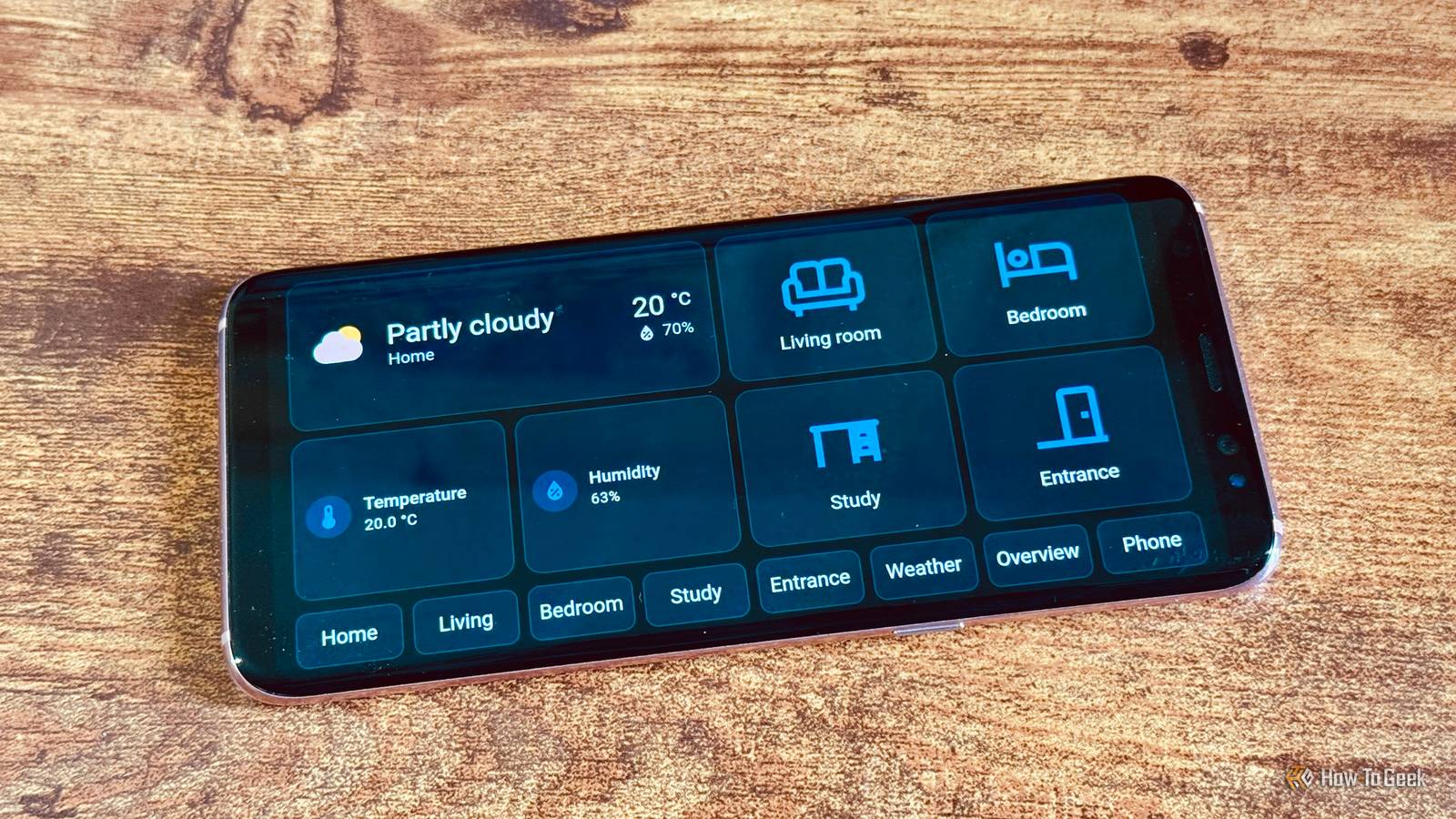
Published Oct 5, 2026, 3:00 PM EDT Adam has a degree in Engineering and has a life-long interest in technology. He has been writing for over a decade for various print and online publications, with a focus on consumer tech. He joined How-To Geek in 2024 while working at Pocket-lint. As well as being a long-term fan of Apple products, he also has a strong interest in smart home tech, running a Home Assistant server at home to automate all his smart home devices. He believes that the ideal smart home should work with minimal interaction from the user, with automations running as if by magic rather than requiring you to push buttons on a control panel. You can find more of his work on Muck Rack. Cheap tablets are popular choices for Home Assistant dashboards. You can mount them on a wall and use them to display data and controls for your smart home. Before you buy a cheap tablet, it's worth considering if your old Android phone can do a better job. Your old flagship may be faster than a cheap tablet Yesterday's premium hardware can beat today's budget devices Just because a device is old doesn't mean that it's not capable. Flagship smartphones are designed to offer high-end performance, and even older phones can have better specs than a cheap, brand-new tablet. For example, the current Amazon Fire HD 8 tablet has lower specs than my Samsung Galaxy S8, which is almost a decade old. It has less RAM, fewer cores, and a much worse front-facing camera. This can make a noticeable difference. Home Assistant dashboards are essentially interactive web interfaces, and more complex dashboards can include animations, custom graphics, live entity updates, and even live camera feeds. Weaker hardware means dashboards load more slowly, feel less responsive, and may be forced to reload after Android reclaims memory. The display may be far superior Your dashboards can look great on an OLED screen Aside from the RAM and CPU, an old flagship phone is likely to have a far better display than a cheap tablet. This means that your dashboards can look nicer on an old phone. Using the same example, an Amazon Fire HD 8 has an 8-inch LCD display with a 1280x800 resolution. In comparison, the Galaxy S8 has a 5.8-inch Super AMOLED display at 2960x1440. The larger tablet has just over a million pixels, while the smaller Galaxy S8 display has more than four times as many. The AMOLED display is arguably even more important. Each pixel produces its own light, so pixels that need to display black can turn off completely. The Fire tablet's LCD display uses a backlight, which stays illuminated even when the display shows black. This means the black backgrounds or text of your dashboards should look genuinely black on the old phone, making everything stand out more clearly. This is especially useful for a bedside dashboard where you don't want a glowing LCD backlight cutting through the darkness. Your phone is a better Home Assistant sensor A dashboard that can monitor the room If you're using the Home Assistant Companion app, it can expose sensors from the Android device that it's running on. Home Assistant makes these sensors available as entities. An old smartphone can often expose far more than a cheap tablet can. For physical sensors, a cheap tablet such as a Fire HD 8 can expose the accelerometer and the ambient light sensor, but that's pretty much it. In comparison, my Galaxy S8 can exhibit additional sensors, including a proximity sensor, barometer, and GPS. These sensors can be really useful. For example, a proximity sensor could trigger an automation to turn on the display so the dashboard appears only when you're nearby. That way you're not wasting power displaying a dashboard to an empty room. A small dashboard can be more convenient It's less tempting to fill the display unnecessarily One obvious advantage of even a small tablet over an old smartphone is more screen real estate. Even large phones aren't ideal if you're looking for something to stick to your wall that you can see from across the room. However, a smartphone's smaller size offers some advantages. The problem with having a large tablet to display your dashboards is that it encourages you to add more and more things to your dashboard. You may be tempted to cram as much as possible onto the screen so you can see it all at once. The problem is that you end up with so much information that you can't see the wood for the trees. Your dashboard becomes so busy that finding the information you actually want becomes much harder. A phone's smaller screen encourages you to include only the data and controls you really need. You might decide to build a dashboard purely for a specific room, or to build separate dashboards for each room. That way, you can even carry your phone around the home and have the displayed dashboard change from room to room based on your presence. An old phone doesn't cost a thing Even a cheap tablet can't be free The biggest benefit of using an old phone as your Home Assistant dashboard instead of buying a tablet is that you already own your phone. You don't need to pay a penny; it's effectively free. Even a cheap Android tablet can set you back $100 or more. By using your phone, you're not only saving yourself money, but you're putting old tech to good use. You can get a lot more life out of your old smartphone instead of creating more e-waste. Before you buy a tablet, consider an old phone If screen size isn't a dealbreaker, an old flagship Android can often do a better job than a cheap tablet. It's worth seeing what old devices you have lying in a drawer, as you may have the perfect Home Assistant dashboard stashed away.
Your old Android phone is a better Home Assistant dashboard than any cheap tablet
Full Article
Original Source
Read the full article at Howtogeek →KhanList aggregates and links to publicly available news content. We do not host full articles from third-party sources. Always verify important information with original sources.