
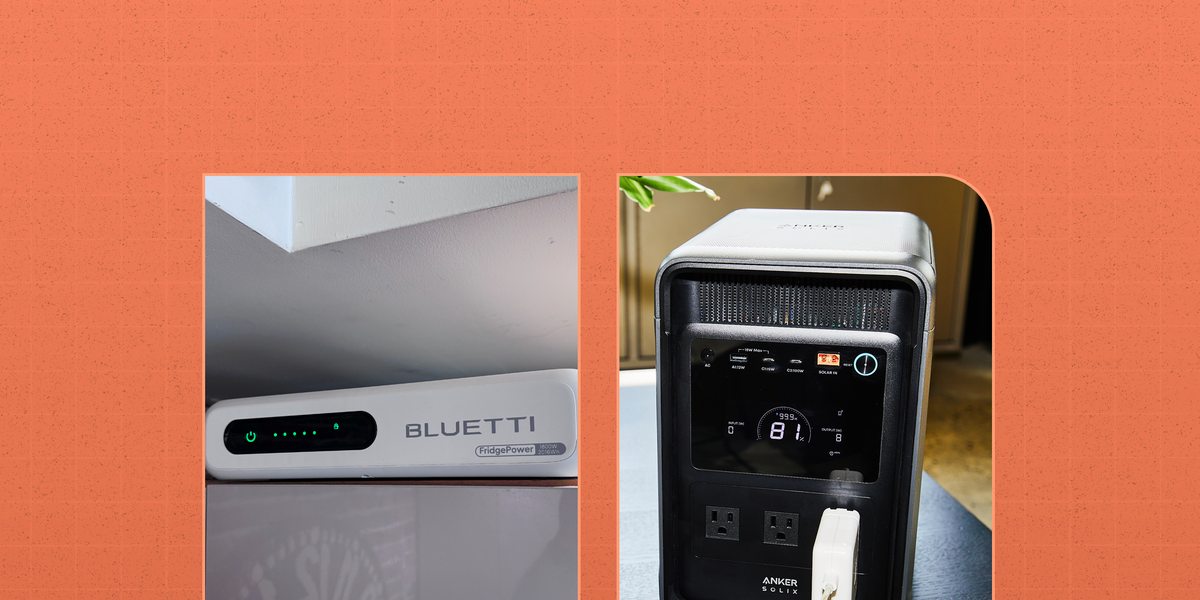
4 min readA new subcategory of power stations has hit the market, designed specifically to back up your refrigerator during an outage. The handful of brands that make these slim, easy-to-set-up smart devices are betting they’ll appeal to people who really only care about saving perishables versus getting involved with a complicated and potentially expensive whole-home backup system.At a very basic level, they aren’t much different from other portable models, save for a few key design differences that offer some real benefits in terms of convenience. But if you already have a portable power station, is it worth the investment?Dedicated Appliance Power Is ConvenientI tested two refrigerator backup models around the time they were introduced to the public: Bluetti’s FridgePower and the Backup by BioLite. There’s also one from Jackery called FridgeGuard, which I’m currently testing. (It’s available at Costco right now, and wider distribution is expected in late fall 2026.)All three have slim profiles and are designed to sit atop a refrigerator or mount on a nearby wall. (Both the Bluetti and BioLite come with mounting materials.) Setup is as straightforward as plugging the unit into the nearest outlet and then plugging the refrigerator into the station.Power from the grid is constantly monitored, and if it goes out, the unit automatically switches over to battery power. When the power comes back, it returns the appliance to grid power and automatically recharges the unit’s battery. Once set up, it’s entirely automated. You don’t have to manually activate it during an emergency, which is great if you’re not at home.All have enough battery capacity to power a refrigerator for 10 to 15 hours, depending on how much power it draws on average, and they can be expanded with additional batteries to increase that runtime. The Bluetti and BioLite have two outlets and 1,800 watts of output, so they can handle your fridge plus another small appliance. Jackery’s FridgeGuard is more limited, with only one outlet and 800 watts of power.Regular Power Stations Are More VersatilePeople who need portable power for a variety of uses—camping, running devices outdoors, and powering appliances during a blackout—are better served by opting for a portable power station. You can’t beat the versatility of being able to take it anywhere you go, or even moving it from room to room if you need to power different things during an emergency.They range in capacity from around 292 watt-hours for small portable models, like this one from Jackery, to more than 12,000 watt-hours of power for massive, whole-home versions like this one from EcoFlow. Total output varies, too, from 300 watts to 6,000 watts or more. There’s a wide variety of sizes, and most use long-lasting lithium iron phosphate (LiFePO4) batteries.Portable Power Stations We LoveHigh Output for Running Several DevicesAlso, depending on what you buy, a portable power station can output a variety of electrical output formats. That includes direct current (DC) using USB or 12-volt ports; 120-volt AC from standard outlets or 30-amp connections (often used for RVs); or even powerful 30- and 50-amp 240-volt outlets for connecting to a manual transfer switch, which you would use to power the electrical box in your home during a blackout.When it comes to dedicated refrigerator or single-appliance backup, most power stations offer the same capabilities as the dedicated refrigerator models, including the ability to act as an automatic uninterruptible power supply (UPS) that kicks in when the power goes out.Refrigerator Backup vs. Portable Power Stations: Which Is Better? I’m quite impressed with the dedicated appliance stations, but I live in a city where blackouts are extremely rare (I’ve had only two brief ones in the last eight years), so I prefer my Bluetti Elite 300 portable station because I can use it at home or while camping. But that’s me. I know a few people who would love a simple system they could easily set up themselves and not have to think about or move around again.Cost is one of the best cases I could make for a dedicated appliance power station system. Other whole-home automated systems, like fuel-based standby generators or large power station setups, can cost you $10,000 or more and involve a lot of labor and know-how if you don’t hire a professional.But the starting list prices of the Bluetti and the BioLite are $1,500 to $2,000 (though Bluetti’s base product is often on sale for under $900), which presents less sticker shock. Jackery’s FridgeGuard is even more affordable, starting at $559. So, for a lot less money, you’re getting the benefit of automation and simple setup, albeit for a limit of just one or two critical appliances.A power station that offers the same capabilities of automation might be cheaper, but it won’t have the design elements that allow you to integrate it seamlessly into your kitchen. For example, Anker’s S2000 station was able to automatically power my refrigerator for an impressive 24 hours, and it’s often on sale for $650. But it’s boxy and there’s no practical place in the kitchen to put it if I wanted to keep it connected to the refrigerator year-round.David is a Reviews Editor for Hearst’s Enthusiast Group, contributing to Popular Mechanics, Runner’s World, Bicycling, Best Products, and Biography. He has over 25 years of experience writing about and reviewing consumer electronics, kitchen appliances, DIY products, outdoor gear, and more. He also spent years covering the ever-changing world of online retail. To relax, he loves experimenting with new recipes, tweaking his smart home setup, and spending time outdoors on his bike or camping.
Your Fridge Can Now Have Its Own Backup Battery. But Is It Still Better to Use a Portable Power Station?
Full Article
Original Source
Read the full article at Popularmechanics →KhanList aggregates and links to publicly available news content. We do not host full articles from third-party sources. Always verify important information with original sources.