
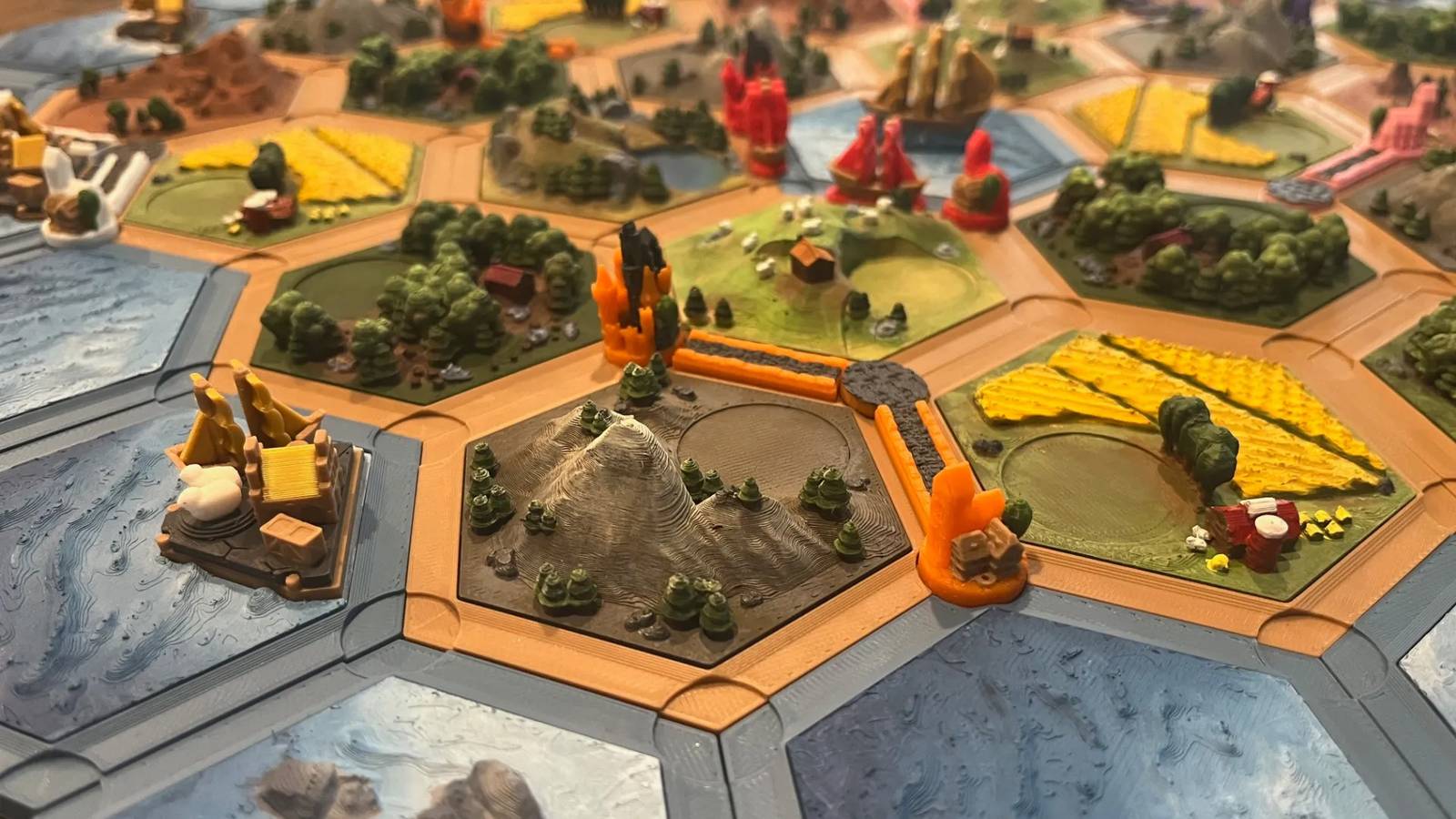
Published Sep 24, 2026, 10:00 AM EDT Patrick Campanale has been in the tech space for well over a decade, specializing in PC/gaming news and reviews, as well as maker-focused products to build small businesses. With a start in technology back in 2010 surrounding the Palm/webOS ecosystem, Patrick spent his formative years developing mobile applications as well as blogging for various publications, eventually leading to starting his own website in 2014. After running a technology blog for a few years, he stepped out of that role and into the world of high-end custom PC manufacturing and building, with a focus on YouTube video production and overclocking. Then, in 2017, Patrick joined the 9to5Toys team as an editor/writer/reviewer with over 14,000 articles being published during his time there, ranging from deals and roundups to in-depth reviews on the latest technology, video games, 3D printers, and more. In his free time, Patrick loves to create projects from wood using various robots and methods, including leveraging the technologies of CNCs and lasers. If Patrick isn't working on a computer or playing video games, he's likely in his 2-car garage workshop creating something unique. In addition to all this, Patrick is also the media director at his local church where he feels God has called him to serve, and he loves every minute of it. Are you looking for a good excuse to buy a 3D printer? What if I told you that owning a 3D printer could make other hobbies you're interested in way cheaper? Here are six hobbies that 3D printing can make cheaper (and better). RC cars, planes, and boats Being able to make your own camera mounts, accessories, or replacement parts is so convenient Credit: FADY | MakerWorld I have a good friend who was super into RC cars for a while, and the amount of money he spent on accessories for his car was astounding. With 3D printing, though, you can simply make your own. 3D printing doesn't have to be something that's weak. Depending on the filaments you use, you can make replacement brackets or accessories that are just as durable, if not more, than the original components. Plus, the best part of 3D printing for radio-controlled miniatures is that you can design your own component if it doesn't already exist, whereas before you could only get things that were already made and mass-produced. Prop making You can make your own helmets, badges, detail pieces, and more Credit: uni3Dworld / MakerWorld Whether you're making a costume for your favorite convention or just wanting to make props for the background of videos, 3D printing makes it infinitely cheaper than what it used to cost. Filament is fairly affordable these days, and it comes in so many different colors. With full-spectrum 3D printing, you can actually print in full color just by using four core colors — CMYK. So, all you have to do is find an existing model or design your own and send it to the 3D printer, and you'll have just about any prop your mind can dream up. Really, the only limit is the size of your machine, and even that can be worked around with clever connectors that can be hidden after assembly. Model railroads Stop buying big collections of buildings you'll never use and just print your own Credit: TinyMaker | MakerWorld My father-in-law was really into model railroads for a while, and he made everything for his model railroad out of foam panels he cut with a hot wire. If he had a 3D printer, it would have been so much easier for him to make most of the models or supports. Later on, he did get a 3D printer toward the end and made a few accessories, but it's nothing like what can be done now. These days, you can find ready-made models of scale buildings, scenery, vehicles, platforms, signs, and so much more. In fact, you can often 3D print discontinued replacement parts if you can't find them for sale anymore. Woodworking Jigs, templates, and tools have never been simpler to make Credit: GeodesicBuilt | MakerWorld I'm a woodworker at heart, and love getting out into my workshop to make something new. With 3D printing, I can easily create things that never were possible before. For example, I've 3D printed router templates quite a few times, from radius jigs to full-on templates to follow with a templating bit. I've also made a ton of dust collection adapters, tool holders, and more. With 3D printing, I don't have to place an Amazon order or run to Woodcraft to pick up an adapter anymore; I just need some filament and a few hours, and it costs me far less. Electronics Who knew it was this easy to make enclosures, mounts, and more? When it comes to tinkering with electronics, 3D printing is about as good as you can get to help with the hobby. You can use it to make custom project enclosures, sensor mounts, brackets, control panels, knobs, and so much more. For instance, my father-in-law is building a flight simulator cockpit (he likes trains and planes), and he's using 3D printing to create a lot of the gauges and panels that will be used in the cockpit. The great part is that most filaments are non-conductive, so you can simply 3D print prototype enclosures for your electronics to see how well things work before looking at anything more complicated. Board gaming Box inserts, card holders, upgraded components, and even replacement parts can cost just pennies While some board games come with organizational inserts, not every one does. With 3D printing, that can be a problem of the past. The great part about the 3D printing community is that many 3D printer enthusiasts are also board gamers, which means there are many solutions out there already for organizing your games in a better way than they shipped. One such way is making custom box inserts for every board game piece, from the cards to the tokens and whatever else came in the box. Or, you can 3D print actual tokens or upgraded components. However, one of my favorite things that can be 3D printed is terrain pieces for games like Catan. Typically, a premium version of a board game just comes with nicer, more detailed, and premium-feeling pieces. However, with 3D printing, you can pick up the cheaper version of the board game and just 3D print the nicer pieces or organizational components. Bambu Lab X2D Combo Brand Bambu Lab Build Volume 256 × 256 × 260 mm Printing Accuracy 50 μm with optional Vision Encoder Connectivity Dual-band Wi-Fi Heated Build Plate Yes Feed Type Direct drive (main) and Bowden (auxiliary) The Bambu Lab X2D Combo is a mid-range 3D printer with dual-nozzle 3D printing for faster print speeds and better support printing. The nozzle reaches 300°C while the actively-heated chamber hits 65°C which is perfect for engineering-grade filaments. The printer comes with Bambu Lab's signature ease of use, AI fail detection, and has a maximum print volume of 256 × 256 × 260 mm. The combo package comes with the AMS2 multi-material system and filament dryer. Bambu Lab P2S Build Volume 256x256x256mm Printing Speed 600mm/s Brand Bambu Lab Max Hot End Temp 300C Max Bed Temp 110C Nozzle Hardened 0.4mm The Bambu Labs P2S 3D printer is ready to go out of the box and can have you printing within 15 minutes. It features up to 20-color printing with the AMS unit, has an upgraded built-in camera for remote monitoring and time lapses, and has an enclosed body for printing even high-temperature filament. 3D printing is a hobby that supports other hobbies Typically, one hobby doesn't support another. At least, not directly. With 3D printing, the hobby can (and does) support basically every other hobby you might be interested in — for cheap. If you're looking for more ways 3D printers can improve your workflow, check out these seven other hobbies that 3D printing makes even better.
Your favorite hobby is a lot cheaper with a 3D printer
Full Article
Original Source
Read the full article at Howtogeek →KhanList aggregates and links to publicly available news content. We do not host full articles from third-party sources. Always verify important information with original sources.