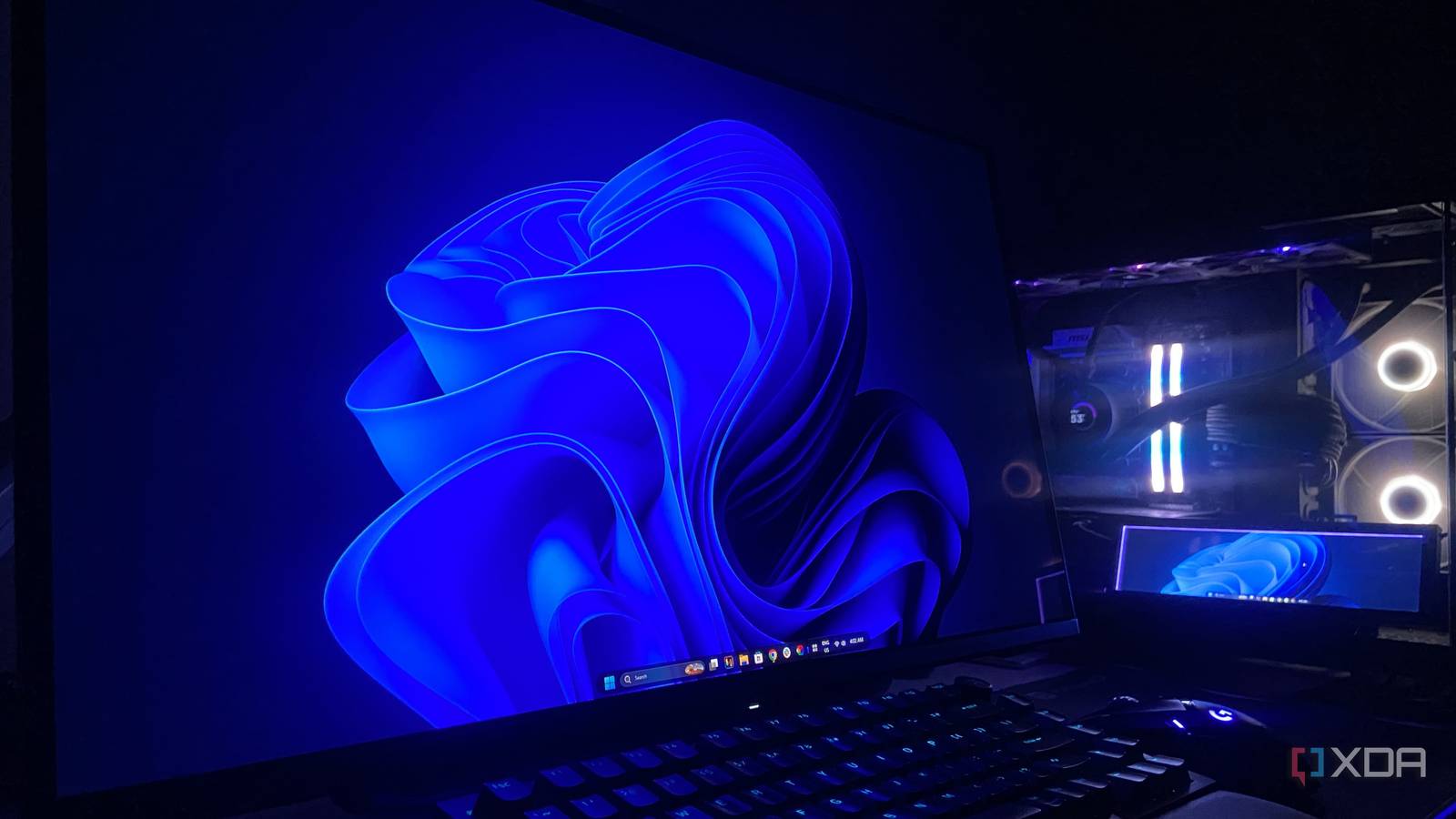
Published Aug 17, 2026, 12:30 PM EDT Abhinav pivoted from a career in banking to pursue his first love in writing. Even while working full-time, he continued contributing as an editor-at-large, a role he has held for more than 7 years. A lifelong tech enthusiast who has built three gaming and productivity powerhouse PCs since 2018, his passion for technology keeps him closely following the semiconductor industry, from NVIDIA and AMD to ARM. His MSc dissertation explored how artificial intelligence will reshape the future of work, reflecting his curiosity about the wider social impact of emerging technologies. When it comes to the performance of your PC, the prevailing wisdom, for good reason, is "don't rely on defaults". Now, these "default" settings can come from many different places, including the motherboard manufacturers, the OEMs, and of course, from the operating system itself. Microsoft Windows 11 is known to come with some of the most notorious performance offenders when it comes to default settings. The catch is, many of these are enabled once and forgotten, and may as well continue to limit performance for many years. Before pointing fingers at the components in your PC, it's worth revisiting these settings that can bottleneck your system without you knowing, because lost performance doesn't often come with a notification. Is your new monitor running at the refresh rate of the old monitor? Ten seconds taken to verify saves you from years of choppy visuals This might seem like the most obvious piece of advice, but that's exactly why it's stupidly easy to overlook. Each year, more people move to 144Hz, 165Hz and even 240Hz monitors, only to discover months later that Windows has been driving them at 60Hz all along, delivering the experience of a budget display. I only added this to my own mental checklist after buying an 8.8-inch USB monitor from Lian Li. Despite supporting a refresh rate of 60Hz, the device booted at 30Hz by default. The most probable reason for this may have been that the display's firmware requested a lower refresh rate as a fail-safe, ensuring it initialized reliably over USB bandwidth on older or less capable systems. But herein lies the problem. I naturally expected the display to run at 60Hz by default and assumed it was delivering that refresh rate until I decided to go to the Display Settings a week later myself. I imagine this problem crops up surprisingly often in multi-monitor setups, because Windows treats each display independently. Your primary monitor may be running at its maximum rated refresh rate while the second is stuck at 60Hz (or in my case, even less) after a fresh installation. In any case whatsoever, it's always worth checking for the added fluidity. Did you ever change your Windows power plan? The wrong setting may be costing your CPU some performance Windows' absurd power management has been a subject of many technical guides, YouTube videos, and Reddit threads, but if you've managed to stay out of the loop, it's worth knowing that this is one of the places where the operating system's defaults aren't really in the best interests of your machine. Currently, the default plan is "Balanced" on Windows 11 machines, with a neat little parenthesis stating that it's the "recommended" plan that "automatically balances performance with energy consumption." The second claim Windows 11 throws at its users about this power plan is something that needs to be approached with skepticism. The problem is that "Balanced" relates less to performance and is more closely related to power management. This mode continuously scales CPU frequency and voltage according to workload demand rather than locking the processor at high clocks. The CPU, therefore, stays in low power states under light load and only ramps up when demand increases. Modern Intel and AMD Ryzen CPUs can still boost aggressively, but there's a small ramp-up period before they reach peak frequencies, which is most noticeable in short, bursty workloads. Now, this makes perfect sense on a laptop, where battery life and thermal performance matters. On a desktop that's plugged into the wall, those energy savings make practically no sense when it comes to power saving, and the vast majority of consumer desktops have a large enough cooling headroom. To make matters slightly worse, you may have actually opened power management settings and missed the most optimal toggle entirely because Windows 11 hides the "High Performance" and "Ultimate Performance" toggles by default. Did you get rid of the AI features Microsoft made you sign up for? Copilot could be hogging your system resources in the background One of the weirdest, out-of-character decisions Microsoft has made inarguably has been about its AI features, such as Copilot. Not only do users outside the European Economic Area don't get an option to opt out of Copilot and the relentless background hog that comes with it. Naturally, when the PC is set up, most users forget to disable or uninstall it. In an April 2026 coverage, MakeUseOf found that uninstalling Copilot immediately reclaimed around 200MB of system memory, reduced idle CPU activity, and eliminated yet another background process competing for system resources. While this may look like a small number to those with a full-tower rig with 32 or 64GB of DDR5 memory, it can make a world of difference to those running a small notebook PC with 8 or 16GB of RAM. Copilot isn't welded into Windows as it was before, and the good news is that it can be uninstalled like any other application. If you don't find yourself reaching for it, it may be a good idea to do away with it. Don't forget to audit your settings (and apps) now and then The easiest way to waste money on a PC is letting the system's defaults rule your hardware. The list doesn't end here, and there are many other things you should check to make sure your PC is delivering great value for you on your own terms. For those determined to get the best bang for the buck, I would recommend going through the system BIOS next to check up on the EXPO/XMP settings to make sure the RAM is running at its advertised frequency and assuring that resizable BAR is enabled for better GPU performance. For those willing to go even further, experimenting with undervolting can bring in some great returns.
Your entire PC build might be bottlenecked by a setting you enabled years ago and forgot about
Full Article
Original Source
Read the full article at Xda-developers →KhanList aggregates and links to publicly available news content. We do not host full articles from third-party sources. Always verify important information with original sources.