
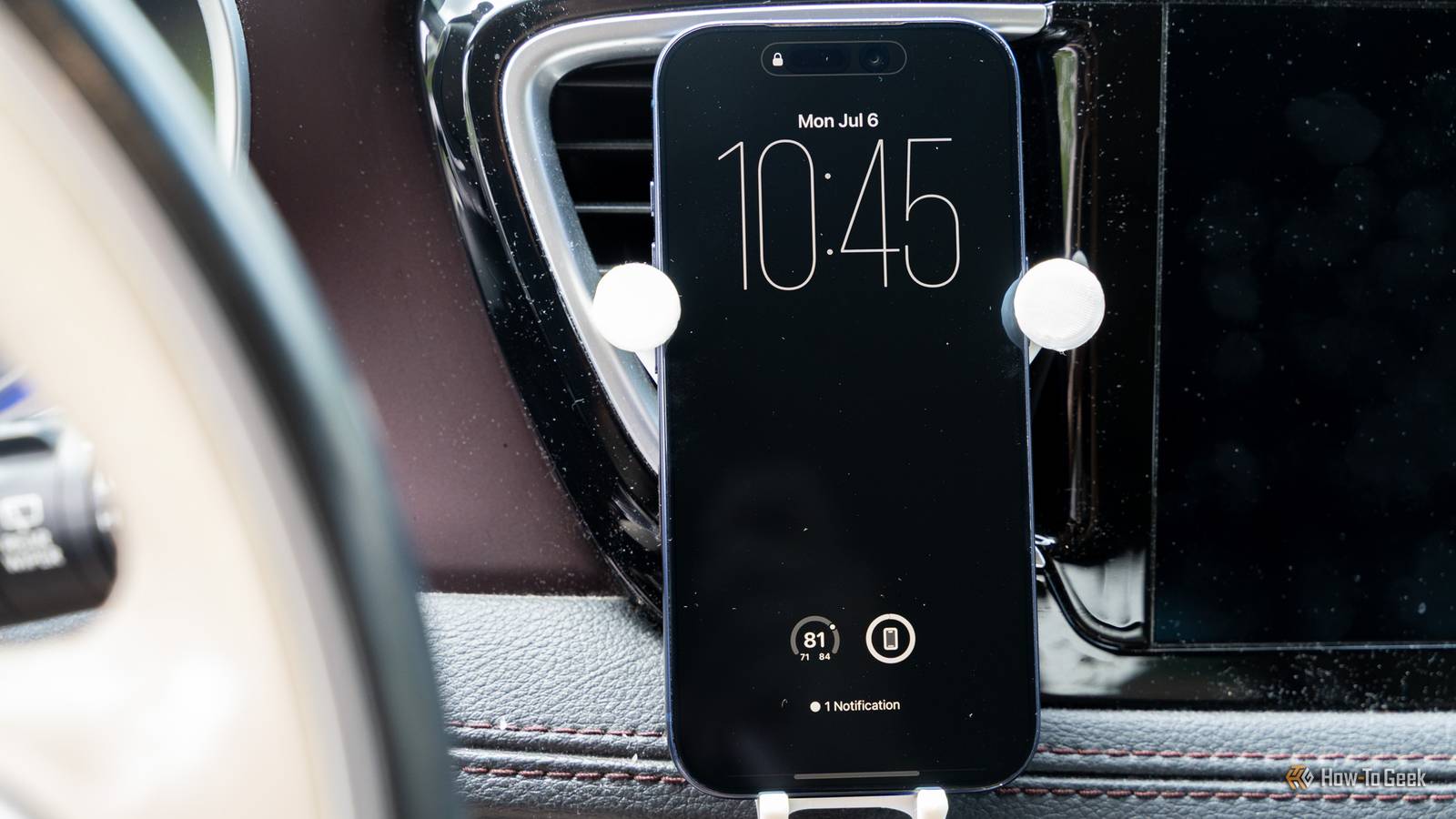
Published Sep 20, 2026, 6:30 AM EDT Sydney Butler is a technology writer with over 20 years of experience as a freelance PC technician and system builder and over a decade as a professional writer. He's worked for more than a decade in user education. On How-To Geek, he writes commerce content, guides, opinions, and specializes in editing hardware and cutting edge technology articles. Sydney started working as a freelance computer technician around the age of 13, before which he was in charge of running the computer center for his school. (He also ran LAN gaming tournaments when the teachers weren't looking!) His interests include VR, PC, Mac, gaming, 3D printing, consumer electronics, the web, and privacy. He holds a Master of Arts degree in Research Psychology with a minor in media and technology studies. His masters dissertation examined the potential for social media to spread misinformation. Outside of How-To Geek, he hosts the Online Tech Tips YouTube Channel, and writes for Online Tech Tips, Switching to Mac, and Helpdesk Geek. Sydney also writes for Expert Reviews UK. He also has bylines at 9to5Mac, 9to5Google, 9to5Toys, Tom's Hardware, MakeTechEasier, and Laptop Mag. Most new cars these days have a built-in screen that works with Apple CarPlay or Android Auto. This allows you to tuck your phone away somewhere safe, connected to this external screen. Either using a wireless method, or a plain old cable. But, there are still millions of vehicles on the road that don't have this type of modern head unit. Here, if you want to use your phone for navigation or music while driving, you need to mount it inside the car somewhere. There are seemingly endless options when it comes to where and how you can mount a phone, and some methods are worse for your phone's health than others. Your camera has moving parts that really don't like constant vibration You don't want photos that look like you had a buzz on We tend to think of modern smartphones as completely solid-state devices, but the truth is that they have several tiny electromechanical components that can move a small amount, and that makes them vulnerable to certain types of vibration. In particular, high-end phones have camera assemblies with moving parts to make OIS (Optical Image Stabilization) and autofocus possible. High-amplitude vibration can damage and degrade these components, which can ultimately have a negative effect on the performance of your camera. Apple has an official warning against using its phones with motorcycle handlebar mounts on powerful bikes. It also says that even if you're mounting your phone on a less powerful vehicle where only low-amplitude vibrations are generated, you should still use a shock-dampening mount. Of all the options, a car mount is probably the least risky, but the risk isn't zero. You'll see some car mounts are marketed as "vibration dampening" and these are the ones you want. Especially if you have a vehicle where lots of vibration is transferred into the cab and dashboard. A windshield mount can put your battery in one of the hottest places in the car In the hot seat Credit: Potashev Aleksandr/Shutterstock.com Your phone does not like heat. In particular, lithium batteries operate best in a specific temperature range, and if they get too hot they can become damaged or have a shortened lifespan. Your phone's processors don't have any sort of active cooling either, and the phone will throttle and slow down if it becomes too hot. Push it too far, and you might even experience your phone performing an emergency shutdown in a desperate bid to save itself. So putting your phone in the windshield, in direct sunlight, possibly catching some radiant heat from the top of the dashboard, might not be the best move. Google calls the dashboard out as a dangerous hotspot, saying that temperatures above 45C ambient can damage the phone. Apple has something to say about ambient temperature too. In particular, charging your phone above 35C can permanently shorten your battery life. These aren't immediate catastrophic issues, but if you're charging your phone baking in the sun every day on your commute, it can lead to a shorter lifespan for your phone, or an earlier battery replacement than you planned for. While they have their own problems, this is why I've always favored air vent mounts, because they also actively cool your phone. Navigation and charging pile even more heat onto the problem Use it AND lose it Credit: Reshetnikov_art/Shutterstock.com Just having your phone mounted in a hot place is not the worst-case scenario. It's when your phone is charging streaming audio, navigating with GPS, and has its screen at high brightness all at the same time that things are really cooking. All of these actions generate heat, and all of them are likely to happen when a phone is mounted inside a car. Cellular data transmissions, especially high-frequency ones, generate heat. Intense processing of data adds fuel to the fire. You might also be surprised that using a wireless charging mount generates more heat than a wired connection. That's because wireless charging is actually pretty inefficient, and so a lot of the energy is simply lost as heat. You don't have to give up your car mount, just stop treating it as an afterthought So what now? The good news is that no one is telling you to stop using a car mount. But it is a good idea to think about where you mount your phone and different ways of mitigating excess heat. Mounting your phone in a cool air stream is a good idea. Don't forget that you can often change the directions of a nearby vent to cool down the area around your phone. Avoid wireless charging. It's not dangerous by itself, but it is an additional source of heat. This only counts for dash or windshield mounting. If your car has a built-in wireless charger down somewhere out of direct sunlight, then that's obviously OK. The optimal solution would be to add CarPlay (for iPhone) or add Android Auto to your car, which will keep your phone out of harm's way. You'll also want to disable cable-based fast charging in your car, since this also causes excess battery heat, and if your phone has bypass charging, consider activating it for in-car use.
Your car mount is slowly ruining your phone's camera and battery
Full Article
Original Source
Read the full article at Howtogeek →KhanList aggregates and links to publicly available news content. We do not host full articles from third-party sources. Always verify important information with original sources.