
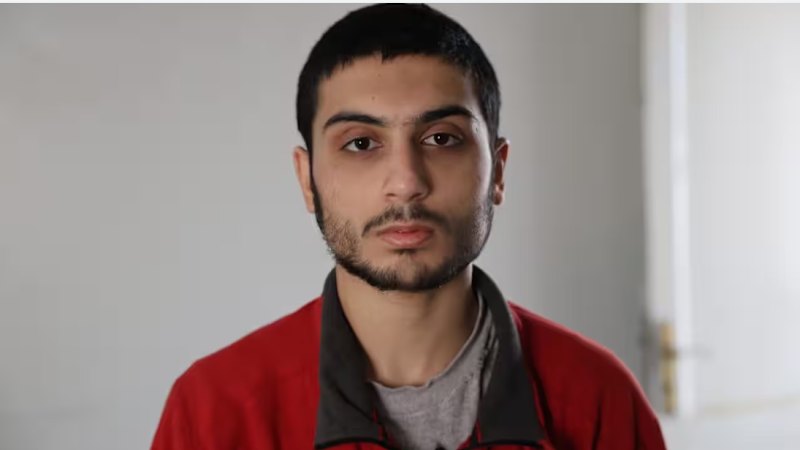
A young Australian taken as a boy to live with the Islamic State was on the brink of travelling home when American soldiers snatched him from a Syrian prison and transported him to Iraq, where he could face trial on terror charges.Yusuf Zahab, 23, was 12 years old when his parents took him to live in the so-called caliphate, and is the only male issued a passport by the Australian government as part of attempts by family members this year to bring Zahab and 34 women and children home.Yusuf Zahab being interviewed by SBS Dateline in a Syrian prison in 2024. He has since been moved to Iraq.Colin CosierAs family members travelled to Syria in February to try to bring the women and children home, the United States was transferring 5704 prisoners, including Zahab and 12 other Australians, to Iraq.The forced transfer came in the face of a deteriorating security situation in north-eastern Syria. In Iraq, many will face trial as alleged terrorists, and possibly the death penalty.It remains unclear if Zahab will be among them. Two sources, including one close to his family, say he has been told he will not be prosecuted because he was a minor during the conflict.“Iraqi investigators that have met with him found that he never took up arms or supported the death cult and had never been involved in anything that made him a combatant, supporter or adherent,” one of the Australia-based sources said.Letta Tayler, senior counterterrorism advisor at Human Rights Watch, issued a scathing report on Monday about the prospect of fair trials in Iraq and the responsibilities of Western countries. She said Zahab’s case was particularly shocking.“Yusuf’s only crime appears to be he was brought to Syria as a boy by adult relatives,” Tayler said.“He’s been detained for years without charge or trial, separated from his family, wounded, including in the head, come down with serious illnesses and is given up for dead, only to be discovered in Syria, where he was last seen.“What a legal black hole and what a horrific experience for this child. And if he hadn’t suffered enough, he was then transferred to Iraq at the moment he was ready to be sprung from detention in northeastern Syria. The mind reels at the amount of trauma this boy has suffered.”Tayler agrees it is possible he will not be tried.Iraq is “looking very carefully at the young men who were detained since they were children, so I would not be surprised if Iraq doesn’t bring charges against Yusuf Zahab,” she said.Another Australian source with knowledge of the situation said if he was released, Zahab could be reunited with his passport – which is in safe keeping in Syria – and returned to Australia.“Certain community members are discussing what they can do to give him justice,” the source said.“I think it wouldn’t be that difficult to get Yusuf from Iraq into Syria, get his passport and get him back here, but there’s a procedure we need to go through.”The source said it was likely Zahab would need to go before an Iraqi judge who could order his release. Though the authorities there would prefer cooperation or contact with the Australian government, there had been little to none.Australia has consistently refused to offer any assistance to those linked to Islamic State, and has said of another prisoner, Tareq “Dr Jihad” Kamli that he can “rot in jail” in Iraq.The Human Rights Watch report says 5704 detainees had been taken from Syria in January and February without any legal basis into the Iraqi legal system which has “a documented history of torture and unlawful executions”.Iraq had only days to prepare before 1100 adults arrived with serious and contagious diseases including tuberculosis, according to sources cited by Human Rights Watch. “One man died in transfer and 14 others died after arrival, apparently from serious health conditions”.The Al-Karkh prison authority told Tayler the cells were filled to 158 per cent capacity. More than 440 transferred detainees are children, including one who is 12.The Iraqi government and Human Rights Watch have urged countries, including Australia, to take responsibility for their citizens, repatriate them and try them in their own countries.“The international community must step up and assume its responsibility,” according to Ali Diaa, the administrative director of Iraq’s National Centre for International Judicial Cooperation, which is overseeing the investigations.“We are looking for tangible support, not workshops and conferences.”Iraqi law allows for the prosecution of children as young as nine, but Diaa told Human Rights Watch that 95 per cent of children were unlikely to be prosecuted. The outcome for young men detained since childhood, such as Yusuf Zahab, remains unclear, the report said.“This situation is not unique to Australia,” report author Letta Tayler told this masthead. “But Australia certainly could take a leadership role by bringing this young man home.”Cut through the noise of federal politics with news, views and expert analysis. Subscribers can sign up to our weekly Inside Politics newsletter.Michael Bachelard is a senior writer and former deputy editor and investigations editor of The Age. He has worked in Canberra, Melbourne and Jakarta, has written two books and won multiple awards for journalism, including the Gold Walkley.Connect via X or email.From our partners
Young Australian caught up in IS could come home on passport soon
Full Article
Original Source
Read the full article at Smh →KhanList aggregates and links to publicly available news content. We do not host full articles from third-party sources. Always verify important information with original sources.