
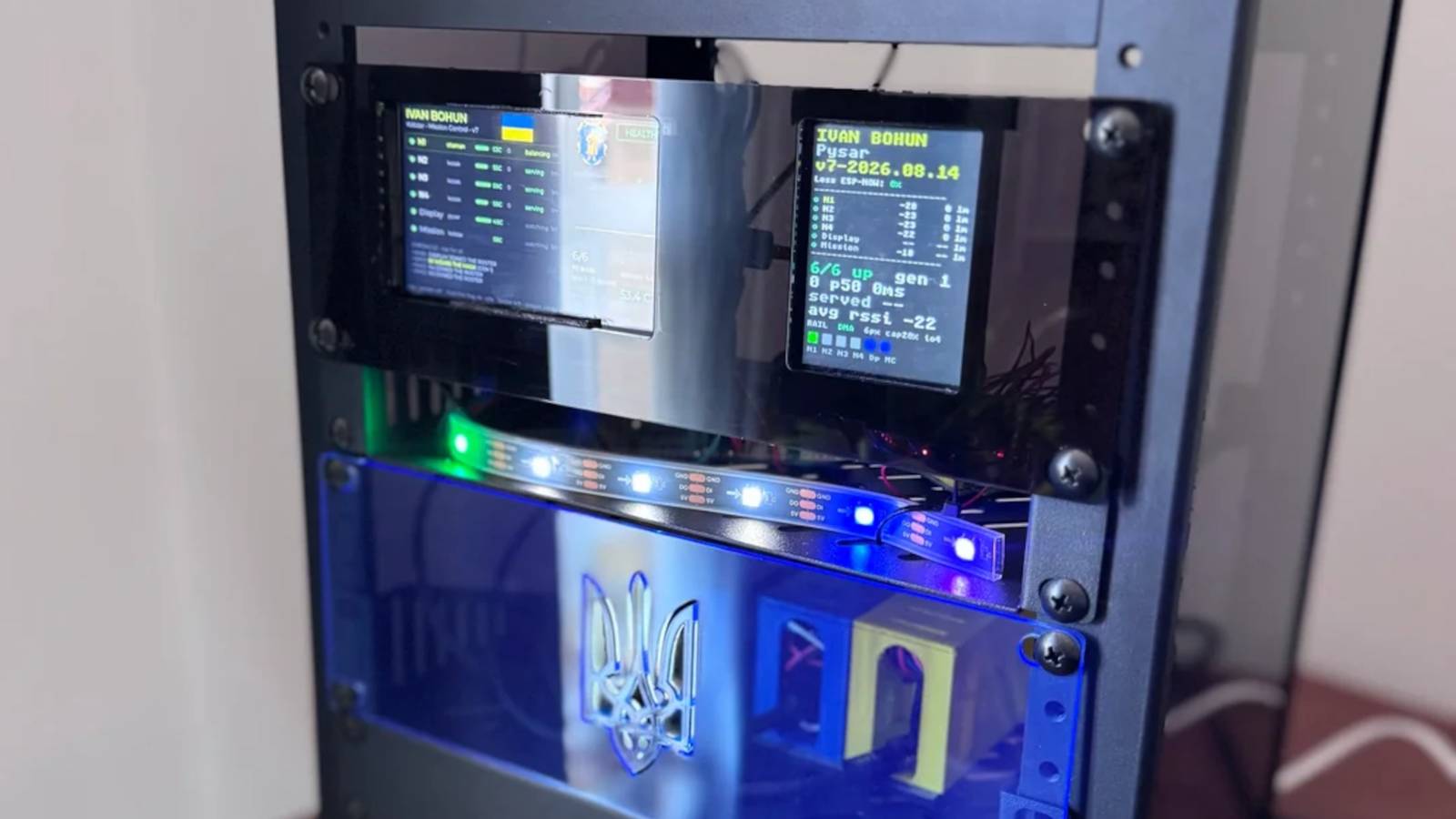
Credit: disco-jack Published Aug 17, 2026, 4:03 AM EDT Simon is a Computer Science BSc graduate who has been writing about technology since 2014, and using Windows machines since 3.1. After working for an indie game studio and acting as the family's go-to technician for all computer issues, he found his passion for writing and decided to use his skill set to write about all things tech. Since beginning his writing career, he has written for many different publications such as WorldStart, Listverse, and MakeTechEasier. However, after finding his home at MakeUseOf in February 2019, he would eventually move on to its sister site, XDA, to bring the latest and greatest in Windows, Linux, and DIY electronics. Sign in to your XDA account Summary Six ESP32-S3 blades serve a website together, using an elected load balancer and virtual MAC. Each blade watches the others; if one fails or is removed, traffic reroutes and recovers in ~3 seconds. The project is open-source with OTA updates, rollback, observers, and a live status webpage. You can do a lot with a single ESP32, but what if you got six of them working in tandem? Well, as one tinkerer has shown us, you can host a website off them. Not just a regular server, though; a server that can detect when a blade goes down and automatically recover itself in three seconds. And the best part is, it's all open-source. This ESP32-powered server can do more than just host a website It looks great, too Over on the ESP32 subreddit, user disco-jack explained how they managed to get six ESP32s to host a server. You can see the proof for yourself by checking out the server's own website, which shows the status of each blade and gives a brief description of how it all works: It is being served to you, right now, by four ESP32-S3 microcontroller blades, sitting on a shelf in a London flat. They are watched over by two more observer units that witness and visualize the swarm. The router forwards every request to one immortal virtual MAC address: the mask, worn by whichever blade won the election. The wearer hands your connection to the least busy blade, so you are answered by a different microcontroller from the one you connected to. The cool thing about splitting the job across six ESP32s is that it protects the website from potential downtime. Each ESP32 keeps watch over itself and the other boards, and if one of the boards fails or is removed from the system, the array spots it and redirects everyone affected to another operational blade in three seconds. This isn't just a fun little way to host a website; it has a surprisingly deep amount of resilience to it. If you'd like to read more about the project (and perhaps even make your own), check out the project's GitHub page, where everything is open-source.
You, too, can make this web server that runs off six ESP32s working together
Full Article
Original Source
Read the full article at Xda-developers →KhanList aggregates and links to publicly available news content. We do not host full articles from third-party sources. Always verify important information with original sources.