
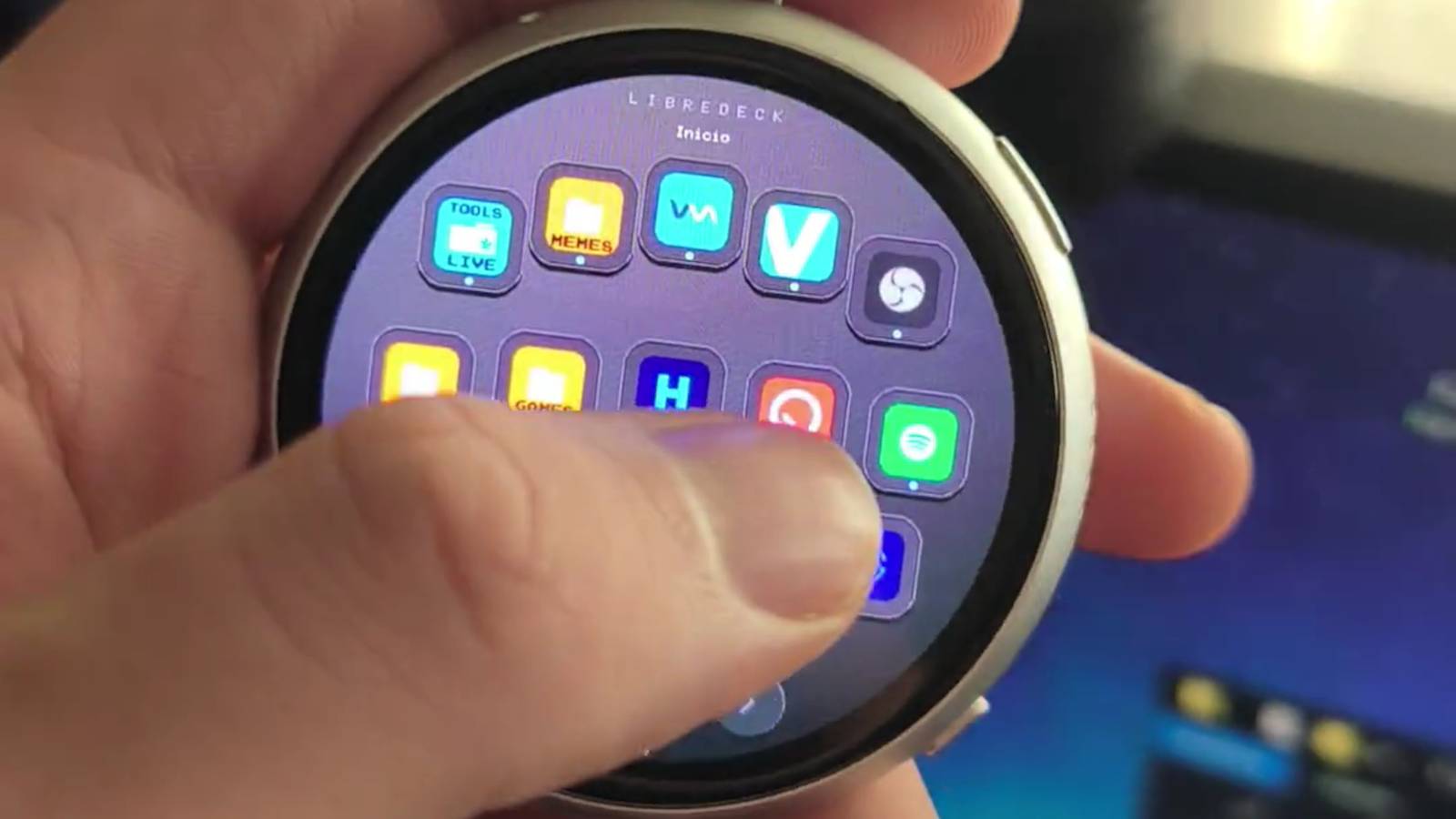
Credit: Víctor Santiago Martínez Picardo Published Nov 4, 2026, 2:40 AM EST Simon is a Computer Science BSc graduate who has been writing about technology since 2014, and using Windows machines since 3.1. After working for an indie game studio and acting as the family's go-to technician for all computer issues, he found his passion for writing and decided to use his skill set to write about all things tech. Since beginning his writing career, he has written for many different publications such as WorldStart, Listverse, and MakeTechEasier. However, after finding his home at MakeUseOf in February 2019, he would eventually move on to its sister site, XDA, to bring the latest and greatest in Windows, Linux, and DIY electronics. Sign in to your XDA account Summary LibreDeck runs a Stream Deck-style UI on a round pocket AMOLED, acting like a modern pocket-watch remote. It started as an AutoHotkey macro tool and grew to Android and desktop clients, then an ESP32 standalone build. It uses a Waveshare ESP32-S3 1.75" round touch AMOLED to fit many buttons in a pocket-sized device. The pocket watch is one of those inventions that sadly went to the wayside, mainly because if someone wants to check the time, they now have their phone on hand at all times. So, what if we brought it back with a new purpose? For instance, someone made this cool pocket-sized remote controller that works like a Stream Deck and uses a stylish round AMOLED to get the job done. This LibreDeck-powered device is the classiest way to control your gadgets It definitely looks the part Over on the ESP32 subreddit, Víctor Santiago Martínez Picardo showed off what they've been working on. It's called LibreDeck, and it started off as a way to set up AutoHotkey scripts. However, over time, LibreDeck grew: That led to an Android client, followed by a desktop interface designed specifically for secondary touchscreen displays. I also experimented with rebuilding the interface using Godot, a game engine that turned out to be quite useful for developing touch-friendly applications with custom interfaces. The next step in evolving LibreDeck was to see if it could run on a separate device, without a phone or a second monitor. They chose the Waveshare ESP32-S3 Touch AMOLED 1.75C mainly because it balanced being pocket-sized with enough room for useful buttons. However, because this Waveshare device has a round design, it also looks like a pocket watch. The end result is a small remote control you can pull out of your pocket at any time and control whatever you've wired up to it via touchscreen buttons. Sounds very handy, if you ask me. If you want to check out this cool project for yourself, head over to the LibreDeck GitHub repo for all the details.
You, too, can build this ESP32 touchscreen remote that fits in your pocket
Full Article
Original Source
Read the full article at Xda-developers →KhanList aggregates and links to publicly available news content. We do not host full articles from third-party sources. Always verify important information with original sources.