
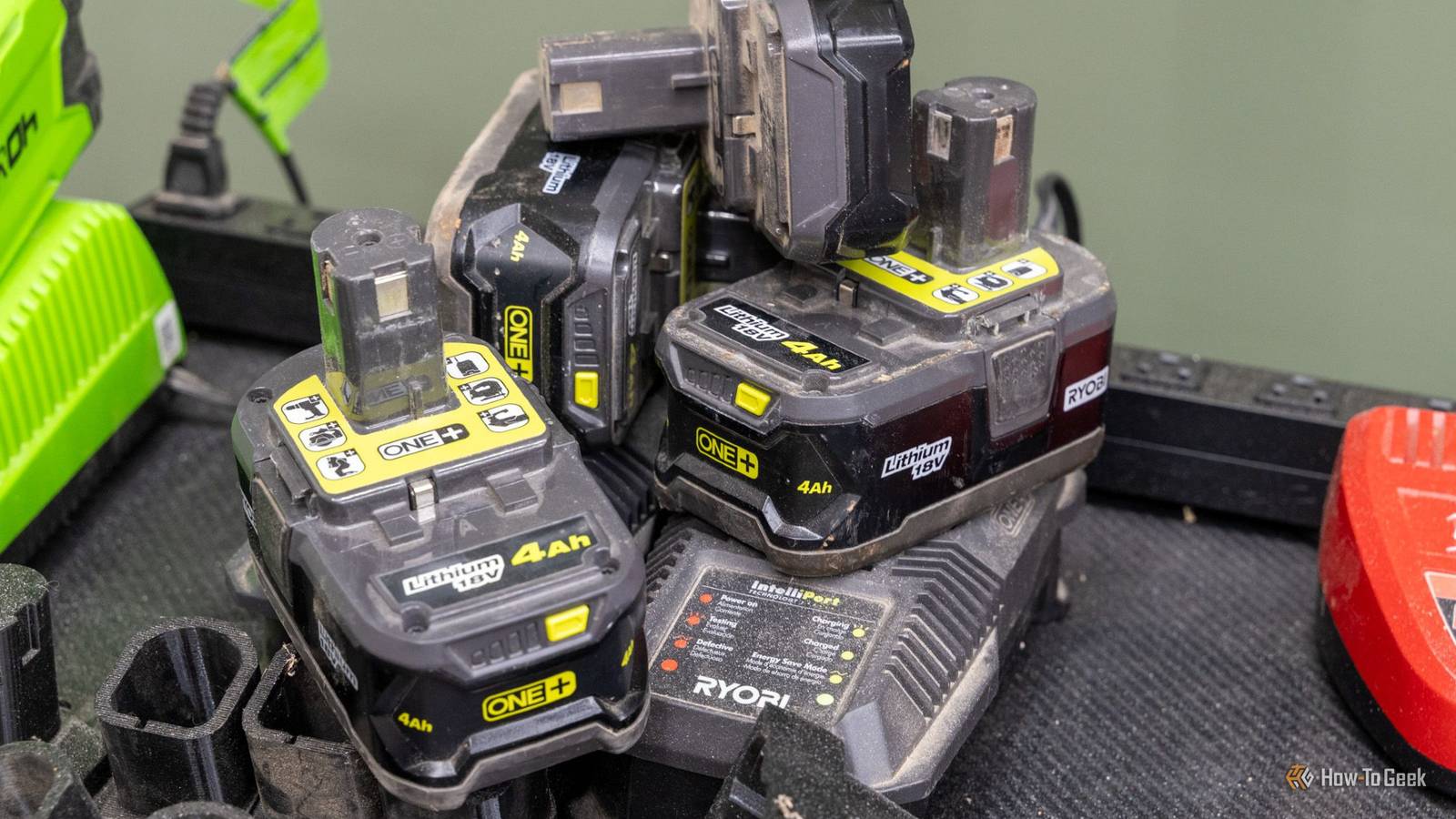
Published Nov 24, 2026, 3:30 PM EST Cory Gunther is a senior author and Newsletter Editor at Valnet, covering cutting-edge tech, Android, and more for How-To Geek. He's covered Android, cars, and technology for over a decade. When he's not reviewing the latest gadget, you can find him off-roading in his Toyota truck, fixing said truck, or doing something outdoors with friends and family. He's covered CES, SEMA, and MWC and reviewed countless phones, TVs, speakers, EVs, e-bikes, and more. Before Valnet, Cory worked for GottaBeMobile. His writing has also appeared on SlashGear, InputMag, and AndroidCentral. He's written over 9,000 articles. Ryobi is one of the most popular power tool brands, especially among DIYers, and many of us eventually end up owning way more battery packs than we ever actually utilize. Instead of letting them collect dust in the garage, put those Ryobi 18V or 40V batteries to work around the house, at a campsite, on a DIY project, or during your next power outage. With all the Home Depot sales and buy-one-get-one battery promos, I've slowly amassed a large arsenal of battery packs. I try to rotate between my more than a dozen batteries, but it gets difficult. Instead, I've slowly bought several Ryobi accessories and gadgets that take advantage of them. Here's how you can put them to good use. Charge your phones and have backup power Ryobi's Power Source Chargers are truly versatile Credit: Ryobi Personally, the best way to get the most out of all my Ryobi battery packs, besides attaching them to a power tool, is to turn them into on-demand power for emergencies, camping, and other scenarios. Your favorite lime-green tool company sells an 18V ONE+ 200W Power Source and Charger that'll work with all your regular 18V ONE+ battery packs, as well as a larger 40V 300W Power Source. It's basically a battery charger that doubles as a charging dock for phones and other gear in the garage, and you can also take it anywhere and use it as a power bank with a Ryobi battery attached. For example, I recently bought a 300W 40V power source, which has a 100W USB-C port, a 15W USB-C port, USB-A, a 120V AC outlet, and a built-in LED light. It's the ideal accessory for emergency power outages. Not only does this charge my 40V battery when it's not in use, but it also sits on my workbench, letting me recharge my phone with less clutter and fewer outlets. I recently used it to run my Wi-Fi router when the power went out, and it worked great for a few hours. The 18V model isn't quite as powerful, but either model would be great in a pinch. I plan on taking it camping quite a bit once the weather warms up early next year. Wild projects like a DIY go-kart Build anything you can imagine Credit: Cory Gunther / How-To Geek If you browse Reddit or other forums long enough, you'll find a few people doing truly amazing things with extra power tool battery packs. We've seen Dyson vacuum owners using Milwaukee battery packs, or DIYers turning 18V ONE+ battery packs into power sources for kayaks or homemade go-karts, makeshift e-bikes, andmuch more. My neighbor across the street bought one of those remote-controlled cars that a child can sit in; only it was completely broken and had a dead battery. Eventually, he figured out what was wrong and 3D-printed a few motor parts, a battery housing, and wired in two Ryobi 18V battery packs (in parallel) to 36V. After some trial and error, it works great. Now, it's faster than most you can buy in the store, and he was able to completely repurpose something that would otherwise end up in the garbage. That's one way to use extra Ryobi battery packs, and it's easier than hunting down whatever battery came in the car, not to mention the proprietary charger. Sometimes I wonder why Ryobi (or any brand, for that matter) doesn't partner with other brands or products and let them take advantage of these powerful lithium-ion battery packs. Several years ago, Ryobi actually offered an unbranded RC truck that used its 18V packs. That doesn't happen anymore, and it's a bummer. Power fans, lights, and vacuums Ryobi's ecosystem is vast One of the many reasons people choose Ryobi, aside from being affordable, is the vast ecosystem of "tools" outside your regular drills, drivers, saws, and sanders. While I absolutely love my Ryobi hammer drill, and my high-torque impact wrench is essential for working on my truck, I actually don't use my power tools on a daily or weekly basis. And I have a feeling most homeowners are in a similar boat. But what I do use constantly, at least multiple times a week, is my Ryobi LED work light, garage fan, or 5-gallon bucket-top shop vac to clean out the car. My 18V Bluetooth speaker gets used all summer long, and that's also when I use those otherwise ignored 2Ah battery packs. I have Ryobi's popular 4-inch clamp fan in the car, paired with a 2Ah battery, to keep the kiddo cool in the back seat. That same fan goes everywhere with us as a stroller fan, to the beach, or any other outdoor adventure. And so much more If you're a Ryobi enthusiast, you already know about the company's endless products. At this point, any 18V ONE+ battery can power 380+ products, tools, or accessories, and that list is growing all the time. If you're a newcomer who just bought your first few tools or combo kits and now has extra batteries, you'll love everything Ryobi has to offer. Ryobi is quietly one of my favorite brands for random camping gear, like bug zappers, lights, inflators, or portable power. And it has a pretty great car jump-starter that's always in my truck in case I'm stuck with a dead battery. Those are just a few examples, but there are dozens of things you can buy the next time you're wandering through Home Depot.
You own too many Ryobi power tool batteries. Here are 3 ways to put them to good use
Full Article
Original Source
Read the full article at Howtogeek →KhanList aggregates and links to publicly available news content. We do not host full articles from third-party sources. Always verify important information with original sources.