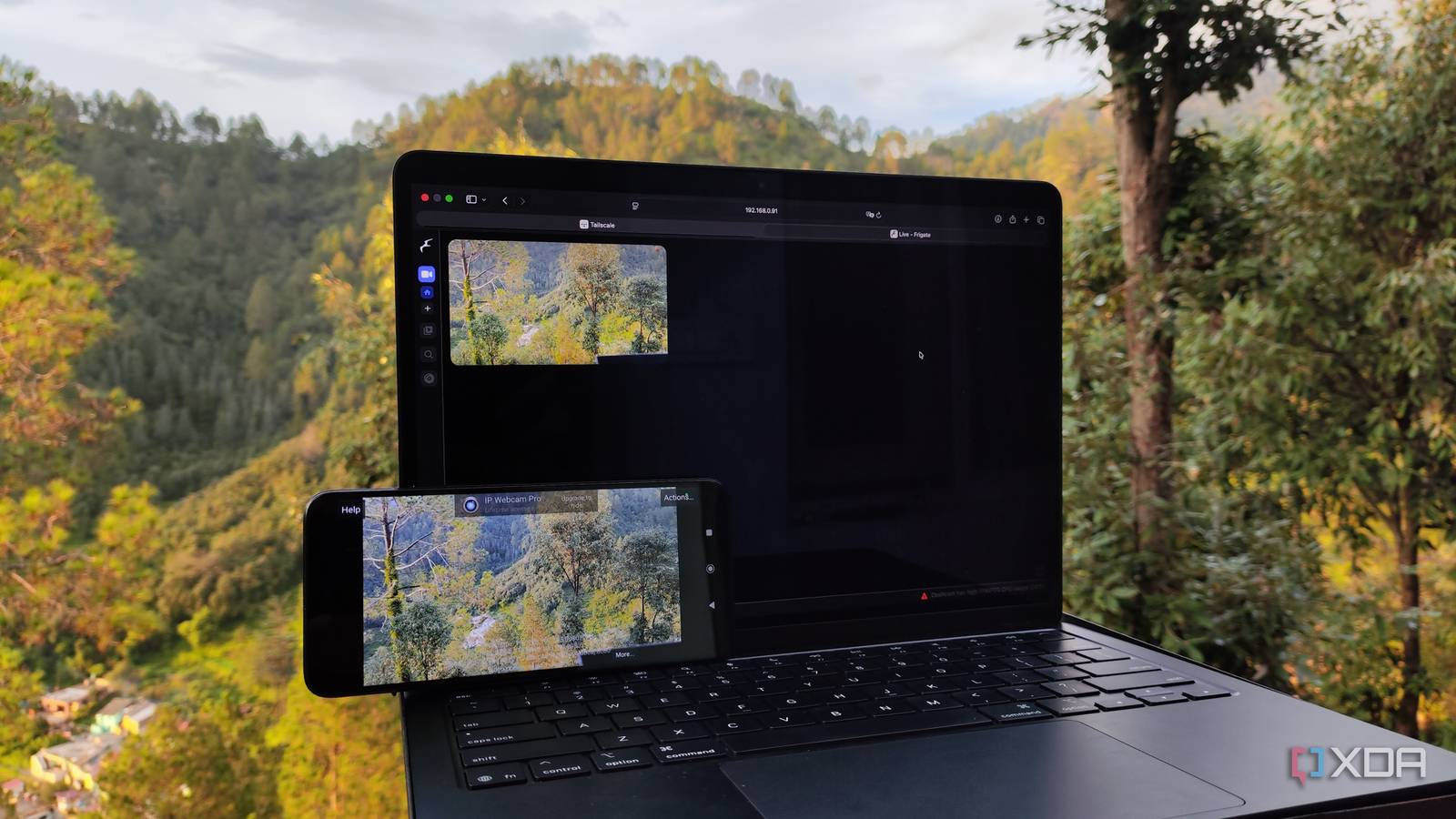
Published Aug 15, 2026, 12:15 PM EDT Dhruv Bhutani has been writing about consumer technology since 2008, offering deep insights into the personal technology landscape through features and opinion pieces. He writes for XDA-Developers, where he focuses on topics like productivity, networking, self-hosting, and more. Over the years, his work has also appeared in leading publications such as Android Police, Android Authority, CNET, PCMag, and more. Outside of his professional work, Dhruv is an avid fan of horror media spanning films and literature, enjoys fitness activities, collects vinyl records, and plays the guitar. When most people think of setting up a home security system, investing in an NVR (Network Video Recorder) comes to mind. With 4K streams and multiple cameras, it feels like an essential requirement to store mountains of data. So when I was looking at upgrading my home surveillance system, it was predictably something I was keeping an eye out for. That's until I discovered Frigate. It turns out there's a better way to handle security footage. After putting it through a thorough test, I can confirm that Frigate is the self-hosted solution that does practically everything better than an NVR, and that's what you need to consider. Here's why. What is Frigate? Frigate runs on your choice of hardware The name might not make it obvious, but Frigate is an open-source network video recorder software built for modern needs. That means it can take camera feeds from most popular brands of security cameras and add intelligence to them using AI-powered detection. We've seen that before with other brands of security cameras. However, the difference is that those cameras lock you into a proprietary ecosystem. Not the case here. Instead of passively recording hours of empty hallways or a street across your home, Frigate can detect and tag motion, people, cars, pets, and more. Better still, all of this detection runs on your local hardware without relying on the cloud. Your footage remains private, as does the tagging metadata on top, and you get to decide how long this data is stored. Unlike a traditional NVR, Frigate doesn't require a proprietary box or any sort of vendor lock-in. You can run it on anything from a mini PC paired with a Coral TPU card, a NAS, or a spare server. The performance scales up based on the hardware you have on hand. Moreover, installation can be as simple as spinning up a Docker container. Once you do, the app is easily accessible over a clean browser-based interface that can even be installed as a progress web app for quicker access. An NVR can lock you into specific hard drive sizes or the number of hard drives, with an upgrade requiring a brand-new box. That's not the case here. Since you build the system that Frigate runs on, the sky is the limit. You decide where recordings live, whether it is a local SSD or a big NAS box. You can even tap into cloud storage if you want. Frigate leaves that up to you. Unlike a traditional NVR, Frigate is built ground-up to be flexible in your choice of cameras, storage, and more, which gives it a significant leg up. Why Frigate is better than an NVR Smart detections, Home Assistant integration, and so much more If the wide choice in hardware selection hasn't made it clear why Frigate is better than an NVR, there are several other advantages, too. For me, the biggest is smart detection. Most NVRs are just straight-up recorders. Some modern solutions offer smart detections. Frigate offers that, and more, and does it better. For example, Frigate can be configured to record only when a person or vehicle is detected, store a minute's footage before the detection, and mark those events on the timeline. This makes reviewing footage significantly faster. Since Frigate integrates with go2RTC, it can make streaming and live-viewing significantly smoother and faster using WebRTC. That standardized approach is a significant leg up over the stutters and lags that you often get with NVRs. Similarly, Frigate opens up a world of options as far as storage is considered. Recording 24/7 is obviously an option, but you can also set rules to store only motion-detection clips or set rules for how long clips and snapshots are stored. Ten days of recordings, or keep recording till your drives are full. With Frigate, you get to decide. Then there's the integration with Home Assistant. If you're building a smart home with Home Assistant, Frigate's deep tie-in with Home Assistant allows you to create automations based on detections. Lights can turn on when a person walks up to your door; Home Assistant can even send a notification on your phone when Frigate detects a package on your porch. This kind of deep integration isn't possible with traditional NVRs. Finally, back on the topic of hardware. You might think that you will need a high-end computer to take advantage of Frigate's capabilities. However, it is easy to accelerate its capabilities using an inexpensive Google Coral TPU accelerator or by pairing it with an inexpensive Nvidia or AMD graphics card. The flexibility on offer means that you can scale your hardware as your needs and the number of cameras grow. Frigate makes traditional NVR systems obsolete It's hard to go back to a traditional NVR once you've tasted the capabilities of Frigate. They are locked down, usually overpriced due to the proprietary lock-in, and rarely integrate with a broader smart home ecosystem. Frigate gives you an alternative. And a very good one at that. Flexibility, intelligence, and privacy — these are the key elements anyone wants in a surveillance system, and few commercial products do it better than Frigate. So, if you are setting up a home security system, skip the bulky NVR and invest in a self-hosted Frigate system instead. The flexibility and control make it worth the effort.
You don't need an NVR for your home security system, you just need Frigate
Full Article
Original Source
Read the full article at Xda-developers →KhanList aggregates and links to publicly available news content. We do not host full articles from third-party sources. Always verify important information with original sources.