
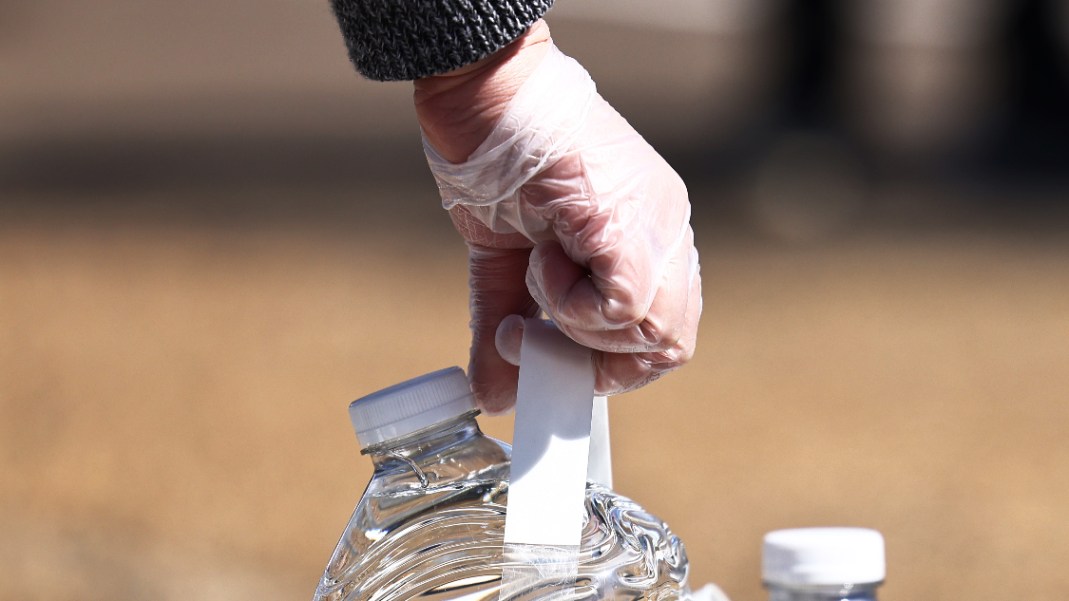
A volunteer grabs a gallon of water at a water and food distribution drive on March 7, 2021 in Jackson, Mississippi. Michael M. Santiago/Getty Get your news from a source that’s not owned and controlled by oligarchs. Sign up for the free Mother Jones Daily. On Friday, the Fifth Circuit Court of Appeals affirmed the dismissal of a lawsuit against the city of Jackson, Mississippi, which alleged the city knowingly let residents drink lead-contaminated water. The lawsuit, first filed in 2022, says the contamination violated Jacksonians’ constitutional right to bodily integrity. Donald Trump-appointed judge Kurt Engelhardt disagreed. “The Constitution does not provide redress for every governmental wrongdoing,” Engelhardt said. “Defendants’ actions allegedly deprived Plaintiffs of clean water and guileless information. These deprivations, while grievous, do not infringe upon any deeply rooted constitutional right.” That may be true in Mississippi—but on the state level in at least nine US states, and in more than a dozen other countries, clean drinking water is in fact a protected right. In countries including Uruguay and South Africa, a right to clean water is enshrined in the constitution. New York’s state constitution, as of a 2021 amendment, states that “each person shall have a right to clean air and water, and a healthful environment.” So too in Massachusetts, where “the right to clean air and water” has been constitutionally protected since 1972. But according to the Fifth Circuit ruling, the US constitution is too narrow for such a claim. The Jackson plaintiffs alleged that their city government deliberately withheld information about the water’s toxicity, and exacerbated the problem through a series of boil-water notices—a practice that can eliminate some bacterial contamination, but also concentrates lead in water. Engelhardt stated there is no “constitutional right to truthful information from officials during a public health crisis.” Jackson is more than 80 percent Black and has a poverty rate that is more than double the national average. The city’s water system has long been in dire need of upgrades. In 2015, officials from the Mississippi State Department of Health found elevated lead levels in the water supply. Instead of immediately informing citizens, they remained silent about the issue for six months, according to reporting from Grist, while residents continued drinking toxic water. EPA officials ran a series of tests in 2020 and found “persistent and concerning violations” of water safety policy, including leaks, corrosion, and high lead levels throughout the system. But no city, state, or federal agencies fixed the problem. Meanwhile, people including Jackson plaintiff Priscilla Sterling continued drinking water with unsafe levels of lead. According to the 2022 lawsuit, several of Sterling’s children have since been diagnosed with lead poisoning, which can cause permanent brain damage. A quarter of Jackson’s residents are children, who are particularly vulnerable to the life-long effects of lead poisoning. The Fifth Circuit ruling comes as the Trump administration moves to weaken clean-water-related protections. Also on Friday, Trump’s EPA released a supplemental rule to further dilute the Clean Water Act, quickly condemned by environmental watchdogs. “The administration is clearly struggling to craft a rule that will hold up in court while satisfying their donors’ desire to effectively scrap these protections wherever possible,” said Jim Murphy of the National Wildlife Federation. “One thing is clear: If we don’t protect our streams and wetlands, the cost of dirtier drinking water and increased flooding will flow downstream to households at a time when most Americans are living paycheck to paycheck.”
You Don’t Have a Right to Safe Drinking Water, US Court Rules
Full Article
Original Source
Read the full article at Motherjones →KhanList aggregates and links to publicly available news content. We do not host full articles from third-party sources. Always verify important information with original sources.