
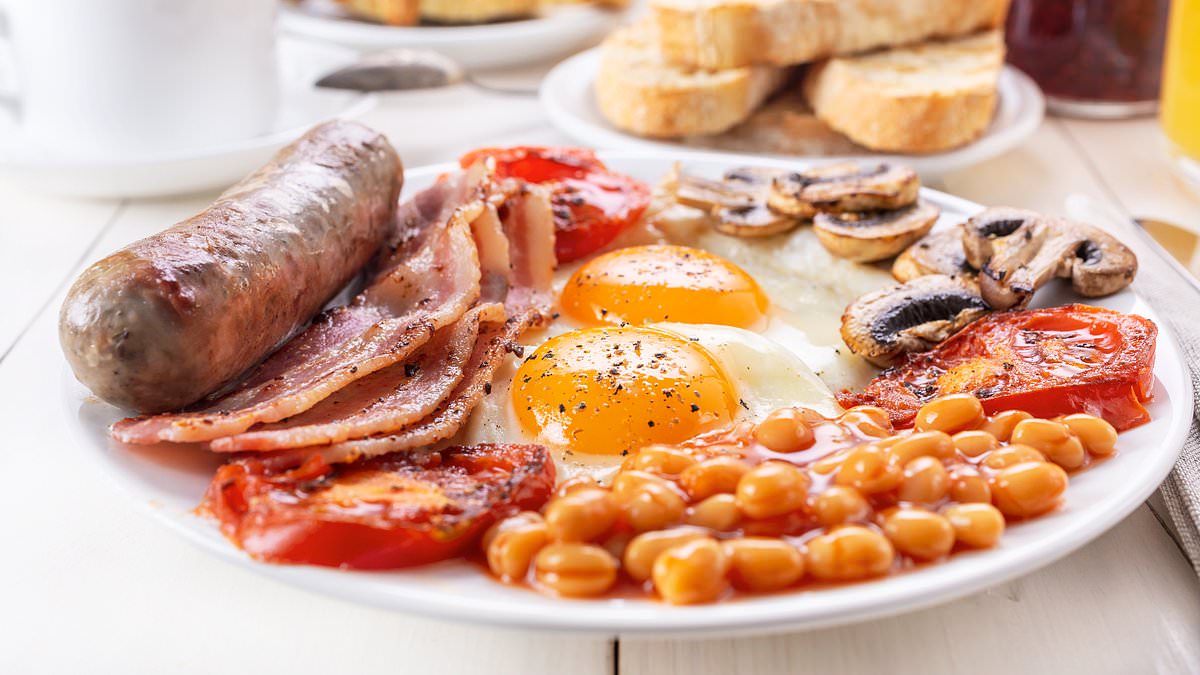
Sizzling bacon, a crisp-edged fried egg and a succulent sausage: a full English breakfast is one of life's great pleasures. But it's no secret that the meal is not the healthiest of choices. In its entirety - complete with an egg, 1 sausage, 3 bacon rashers, tomato, toast, baked beans and black pudding - you're looking at around 715 calories and a third of your daily limit of saturated fat.But Google 'healthy fry-up' and you'll find a generous helping of disappointment. With bacon banished, the banger swapped for tofu and the fried egg traded for a joyless egg-white omelette, it's hardly worth getting out of bed for.As a nutritionist, I take a different view. Most of us aren't tucking into a full English every morning, so this weekend breakfast doesn't need completely reinventing.That said, there are a few simple ways to make it better for your health without diluting any of the deliciousness. In fact, some of the most effective nutritional upgrades are so subtle you won't notice any difference at all. Strategic tweaks will trim back saturated fat and calories while boosting your intake of fibre, iron and vitamin D.Here's how to make your fry up work harder for your health. Studies suggest that half the nation view a full English as the best way to start the day - and nutritionist Angela Dowden says there's a simple way to make the meal good for your healthIt's fine to fry...but use a different oil One of the easiest upgrades happens before any food reaches the pan.My top frying oil choice for a full English is rapeseed oil.It has a relatively neutral flavour while containing roughly the same amount of heart-healthy fats as olive oil - and it is lower in saturated fat. It also contains good amounts of alpha-linolenic acid (ALA), an essential omega-3 fat.Inexpensive oil labeled just ‘vegetable oil’ is often 100 per cent rapeseed oil, which you can check by reading the ingredients list. However, a cold-pressed variety will get you higher levels of naturally occurring antioxidant compounds, such as polyphenols and vitamin E.The trick is not to pour directly from the bottle. Measure the oil with a teaspoon and use only as much as you need to lightly coat the pan.Start with a couple of teaspoons and add more only if needed. You'll still get plenty of browning and flavour, without turning breakfast into an oil slick.You don't have to choose poached egg over fried Despite decades of bad press, a fried egg is rarely the nutritional problem in your full English. A large egg contains only around 70 calories and provides about 8g of high-quality protein (about half the amount you should have with every meal), B vitamins that help the body release energy from food, and vitamin D, which supports healthy bones and immune function.If you're trying to lighten up your fry-up, the issue is rarely that the egg is fried, but how much fat you use to do it.Stick to measuring oil as per above and you'll save yourself at least 50 cals. Swap a sausage for a black pudding sliceBlack pudding is one of the fry-up foods I find myself defending often.Traditional Lancashire-style black pudding has oats and barley as filler ingredients rather than high quantities of pork fat, providing much-needed fibre to keep you full and protect against bowel cancer.For women especially, black pudding is beneficial because its staple ingredient, pig's blood, is hugely rich in haem iron—a type of iron that the body absorbs readily and that women are more likely to lack.For instance, a slice of The Bury Black Pudding Company black pudding—widely available in major supermarkets—provides around 6.8mg iron (46 per cent of what women and girls should have daily), but only 69 calories and 0.5g saturated fat.Compare that to a grilled pork banger, which can pack around 140 calories, 4g of saturated fat and is light on iron.Given how many women struggle with fatigue and lack of focus due to low iron levels a slice of black pudding to replace one sausage on your plate makes good sense.Upgrade your mushrooms (and sneak in a green)An easy nutritional win is to choose vitamin D-enriched mushrooms. Look for packs explicitly labelled as a source of vitamin D, such as Tesco Chestnut Mushrooms or M&S Chestnut Mushrooms. They taste and cook exactly the same but have been exposed to UV light while growing, which triggers them to naturally produce the vitamin. Together with the egg on your plate, they'll get you close to around two-thirds of your daily vitamin D needs—a valuable contribution given most people struggle to get enough.For extra goodness when you're sauteeing mushrooms in the pan, throw in a large 80g handful of fresh spinach during the two minutes of cooking. It wilts down readily, blends straight into the mushrooms and sneaks an extra vegetable serving into your breakfast with zero fuss.The tomato trick that upgrades your baked beansIf the half tomato with your fry-up usually ends up sad and uneaten on the side of your plate, a smarter move is to stir a teaspoon of concentrated tomato purée directly into your baked beans as they heat through.Baked beans are already a great breakfast ingredient as they supply bowel-friendly fibre and plant protein, but adding tomato purée sneaks in a few extra benefits.Tomato purée delivers a concentrated dose of tomato carotenoids— protective plant antioxidants that support heart health and are easy for the body to absorb.It blends into the baked bean sauce without changing the classic flavour. UK health chiefs advise Britons to eat no more than one 70g serving of red meat a day due to the link with bowel cancer and heart problemsBe choosy about your baconGood news: the bacon survives. But back bacon is generally a better choice than streaky, as it tends to contain less cholesterol-raising saturated fat. Rather than piling on extra slices, focus on quality over quantity. Two thick rashers of unsmoked back bacon trimmed of excess fat are more satisfying than three or four thin, streaky ones.I also tend to favour nitrite-free bacon where possible. Processed meats are linked to a higher risk of bowel cancer, and while nitrites aren't the whole story, they're one of the reasons these foods remain under scrutiny. Choosing a nitrite-free option won't suddenly make bacon healthy, but it does remove one of the potentially risky additives from your breakfast. How does a healthy full english compare to a regular one? Regular HealthyCalories 715 595Saturated fat 11g 6.7gSugar 8.8g 8.5g Salt 4.1g 4gFibre 8.9g 9.7gFruit & veg 2 portions 3 portions READ MORE: What's the healthiest packet of crisps? Dietician reveals why lentil chips are worse for you than Walker's - and the best bag to pick
You CAN have a healthy fry up - my six tiny tweaks to your full English will halve the fat, save hundreds of calories and you'll barely notice the difference NUTRITIONIST ANGELA DOWDEN
Full Article
Original Source
Read the full article at Dailymail →KhanList aggregates and links to publicly available news content. We do not host full articles from third-party sources. Always verify important information with original sources.