
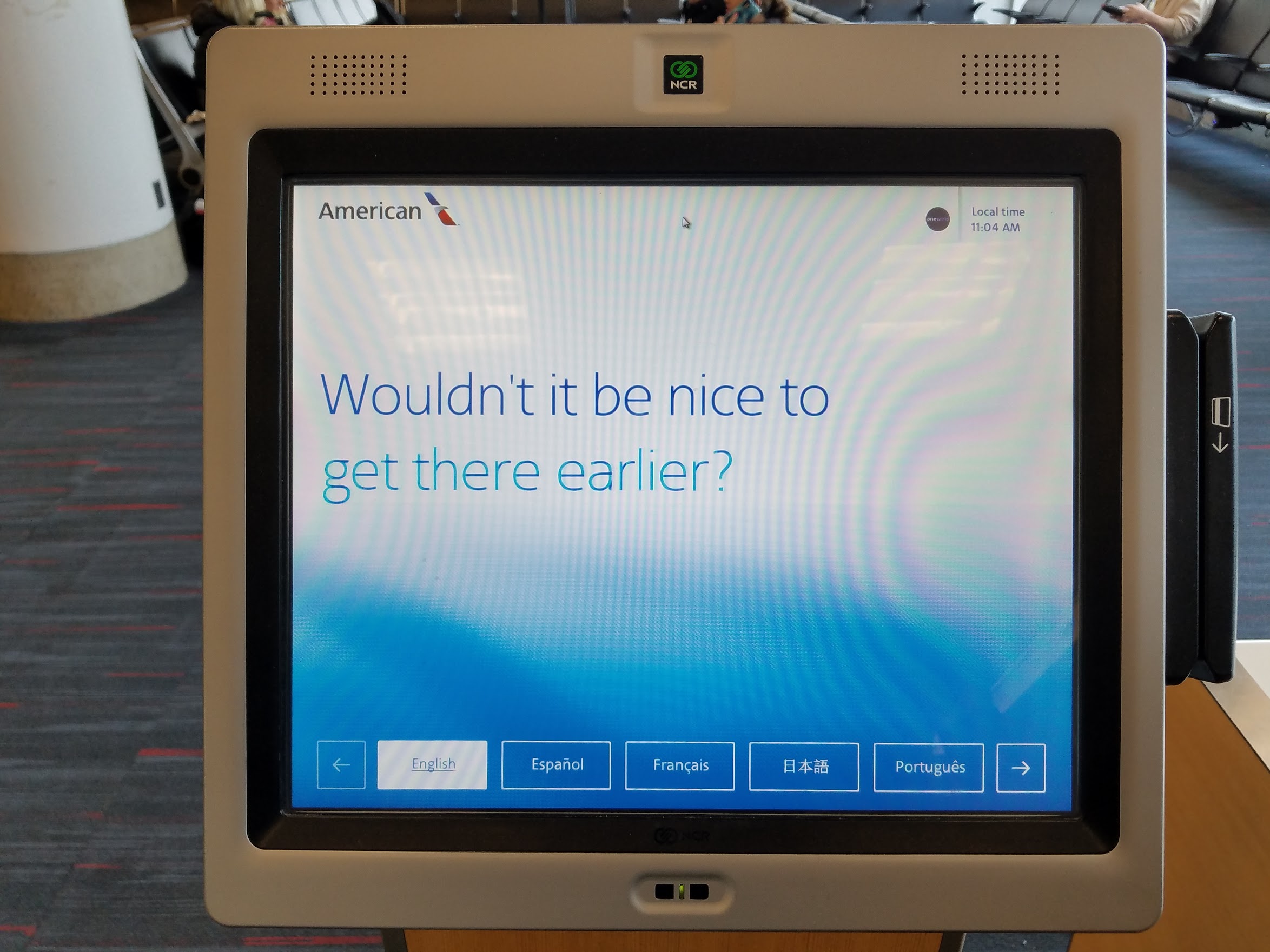
You bought the ticket. The airline has your name, your money, and in most cases your seat assignment. Why do you still have to check in? If you don’t check in far enough in advance of the flight, they’ll remove you even though you have a ticket. Sometimes they won’t even let you check in online. Delta started automating this task in 2017. Airlines take it further and it should be the default. Any required ‘check in’ should be handled automatically. There are processes that get triggered at an airline by check-in, but there’s no reason airlines should rely on passengers initiating those by pressing the check-in button. Check-in made obvious sense when it meant physically presenting yourself at an airport counter and the airline was relying on paper records presented by the passenger, which might then be used to settle interline accounting with another carrier. Mandatory telephone reconfirmation of your reservation was even once a thing! Thirty years ago airline automated phone systems were still telling people they no longer needed to call to re-confirm. Online check-in separated that process from showing up. Alaska Airlines introduced internet check-in in 1999. (They were also first to sell tickets online in 1995.) When you’re checking in a day in advance from your phone the airline doesn’t actually know you’ll arrive at the airport in time. An airline’s departure control system handles passenger acceptance, seats, boarding passes, baggage, document checks, and boarding records. Passengers often get added to upgrade lists at check-in, handled as a separate system from advance upgrades. But none of this requires passengers to initiate a check-in. Check-in helps an airline estimate how many ticketed passengers will show up. A check-in cutoff also gives it a point at which it can release seats and accommodate standbys while still departing on time, and since check-in is a regulatory standard airlines can failure to do so to deny overbooking compensation.. Sometimes people argue that weight and balance requires check-in, but while passenger and bag counts matter a flight’s load calculation has to reflect the people and load actually carried not those who checked in the day before. While 24 hour check-in is pretty standard, there’s nothing magic about that. easyJet opens check-in 30 days before departure. Checking in doesn’t inherently make a refundable ticket nonrefundable. Generally tickets can be cancelled for credit, or refunded if applicable, up to a certain number of minutes prior to departure. Government checks can begin long before check-in. Under the Secure Flight program, passenger information is normally transmitted 72 hours before departure, with provisions for later bookings and changes. Delta announced automatic check-in for eligible domestic travelers using its app in October 2017. Passenger still had to acknowledge restricted items rules in the app. But they automated the routine transaction while keeping exception handling. Lufthansa offers automatic check-in on eligible itineraries. LATAM does it for domestic bookings made directly with the airline. U.S. rules require dangerous-goods information at boarding pass issuance and acknowledgment in self-service workflows. That may be the strongest argument for ‘check-in’ and airlines aren’t going to want to add time with each passenger at the gate. It’s not necessarily a good reason, but it’s a legally-required one. At a minimum airlines should: Make the boarding pass appear automatically. Validate the ticket and run the required checks in the background. Issue the pass when the passenger is eligible, assign seats under the airline’s normal policies, and update the pass when something changes. Don’t send a reminder asking me to start work the airline can already do. Ask for whatever is actually missing. Need passport details, a visa, or an agent to examine a document? Make that clear as soon as the airline identifies the issue. Put required safety acknowledgments in the workflow to pull up the boarding pass for travel. Trigger airport lists automatically. Put eligible passengers on upgrade lists, and carry over any standby requests. That shouldn’t require triggering by the passenger. Publish deadlines for the things passengers actually have to do. Bags must be dropped by a certain time. Unresolved document checks must be completed. Passengers must reach the gate before boarding closes. Once the relevant deadline passes, the airline can release the seat under its rules. None of this needs to be related to a check-in trigger. An airline could start by automating its existing check-in transaction. Connections, partner-issued tickets, and document problems would still generate exceptions. Passengers should also retain a simple way to get a paper boarding pass. When Alaska removed check-in kiosks and told passengers to print boarding passes at home or use their phones, it shifted work onto travelers who still needed to check in. A passenger with a dead phone should still be able to walk up, identify themselves, and get a paper pass without being penalized for failing to perform an unnecessary online chore. Topics on this page
You Already Paid For Your Flight — Airlines Should Stop Making You ‘Check In’ To Use Your Ticket
Full Article
Original Source
Read the full article at Viewfromthewing →KhanList aggregates and links to publicly available news content. We do not host full articles from third-party sources. Always verify important information with original sources.