
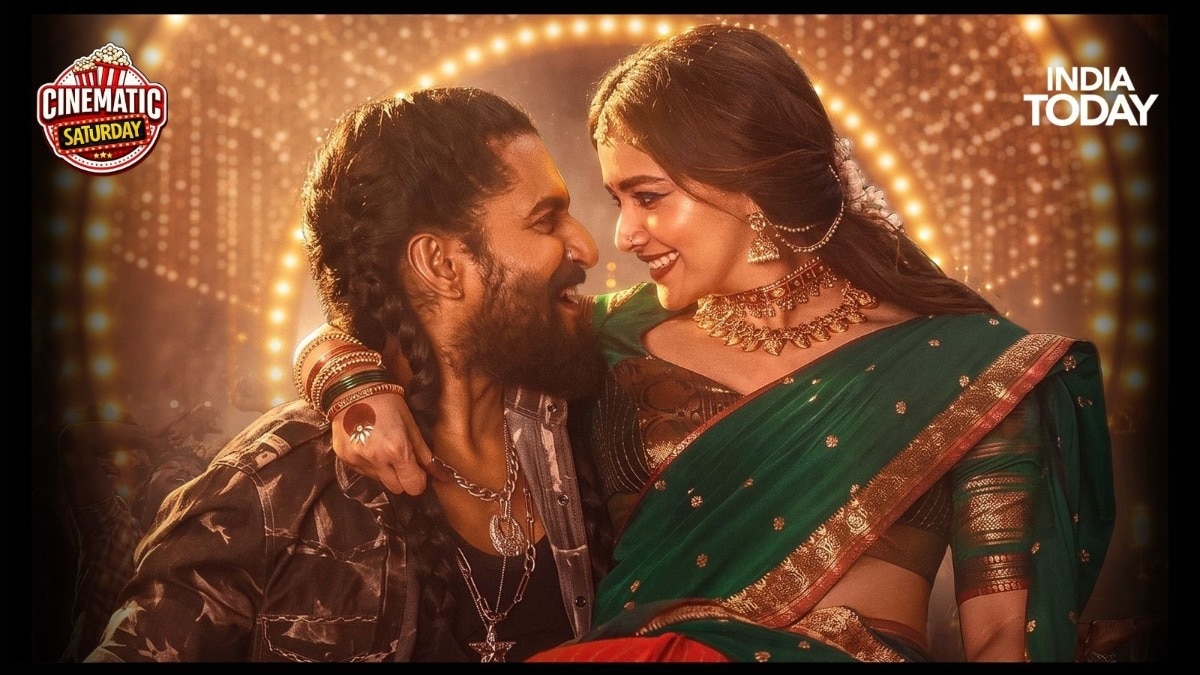
Telangana folk music is having a moment, and not everyone is comfortable with it. From Ranu Bombai Ki Ranu, the viral independent Telangana folk song written and sung by Ramu Rathod along with singer Prabha, hurtling towards 900 million YouTube views, to composer Anirudh Ravichander pulling actor Nani onstage in Dallas to unveil The Paradise’s second single Yeshanagula, a sound once dismissed as regional filler has become impossible to ignore. It is loud, viral, and firmly at the centre of Telugu pop culture. And, predictably, its growing popularity has brought out a familiar chorus of internet users trying to mock, dilute, or question its cultural identity.Yeshanagula, from director Srikanth Odela’s period action drama The Paradise, crossed 30 million views within a day and has since crossed 46 million views on YouTube. The song also took the top spot on YouTube Music’s trending chart in India. For a sound that spent decades being treated as filler, this is not a modest win. It is a rout.But scroll through the replies or search the hashtag on X, and the celebration comes with a familiar undertone. Some users say they cannot understand a word, compare the song to Bhojpuri tracks, joke about how uncultured it sounds and looks, or claim Telangana folk has no identity without Andhra influence. The same pattern followed The Paradise’s first single, Aaya Sher, and other Telangana-rooted films before that. A distinct Telangana sound finds a wider audience, only for a vocal slice of the internet to immediately try to diminish what that success represents.Worth stating upfront: this isn't Andhra versus Telangana. Plenty of people from Andhra, Kerala, Tamil Nadu, Hindi-speaking states, and beyond are dancing to the song and celebrating it. The trolling comes from a specific, loud minority, not an entire community. But the instinct behind it is familiar enough to raise a bigger question: why does celebrating Telangana's cultural identity so often trigger an urge to mock or dilute it? What the trolling actually sounds likeThe criticism keeps falling into the same patterns. There's the comprehension complaint, treating an unfamiliar dialect as unintelligible and demanding subtitles for Telugu. There's the genre shaming, where "Bhojpuri" is weaponised as a lazy insult rather than an accurate description. And then there are claims that Telangana folk has no identity of its own and only stems from Andhra, which skips over centuries of independent, rooted performance traditions such as Oggu Katha, a traditional narrative singing art form, and Chindu Bhagavatham, a folk theatre art form performed predominantly by the Chindu Madiga community.Then there's a trend that gives the game away: dubbing Telangana slang over popular movie clips and turning them into jokes. Following the release of Yeshanagula, this has once again gone viral, with scenes from director S.S. Rajamouli's epic period blockbusters Baahubali and Magadheera being given Telangana-language voiceovers for comic effect. For most people, it's harmless fun. But the trend reveals something underlying: the dialect works fine for a labourer or a villain, exactly how it's been written for decades, but placed in the mouth of a king or a warrior, it becomes comedy. That's not a comment on the language. It's a comment on who the language is allowed to represent. Academic research directly backs up that history. Media scholars Sathya Prakash Elavarthi, Associate Professor in the Department of Communication at the University of Hyderabad, and Vamshi Vemireddy, a cultural and film studies researcher, explored this dynamic in their published paper, Telangana and Language Politics of Telugu Cinema. They analyse how Telugu cinema repeatedly used Telangana speech to construct characters as comic, uncultured, or villainous.Their research highlights prominent film examples from cinema history. In director Jandhyala’s 1989 comedy film Jayammu Nischayammu Raa, actor Kota Srinivasa Rao plays a Telangana-speaking character whose scenes are accompanied by the braying of a donkey for comic effect. Similarly, in director Y. Nageswara Rao’s 1992 film Mondi Mogudu Penki Pellam, actor Vijayashanti plays a rural housewife who speaks in Telangana slang, which is used for comic effect.Their larger argument is blunt: Telugu cinema's dominant conventions historically stereotyped Telangana language and culture as lower and uncivilised. The point isn't that every Telangana meme today carries that history consciously. It's that the joke has a deep history.The clothes are having the same argumentThere's a second front that runs on the same logic: styling. Actor Nani's character, Jadal, in The Paradise, wears long braids, a heavy beard, flashy shirts, heavy gold chains, and tinted glasses. The film is reportedly set in the 1980s Secunderabad and follows an oppressed community denied basic rights, with Jadal emerging as a leader in its fight for recognition.Once the film's promotional stills landed, some viewers read the whole package, including the braids, the raw dialect, and the rustic backdrop, as Telangana being inherently uncultured.Authenticity and stereotype can look alike from a distance, and audiences often default to reading it as the latter when the community on screen is from Telangana. It's an old, unspoken double standard: a lungi and a dhoti are functionally similar garments, yet one has historically been read as labourer's wear and the other as fit for an executive.There's genuine sociological vocabulary for this. American sociologist Thorstein Veblen described it over a century ago as conspicuous consumption: people shut out of visibility often dress loudly because visibility itself is the point, making it a way of announcing arrival. Jadal's look in The Paradise, much like actor Allu Arjun’s character Pushpa Raj in Pushpa franchise with his flashy printed shirts, silver chains, and signature body language, is a textbook cinematic version of this logic.In contemporary Indian digital space, this instinct now carries a label that functions almost entirely as a classist slur: chapri. The term has drifted online into shorthand for someone seen as trying too hard through unconventional clothes, bright dye jobs, accessories, or mannerisms. So when The Paradise's marketing gets mocked as chapri alongside Yeshanagula, it's the exact same historic prejudice in a modern outfit.This didn't start with a hashtagNone of this is new. When the Telugu film industry consolidated in Hyderabad, the capital, financial power, and studio control came largely from coastal Andhra and Rayalaseema. Academic work on Telugu cinema, including Elavarthi and Vemireddy's paper, traces how that economic dominance hardened into a linguistic hierarchy. Their research argues that because the industry was dominated by filmmakers and producers from the coastal districts, Andhra’s dialect became the industry's default standard for the voice of the hero, the heroine, and the romantic duet.Meanwhile, Telangana Telugu was handed two primary roles for decades: the villain, used to denote threat, brutality, or criminality; and the comic relief, used to signal ignorance, buffoonery, or lack of refinement. Neither role allowed the dialect to carry dignity, romance, or heroics. As the linguist Max Weinreich famously observed, "A language is a dialect with an army and a navy." Cultural prestige has little to do with the intrinsic quality of a dialect and everything to do with who holds economic and media power.The shift that's actually happeningHere's what makes the current backlash feel out of step: the ground has already moved. Over the past decade, a new generation of filmmakers rooted in Telangana, including Sekhar Kammula (Fidaa), Sandeep Reddy Vanga (Arjun Reddy), Srikanth Odela (Dasara, The Paradise), Venu Yeldandi (Balagam), and Tharun Bhascker (Pelli Choopulu), have placed the dialect at the emotional and heroic centre of mainstream Telugu cinema. They didn't dilute the accent for broader acceptance; they trusted the audience to meet them where they were. Director Tharun Bhascker highlighted this exact linguistic inertia in an in-depth interview with film portal Idlebrain, where he reflected on how regional accents were historically suppressed in Telugu film writing: "We are playing it safe with neutral Telugu which has to be spoon fed to everyone,” he saidActors from the region have echoed that sentiment. As reported in The Times of India in a 2024 feature on how Telangana dialect moved from punchline to mainstream cinema, actor Vijay Deverakonda recalled how he was initially advised to tone down his accent when entering the industry: "Before the formation of Telangana, the Telangana dialect was often mocked in mainstream Telugu cinema. When I started out, I was even told not to speak it... Now, because of my natural way of speaking, the Telangana dialect is welcomed... It is my dialect, this is how I will always speak," he said. Films like DJ Tillu, Dasara, and Balagam have proven that the dialect is an asset, not a handicap. Outside of cinema, independent folk tracks like Ranu Bombai Ki Ranu have become massive pop-culture phenomena in their own right, generating hundreds of millions of streams on YouTube. Now, Yeshanagula demonstrates that Telangana-rooted sounds and vocabulary can become a national chart-topper on their own terms. So, is Telangana Telugu a joke?No. But the fact that the question persists is revealing. Nobody asks whether coastal Andhra Telugu or standardized literary Telugu belongs in a multi-crore blockbuster, as it is treated as the natural, unquestioned default. Telangana Telugu, even while breaking YouTube records and dominating music charts, is still routinely called upon by internet commentators to justify its presence.The mockery in the comment section isn't proof that Telangana folk music is failing. It is a reaction to the fact that it is winning, and that the old cultural hierarchy no longer holds the screen.- EndsPublished By: T Naga Maruthi AcharyaPublished On: Sep 5, 2026 10:20 IST
Yeshanagula from The Paradise went global. So why is Telangana Telugu still a joke?
Full Article
Original Source
Read the full article at Indiatoday →KhanList aggregates and links to publicly available news content. We do not host full articles from third-party sources. Always verify important information with original sources.