
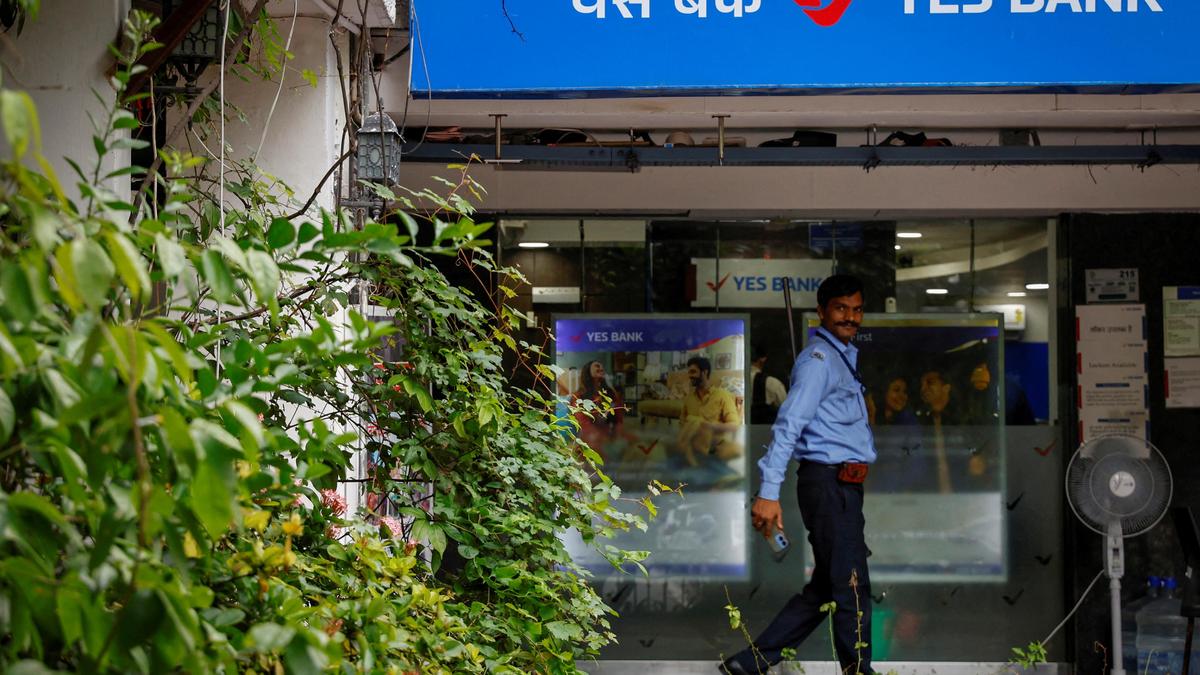
The SC recently upheld the Bombay High Court’s order quashing the 2020 write-down of Yes Bank’s AT1 bonds during the private lender’s rescue. | Photo Credit: Reuters TThe Supreme Court’s (SC) verdict on Yes Bank’s Additional Tier-1 (AT1) bonds could leave nearly 60 lakh small shareholders, along with large investors, bearing the cost of reversing the ₹8,415-crore write-down, analysts and a proxy advisory firm have warned.The SC recently upheld the Bombay High Court’s order quashing the 2020 write-down of Yes Bank’s AT1 bonds during the private lender’s rescue. The Court held that the administrator appointed during the rescue lacked the authority to write down the bonds.The verdict triggered a sharp sell-off in the bank’s shares, which plunged 14.5% on the day, their steepest single-day fall since July 2020. Within a week, the stock had lost 24%, touching its lowest level since 2005.Yes Bank, the Reserve Bank of India (RBI) and the Centre have filed review petitions against the judgment, leaving its ultimate implications uncertain. While bondholders have welcomed the ruling, the bigger question is who will foot the bill for reinstating the bonds.“If the court does not agree to review the order, it will impact the millions of retail shareholders of Yes Bank. This also poses a larger economic question — if a bank has to be rescued through fresh capital, should existing instruments specifically designed to absorb losses remain insulated?” said Shriram Subramanian, Founder and Managing Director of InGovern Research Services.He said the information memoranda governing the AT1 issuances envisaged loss absorption at the point of non-viability. “The underlying logic was that existing capital instruments should bear losses in accordance with their terms before new capital is introduced. Otherwise, the burden of repairing the bank risks being shifted to new investors or public resources,” he added.Independent market analyst Ambareesh Baliga said nearly 60 lakh small investors could be affected, having already borne the brunt of the earlier crisis.“The order was more on technical grounds largely related to the process followed by the administrator and not on the concept of AT1 Bonds which are based on a globally accepted principle,” he said.He warned that uncertainty over who can trigger a write-down and the procedures involved could make it harder or more expensive for banks to raise AT1 capital.Yes Bank estimates that reinstating the bond principal would reduce its core capital ratio by about 250 basis points. Brokerages estimate the post-tax impact at more than a year’s profit.A fresh capital raise now appears imminent. Whether through large investors or a rights issue, existing shareholders could bear the cost through dilution or additional investment.The verdict settled who had the authority to act in 2020. It has left unanswered the more consequential question: who should pay for it today? Published - November 26, 2026 08:49 pm IST
Yes Bank AT1 bond verdict: 60 lakh retail shareholders face ₹8,415-crore bill
Full Article
Original Source
Read the full article at Thehindu →KhanList aggregates and links to publicly available news content. We do not host full articles from third-party sources. Always verify important information with original sources.