
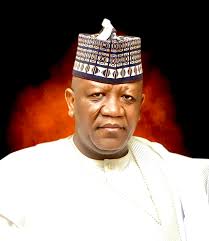
Emma Okechukwu Political appointments are often announced in a single sentence. But the experiences that recommend individuals for consequential assignments are rarely accumulated overnight. That distinction is useful in considering the appointment of Senator Abdulaziz Abubakar Yari as Director-General of the All Progressives Congress Presidential Campaign Council for the 2027 elections. President Bola Ahmed Tinubu formally constituted the campaign council on August 22, 2026, with Yari as Director-General. The appointment immediately elevated the former Zamfara governor to one of the most important operational positions in the governing party’s re-election machinery. Yet, to assess the appointment only from the standpoint of the announcement would be to ignore the political journey that preceded it. Yari’s participation in Nigerian politics stretches back more than two decades. His progression through party administration, legislative politics, executive government and intergovernmental leadership has exposed him to different layers of the political system. He served as Secretary of the then All Nigeria People’s Party in Zamfara between 1999 and 2003, became state chairman of the party, later served as its National Financial Secretary and was elected to the House of Representatives in 2007. Four years later, he was elected Governor of Zamfara State and won re-election in 2015. That same year, his fellow governors elected him Chairman of the Nigeria Governors’ Forum, a position he occupied during a politically significant period in the country’s democratic history. He presently represents Zamfara West in the Senate. Taken together, these are not simply offices to be listed in a biographical sketch. They represent different political laboratories. Party administration teaches organisation. Legislative politics requires negotiation. Governorship demands coordination of institutions, interests and competing constituencies. Leadership of the Governors’ Forum introduces an entirely different responsibility: managing peers who possess their own political mandates, ambitions and convictions. And the Senate is another arena of consensus-building altogether. A presidential campaign director-general operates at the intersection of practically all these demands. The job is considerably more complex than delivering campaign speeches or appearing on podiums. A presidential campaign is an enormous political enterprise involving governors, legislators, party officials, support groups, regional interests, political financiers, communications teams, grassroots organisations and thousands of volunteers. Some interests will complement one another. Others will collide. The task of the director-general is partly to prevent those inevitable collisions from undermining the larger objective. This is why Yari’s political history is relevant to any serious assessment of his present assignment. It does not mean that experience automatically guarantees success. Political campaigns are judged ultimately by organisation, messaging, coalition management and electoral outcomes. Previous offices are credentials, not insurance policies. But credentials matter because campaigns of presidential scale cannot reasonably be treated as experimental projects. There is another element to Yari’s trajectory worth noting. His political career has survived transitions in parties, offices and political circumstances. He moved through the ANPP era into the coalition that created the APC and has remained active through executive and legislative politics. Longevity of this kind usually produces something indispensable to national campaigns: relationships. Nigeria’s politics remains intensely relational. Beyond institutions and manifestoes, political mobilisation continues to depend substantially on networks built across states, constituencies, party structures and generations of political actors. That reality makes a proper documentation of Yari’s antecedents important. The most useful public conversation around his appointment, therefore, should not revolve around extravagant descriptions of his personality. It should ask more practical questions. What has he managed before? What institutions has he led? What political constituencies has he interacted with? What organisational experience does he bring? Where are his relationships strongest? What evidence exists of his capacity to mobilise? These questions allow his record to be examined rather than merely advertised. And perhaps that is the appropriate way to understand Abdulaziz Yari’s emergence as campaign Director-General: not as the beginning of a political story, but as another chapter in one that started long before the 2027 campaign. Okechukwu writes from Enugu
Yari’s Long Road to Campaign Command
Full Article
Original Source
Read the full article at Thisdaylive →KhanList aggregates and links to publicly available news content. We do not host full articles from third-party sources. Always verify important information with original sources.