
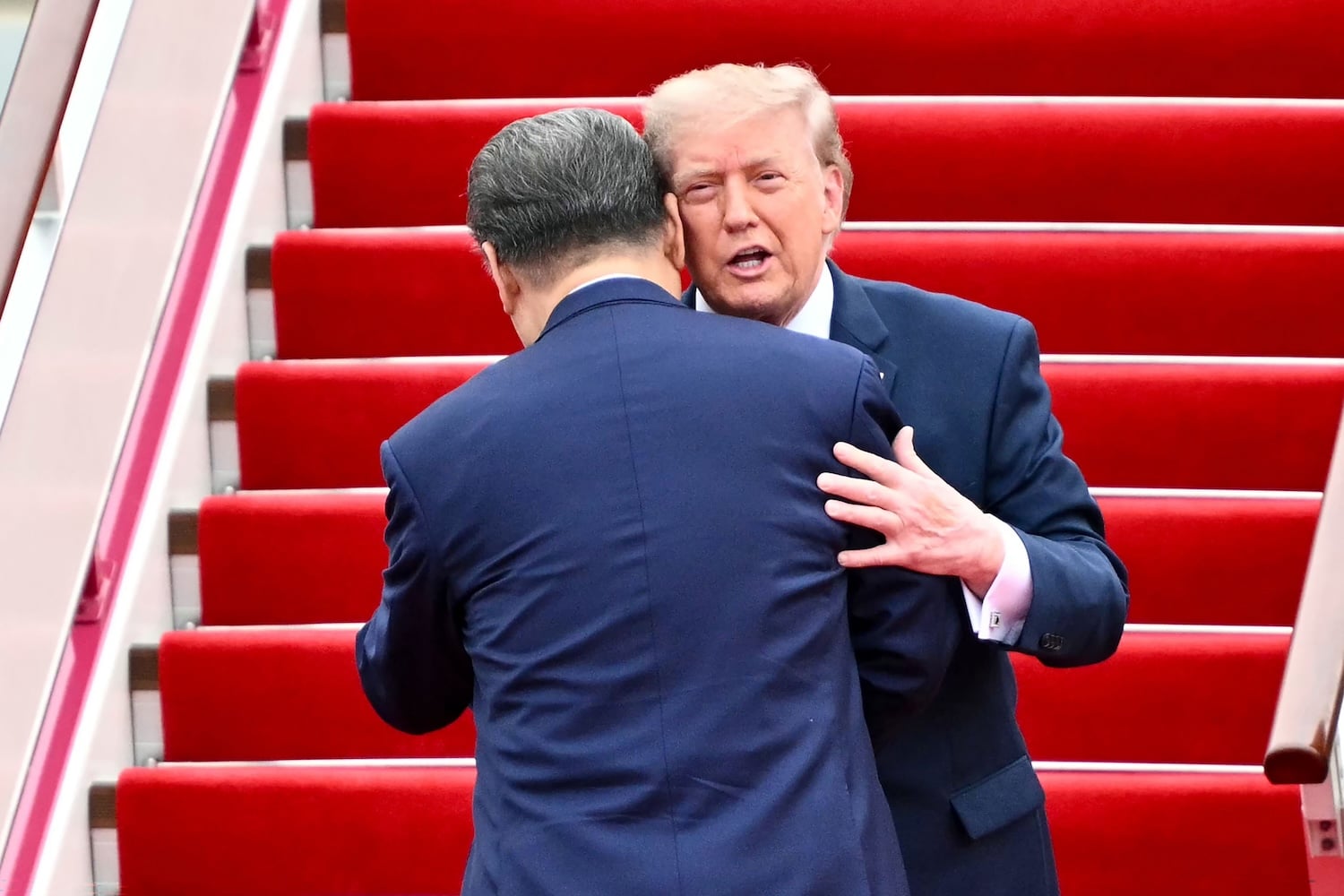
Welcome to Foreign Policy’s China Brief. The highlights this week: Jensen Huang’s return to Nvidia highlights the reality of U.S.-China relations, the Chinese Communist Party purges another Politburo member, and a beloved China correspondent is remembered. Welcome to Foreign Policy’s China Brief. The highlights this week: Jensen Huang’s return to Nvidia highlights the reality of U.S.-China relations, the Chinese Communist Party purges another Politburo member, and a beloved China correspondent is remembered. Nvidia Decision Reflects China’s Growing Leverage U.S. President Donald Trump’s lobbying for Jensen Huang’s return as Nvidia CEO is a national security scandal of unprecedented proportions, as I wrote on Monday (gift link). Huang’s reinstatement comes less than a week after the trilateral summit among Trump, Chinese President Xi Jinping, and Russian President Vladimir Putin, in which Trump pronounced the Chinese autocrat his personal friend and endorsed his geopolitical language. Taken together, these events illustrate an increasingly clear reality of U.S.-China relations: Beijing knows Trump’s pressure points and isn’t afraid to exploit them. But Washington cannot do the same to Xi. It is difficult to know how much Xi shaped Trump’s thinking on Huang. Trump was already sympathetic to Huang and receptive to the whispers of Silicon Valley leaders. But the U.S. president himself said he had discussed the matter with Xi; whatever the precise chain of influence, China scored a major win. Trump’s obsequiousness toward Xi reflects China’s skillful use of both stick and carrot. Last year, Beijing’s rare-earth squeeze caused panic in Washington and forced Trump into a humiliating climbdown in the tariff war that he started. Trump’s involvement in reinstating Huang was likely triggered in part by another of the president’s fears: a falling stock market. With the U.S. economy still entangled with China, Xi has the leverage to force supply-chain crises across multiple industries. He can also offer Trump praise and pageantry on the world stage to help compensate for unpopularity on the home front. Washington, by contrast, lacks the will, knowledge, and capability to pressure Beijing. The Trump administration is bogged down in Iran, has gutted U.S. cybersecurity capabilities, and has wrecked the relationships that once gave allies the confidence to push back against China. With the Nvidia scandal, it has shown that it will abandon its own sanctions enforcement under pressure. It’s this imbalance of power that makes me skeptical of recent announcements that there will be another round of U.S. tariffs on China. As much as Trump loves tariffs, he wants Xi’s approval more. Some analysts, eager to avert a so-called second Cold War, have embraced Trump’s support for reinstating Huang, on the grounds that U.S. chip policy toward China should be more permissive. This misses the point entirely. As I have argued, the real debate about U.S. chip policy needed to be held in good faith. Trump’s decision to allow high-end chip exports to China was not the result of careful deliberation, but of straightforward corruption. Those celebrating Huang’s return are overlooking more than the blatant violations of national-security norms, the abandonment of serious sanctions enforcement, and Trump’s personal financial interest in Nvidia. They are also ignoring the lessons of the recent past. China hawks made a moral and strategic blunder by backing Trump during his first term when his interests seemed aligned with theirs. It would be even more foolish for China doves to do the same today. What We’re Following Politburo member purged. On Tuesday, Xi purged yet another senior official: Shanghai party chief Chen Jining. As is customary, the news broke with an announcement that Chen was under investigation for severe violations of Chinese Communist Party (CCP) discipline. His fall brings the number of Politburo members eliminated since last year to four, out of an original 24 members in 2022. Unlike most of his contemporaries, Chen is a genuine intellectual. An environmental engineer with a Ph.D. from Imperial College London, he followed an unusual path to the top, serving as president of the prestigious Tsinghua University before becoming minister of environmental protection in 2015. As mayor of Beijing from 2017 to 2022, he played an important role in cleaning up the city’s notoriously polluted air. Publicly, Chen has been loyal to Xi, so why was he purged? My guess is that Xi has become increasingly paranoid about the emergence of potential successors. Perhaps he heard one too many people praise Chen’s intelligence and management skills. Whatever the explanation, the purge points to a crisis in the CCP’s leadership. The question is whether that reflects genuine opposition to Xi or exists entirely in the leader’s imagination. GOP’s Huang fallout. Republican Party pushback against Huang’s reinstatement at Nvidia has been surprisingly strong. Senators and influential figures such as Mitt Romney have come out against the decision and called for further investigation. Unless Trump intimidates them into submission, Nvidia could face scrutiny that may intensify once the new U.S. Congress takes office in January. Huang is scheduled to testify publicly before Congress on Dec. 3, and even if Nvidia has seemingly secured a reprieve from federal investigation for now, it may have set itself up as an easy target for whatever presidential administration takes office in 2029. FP’s Most Read This Week Huang’s Return Is the Biggest National Security Scandal in U.S. History by James Palmer The Middle East Is Finally on Its Own by Stephen M. Walt Shenzhen Was No Yalta Conference by James Palmer Tech and Business ‘Guaranteed bubble’ phenomenon. One aspect of the Nvidia scandal that has received little attention is how closely it resembles the way China treats private companies: protecting favorites and punishing those that fall out of favor. Trump has far less ability to intervene as freely as the CCP, but the parallels are worth noting. In China, this kind of state interference helped create a phenomenon called the “guaranteed bubble.” The government has repeatedly stepped in to prop up companies when their troubles threaten to cause public unrest or economic insecurity. This created an expectation that these firms were too big to fail and therefore safe investments. That confidence inflated the bubble further until reality caught up. Even if the artificial intelligence boom does not go that way, Trump’s interference threatens a long-standing U.S. advantage over China: trust that stock prices represent genuine value and that corporate failings are not being covered up by the state. In Memoriam Robert Foyle Hunwick, a long-term China correspondent and a close friend of mine, died last week at 47 after a short battle with cancer. A British journalist who moved to China in the late 2000s, Rob wrote about society, crime, and nightlife in China and its neighbors for numerous outlets, including Foreign Policy. He loved both the humanity and the chaos of modern Chinese life and reserved some of his sharpest criticism for Western journalists who thought themselves above it all. He will be deeply missed.
Xi Knows How to Play Trump
Full Article
Original Source
Read the full article at Foreignpolicy →KhanList aggregates and links to publicly available news content. We do not host full articles from third-party sources. Always verify important information with original sources.