
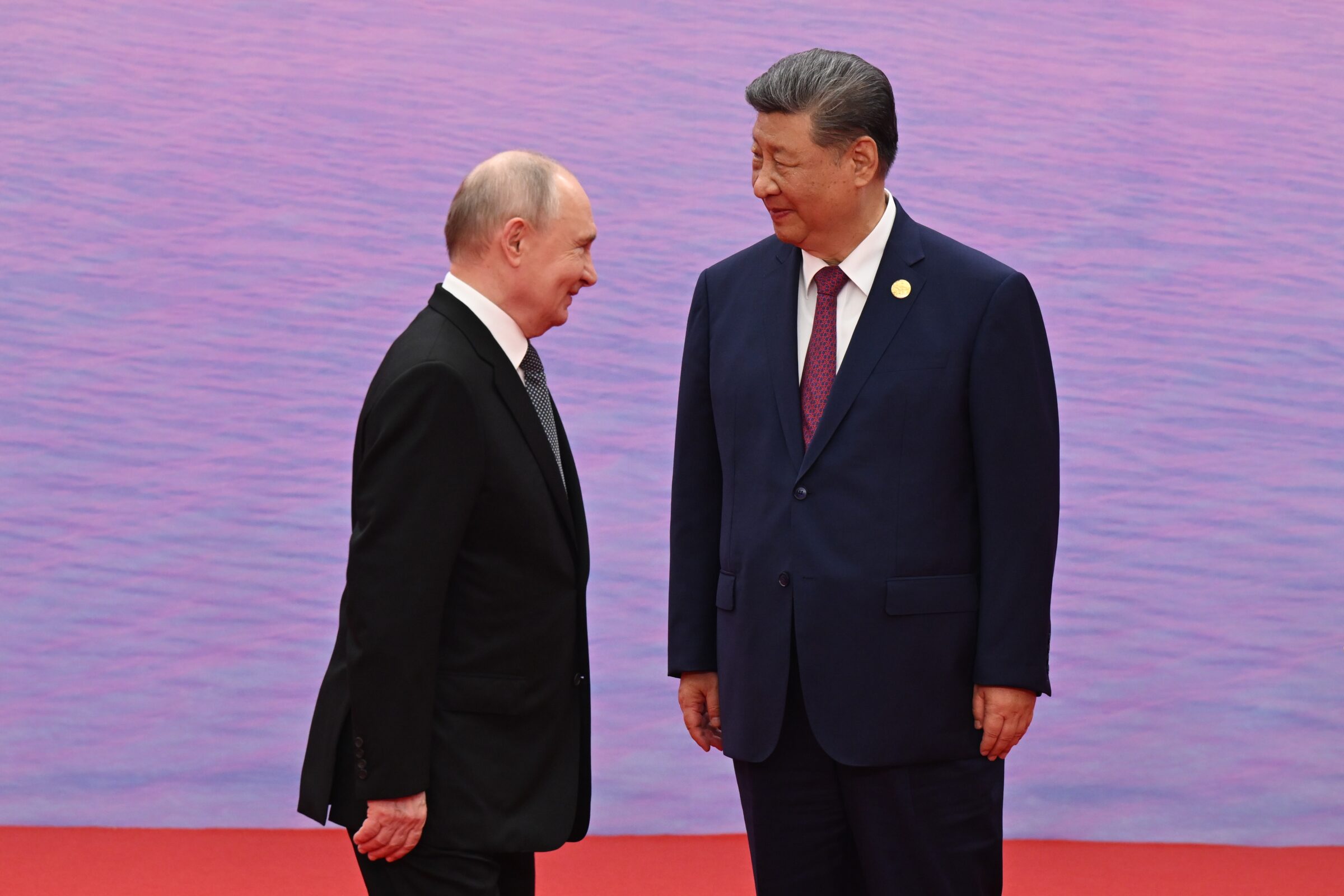
Chinese president Xi Jinping and his Russian and US counterparts, Vladimir Putin and Donald Trump, are meeting in Shenzhen, China, on Thursday (19 November) to discuss the war in Ukraine. China is seen as having considerable economic and diplomatic influence over Russia, but has so far shown little appetite to use this leverage to push the Kremlin towards concessions in peace talks. Xi and Putin began talks in Shenzhen on Wednesday, on the sidelines of the Asia-Pacific Economic Cooperation (APEC) summit, but whether Ukraine will dominate the agenda of Thursday’s trilateral summit remains uncertain. US officials had initially signalled that Ukraine might not be discussed, but Trump later said it would be. Beijing, for its part, has framed the summit more broadly, with China’s foreign ministry saying the three leaders would discuss “safeguarding world peace.” The meeting in Shenzhen comes after discussions in Abu Dhabi among the US, Russia, and Ukraine last week ended with an agreement to exchange 314 prisoners. And with peace talks gaining momentum, Beijing is positioning itself as an indispensable mediator, while avoiding responsibility for delivering a settlement. Beijing is trying to preserve a strategic relationship with Moscow, while maintaining its economic relations with Europe and presenting itself as a responsible global power. “These objectives are not always compatible, and the war in Ukraine has made those contradictions increasingly visible,” said Maria Adele Carrai, an international relations professor and a member of the Oxford School of Global and Area Studies (OSGA), at the University of Oxford. Dimitar Lilkov, a senior research officer at the Wilfried Martens Centre for European Studies in Brussels, also told EUobserver: “It is interesting to see if and how Xi Jinping is actually involved in a potential meeting, given that he considers Vladimir Putin as a junior partner.” Analysts have often called Russia China’s "junior partner", given Moscow’s growing dependence on China for trade, energy, and technology after Putin's full-scale invasion of Ukraine in 2022. China abstained from a United Nations Security Council vote denouncing the invasion in 2022, and Xi has maintained close political ties with Putin ever since. Portraying itself as an outsider to the conflict, Beijing has repeatedly said it is ready to promote peace talks and has conducted diplomatic shuttle missions and multilateral initiatives through its special representative Li Hui, but its diplomatic activity has not been matched by public pressure on Putin. “Its public support for talks stays at the level of general principles,” said Alicia García Herrero, a senior fellow at Bruegel Institute in Brussels. Status without responsibility China has consistently maintained that it is neither “the creator of the Ukraine crisis” nor “a party to it”, while calling for dialogue based on principles outlined by Xi, including respect for sovereignty, territorial integrity, and the UN Charter, as well as attention to the legitimate security concerns of all sides.
Xi keen to look ‘neutral’ on Ukraine at Shenzhen summit, as China risks spoling EU relations by helping Putin to wage war
Full Article
Original Source
Read the full article at Euobserver →KhanList aggregates and links to publicly available news content. We do not host full articles from third-party sources. Always verify important information with original sources.