
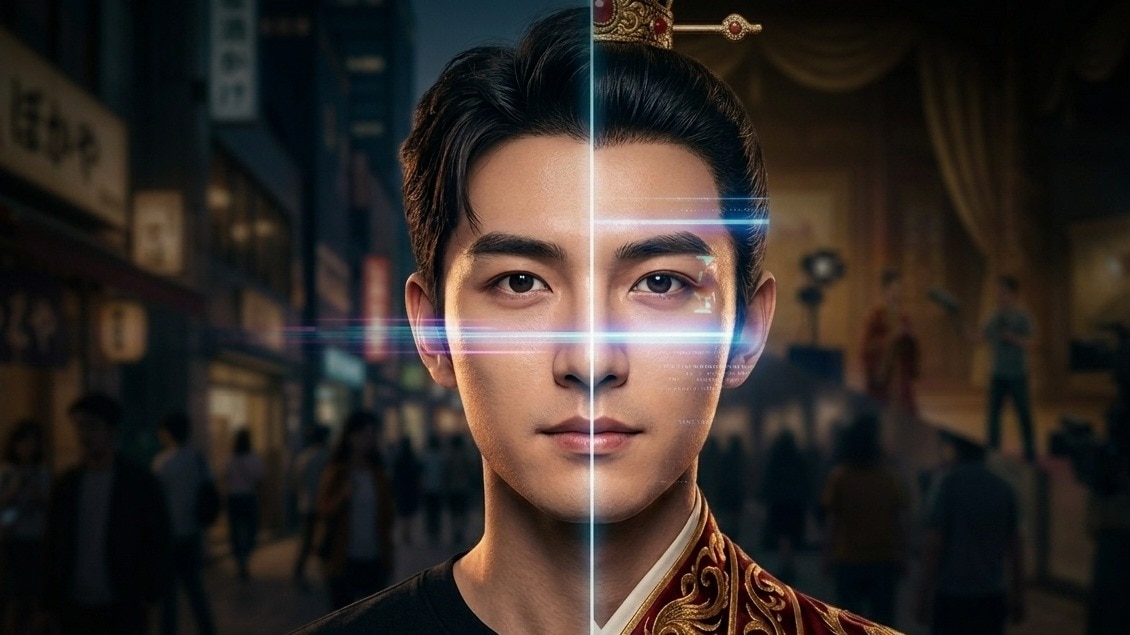
China's AI boom is creating a new side hustle where ordinary people license their faces for digital dramas, ads and games. As AI transforms entertainment, the trend raises questions about earnings, identity, consent and how much control people should give up.China’s AI boom is turning faces into a new source of side income (AI-generated image)What if your face could earn money even when you were not actually working?In China, that idea is becoming a reality. A growing number of platforms are connecting ordinary people with producers of AI-generated short dramas, advertisements and games, allowing them to license their likenesses for digital use.What was once a private arrangement circulating in film and television industry chat groups has increasingly moved to public platforms since April, according to the South China Morning Post. The emerging marketplace is turning an unusually personal asset, your face, into a potential side hustle.YOUR FACE, NOW AVAILABLE FOR HIREThe process is relatively simple. People register on face-licensing platforms, complete identity verification and create digital actor profiles. Producers can then browse these profiles and select faces for AI-generated characters. One such platform, Shenzhen-based Yuanxiang Xinsheng, launched in May and allows users to create these digital profiles after registration and verification, the South China Morning Post reported. China’s AI boom is turning faces into a new source of side income (representative image) The idea is closely linked to China's booming AI-generated entertainment industry. AI is already being used to make short dramas faster and cheaper, with producers experimenting with AI-generated characters, scripts and video. And that creates a rather unusual demand: if AI can generate almost everything, why pay for a real person's face?SO, HOW MUCH CAN YOU MAKE?The answer varies wildly.According to South China Morning Post's report, one bank employee earned nearly 2,500 yuan, or about US$370, after an advertising company acquired his portrait seven times in just three days.Other platforms have reported much smaller payments. Rest of World found that Shenzhen-based ActID had paid people between 99 and 500 yuan, or around US$15 to US$74, per episode. The company had registered about 800 users, around 300 of whom had agreed to license their likenesses for AI productions.At the other end of the spectrum are much higher listings. South China Morning Post report puts the overall reported market range at about US$7 to US$15,000, though that should not be read as a typical earning range for ordinary users. The amount depends on the platform, production, duration, and licensing terms.So, no, uploading a selfie does not automatically mean you are about to make Rs 14 lakh. But the fact that someone can potentially put a price on their digital likeness is the interesting part.WHY DO PRODUCERS NEED REAL FACES?This is where the story gets a little ironic. AI can already generate completely fictional faces. Yet producers sometimes want something more specific: a face that looks distinctive, recognisable or convincingly human.ActID's chief marketing officer told Rest of World that producers want attractive faces for lead characters but also distinctive faces, including elderly people. In AI-generated dramas, the face can essentially serve as source material rather than requiring the person to act. China’s AI boom is turning faces into a new source of side income (Representative image) But there is another view. South China Morning Post reported that some directors believe ordinary faces have little commercial value because AI can simply generate them. Celebrity likenesses, by contrast, may carry recognition and therefore greater value.That creates a strange new question for the entertainment industry: what makes a face valuable when AI can create billions of them?THE CATCHThe money may sound attractive, but licensing a face raises questions about how a digital likeness can be reused, modified or distributed.A Lowy Institute analysis has warned that licensed digital likenesses could be reused beyond their original purpose, making it harder for people to retain control over their identity. Licensing a likeness and allowing facial data to be used for AI training are also not necessarily the same permission. China’s AI boom is turning faces into a new source of side income (representative image) CAN THIS WORK IN INDIA?India is already experimenting with AI versions of public figures, though the model differs from China’s face-licensing market. In March 2026, actor Rhea Chakraborty launched Mishty, an AI-powered digital character developed with Collective Artists Network and Galleri5.Mint reported that the avatar is designed to extend Chakraborty’s digital presence and explore new forms of audience engagement and monetisation.China’s model raises a different possibility: ordinary people earning by licensing their likenesses for AI-generated dramas, advertisements and games.A NEW KIND OF SIDE HUSTLEThe rise of face licensing reflects a wider shift in China’s entertainment industry. SCMP reported that AI has helped some microdrama companies cut production time from three months to one and reduce costs to around one-fifth.As AI makes production faster and cheaper, faces, voices and digital identities could become new assets to license and monetise. But for anyone considering it, the bigger question remains: How much control are you willing to give up for the money?- EndsPublished By: Karan YadavPublished On: Sep 22, 2026 08:00 IST
Would you rent out your face? China's AI boom creates a new side hustle
Full Article
Original Source
Read the full article at Indiatoday →KhanList aggregates and links to publicly available news content. We do not host full articles from third-party sources. Always verify important information with original sources.