
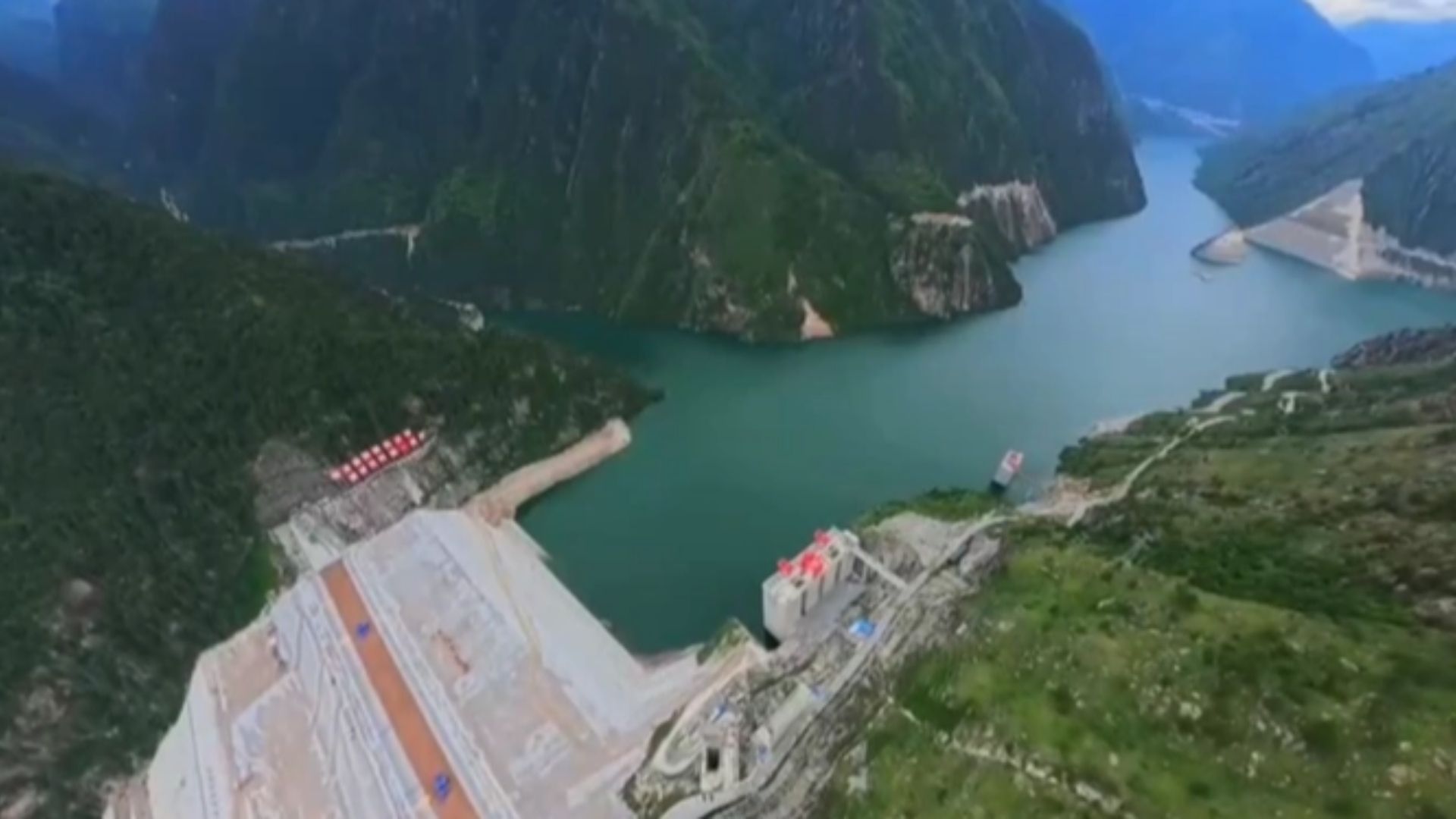
China has activated the third generating unit at the Shuangjiangkou Hydropower Station in Sichuan Province, bringing all three units in the first phase into operation. China Energy Investment Corp shared the update on Monday, calling it another step forward in building the world’s tallest dam and a major hydropower plant on the Dadu River. The project aims to boost electricity supplies in Sichuan and the Chengdu-Chongqing area, especially when demand is high. The project also reflects China’s efforts to build more large hydropower plants and better manage water resources in the region. World’s tallest dam takes shape The Shuangjiangkou Hydropower Station has a dam that stands 1,033 feet (315 meters) tall, making it the tallest in the world. The plant is designed to have a total capacity of 2 gigawatts, using four Francis turbines, each producing 500 megawatts. The reservoir can store about 766 billion gallons (2.9 billion cubic meters) of water. Built on the upper part of the Dadu River, the station is meant to support power generation, flood control, and water resource management. The first generating unit started working in June. Now that three units are running, the project has already delivered about 500 million kilowatt-hours of clean electricity. This helps meet high summer demand in Sichuan and the Chengdu-Chongqing region. Massive output planned Once the last unit starts working, the station should produce about 7.7 billion kilowatt-hours of electricity each year. It is also expected to boost electricity output at downstream hydropower stations by around 6.6 billion kilowatt-hours annually. The large reservoir will allow operators to manage water flows according to electricity demand and seasonal conditions. This capability could improve power supply security and help stabilize the regional grid as demand changes. Lin Boqiang, director of the China Center for Energy Economics Research at Xiamen University, told the Global Times on Monday that the project’s importance extends beyond electricity production. “Such flexibility is becoming increasingly important as wind and solar capacity expands rapidly,” Lin said, noting that reservoir hydropower can help balance fluctuations from variable renewable sources. Challenging construction site The station was built in a high-altitude area with difficult geological and geographic conditions. Low temperatures and a short effective construction season added further challenges for engineers working on the massive structure. Experts said the project demonstrates China’s ability to develop ultra-high rock-fill dams and high-head flood-discharge systems independently. Its commissioning also reflects advances in the country’s large-scale hydropower engineering capabilities. The reservoir’s regulating capacity is expected to become increasingly useful as Sichuan adds more wind and solar generation. Hydropower can adjust output when renewable production changes, supporting a more flexible electricity system. Hydropower capacity expands China has continued adding hydropower capacity as part of its broader clean-energy expansion. The National Energy Administration said on July 30 that the country added 6.03 gigawatts of hydropower capacity during the first half of the year. Conventional hydropower accounted for 3.03 gigawatts, while pumped-storage projects contributed another 3 gigawatts. By the end of June, China’s total installed hydropower capacity had reached 454 gigawatts.Major power producers generated 588.6 billion kilowatt-hours from hydropower during the first six months of the year. Hydropower facilities nationwide averaged 1,452 hours of utilization during the period.Get the latest in engineering, tech, space & science - delivered daily to your inbox.A versatile writer, Sujita has worked with Mashable Middle East and News Daily 24. When she isn't writing, you can find her glued to the latest web series and movies.
World’s tallest dam puts three units online, delivers 500 million kWh of clean power
Full Article
Original Source
Read the full article at Interestingengineering →KhanList aggregates and links to publicly available news content. We do not host full articles from third-party sources. Always verify important information with original sources.