
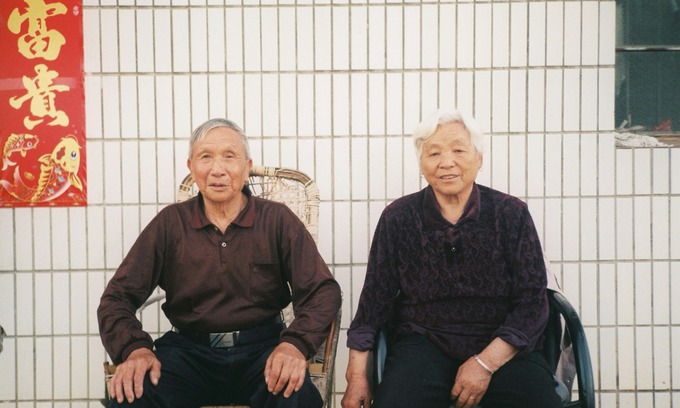
China's old-age dependency ratio overtook the child dependency ratio for the first time in 2025, meaning its working-age population now supports more people aged 65 and above than children. The old-age ratio reached 23.1% in 2025, while the ratio for children stood at 22%, state-affiliated financial outlet Yicai reported on Oct. 25, citing the China Statistical Yearbook 2026 compiled by the National Bureau of Statistics (NBS).The two ratios measure people aged 65 and above, and children aged 14 and under, against the working-age population of 15- to 64-year-olds. That means there were about 23 older people and 22 children for every 100 people of working age.The yearbook put the population aged 65 and above at 223.65 million, or 15.9% of the total, and children aged 14 and under at 212.76 million, or 15.1%.The old-age ratio has risen steadily, from 15% in 2016 to 20.8% in 2021, the first year it passed 20%. It reached 22.8% in 2024, just below that year's child ratio of 23%.The yearbook figures follow a nationwide 1% population sample survey released by the NBS in May, which found that people aged 65 and above made up 15.87% of the population as of Nov. 1, 2025, against 15.25% for children aged 14 and under. An elderly couple sits in front of a tiled wall in China. Photo by Unsplash/Lei Hwang China, the world's second most populous country after India, saw its population fall for a fourth straight year in 2025, by 3.39 million to 1.405 billion, according to NBS data released in January. Births dropped to 7.92 million, and the birth rate to a record low of 5.63 per 1,000 people.The birth rate has been falling for decades, a result of the one-child policy in place from 1980 to 2015 as well as rapid urbanization.The BBC quoted Stuart Gietel-Basten, a professor at the Hong Kong University of Science and Technology, as calling the shift "symbolic" and saying it could suggest more public spending will move from families and schools to pensions and health care.He also cautioned that using the ratio risks "taking agency away" from older people, many of whom he said have been misrepresented as dependents, and that the ratio does not account for improvements in health care.Mu Zheng, a sociologist at the National University of Singapore, said in the same report that the shift could limit China's economic growth and people's spending power. Mu also pointed to changing gender roles, rising living costs and higher education levels as pressures on fertility.Kindergartens struggling to enroll children are being converted into elderly care facilities in cities including Changzhou, Jinan and Jinhua in eastern China, Yicai reported, while many idle rural primary schools have become nursing homes and canteens for seniors.Authorities have rolled out measures to encourage marriage and childbearing, including an annual subsidy of 3,600 yuan ($540) for each child under 3, childcare support and lower childbirth-related medical costs.In April, 15 government departments jointly issued a plan to make cities more supportive of young people, children and families, Reuters reported.
World's second most populous country has more seniors than children to support
Full Article
Original Source
Read the full article at E →KhanList aggregates and links to publicly available news content. We do not host full articles from third-party sources. Always verify important information with original sources.