
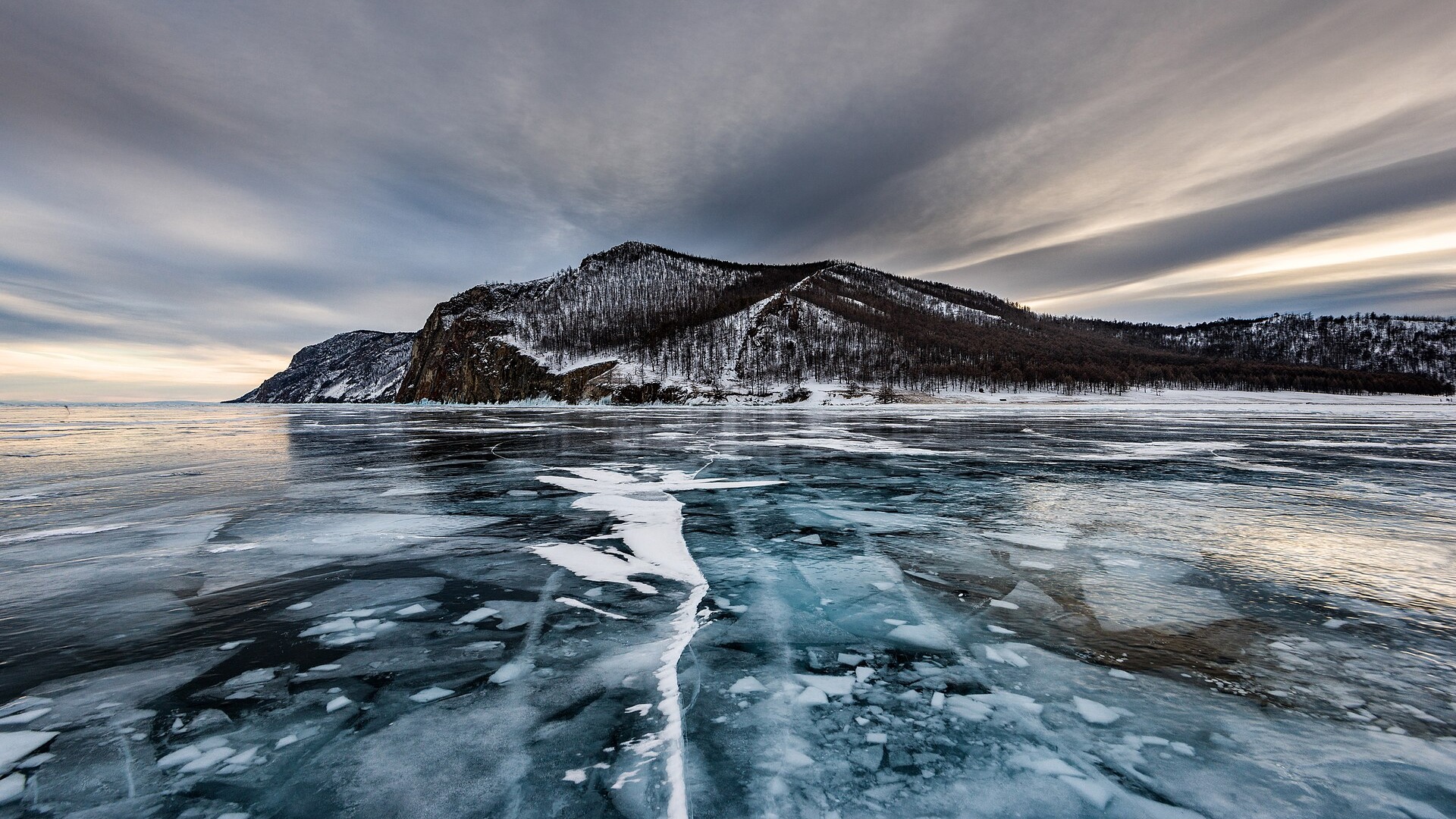
Lake Baikal in Siberia holds about 20 percent of the world’s surface freshwater, and it has been drying up due to adverse effects of climate change. However, a new study has shown that this might be changing – and impressively. Lake Baikal is the world’s oldest and largest freshwater lake, holding about one-fifth of Earth’s unfrozen surface freshwater. This UNESCO World Heritage site relies on water flowing into the lake from the Selenga River and leaving through the Angara River. According to the study, this water balance supports agriculture in Mongolia and hydroelectric power generation in regions along the Angara River, affecting water availability for millions of people. However, in the early 20th century, this streamflow saw a critical decline. Recently, researchers found that streamflow began recovering sharply around 2017, reaching 145.2 percent of its long-term average. The recovery coincided with rising lake levels, increased vegetation growth, and changing Arctic climate conditions. The study, published in Geophysical Research Letters, suggests that changes in atmospheric circulation linked to a regional slowdown in Arctic warming may be helping restore water availability in the Lake Baikal basin. Decades of low water flow Shijie Wang of Yunnan University and colleagues reconstructed 343 years of streamflow using tree-ring records. Researchers collected 52 tree-ring cores from pine trees near Lake Baikal and combined them with existing records from 12 additional sites. Their reconstruction revealed intermittent declines beginning in the early 20th century, with streamflow falling to about 90 percent of relatively high levels. Approximately half of all extreme low-flow years occurred after 1900. However, the researchers identified a sharp reversal beginning around 2017. Streamflow recovered to 145.2 percent of its long-term average, while observations showed rising lake levels and increased vegetation growth. The researchers identified 2017–2024 as the most pronounced recovery event in the 343-year record, following a severe decline between 1995 and 2016. Arctic climate changes linked to recovery Researchers examined environmental factors affecting streamflow, including precipitation, temperature, soil moisture, and snowmelt. Their analysis attributed 59.3 percent of streamflow variability to the combined climatic and ecological factors examined. They also identified significant relationships between streamflow and sea surface temperatures and sea ice cover in parts of the North Pacific and Arctic oceans. Lower sea surface temperatures and higher sea ice cover in the Bering, Chukchi, East Siberian and Okhotsk seas were associated with increased streamflow. According to the study, a regional slowdown in Arctic warming and sea ice retreat coincided with the development of an “Arctic Cold Blob.” Researchers suggested these conditions could alter atmospheric circulation and increase moisture transport toward Lake Baikal. However, further climate modeling is needed to test the proposed connection. Will the recovery last? Despite the findings, researchers have not determined whether the recovery will persist. “Determining whether this wet period is a sustained regime shift or a transient phase is essential for assessing its long-term significance,” the authors wrote. They also cautioned that streamflow estimates for 2015–2024 extend beyond the available instrumental calibration period, introducing uncertainty. The researchers concluded that long-term records are essential for understanding changing water availability and developing adaptive water management strategies. “Our findings indicate that projections relying solely on relatively short instrumental data may not fully capture the basin’s hydroclimatic variability, underestimating the system’s inherent capacity for rapid change,” they wrote. Get the latest in engineering, tech, space & science - delivered daily to your inbox.Originally from LA, Maria Mocerino has been published in Business Insider, The Irish Examiner, The Rogue Mag, Chacruna Institute for Psychedelic Plant Medicines, and now Interesting Engineering.
World’s largest fresh water Lake sees sharpest flow rebound in 343 years
Full Article
Original Source
Read the full article at Interestingengineering →KhanList aggregates and links to publicly available news content. We do not host full articles from third-party sources. Always verify important information with original sources.