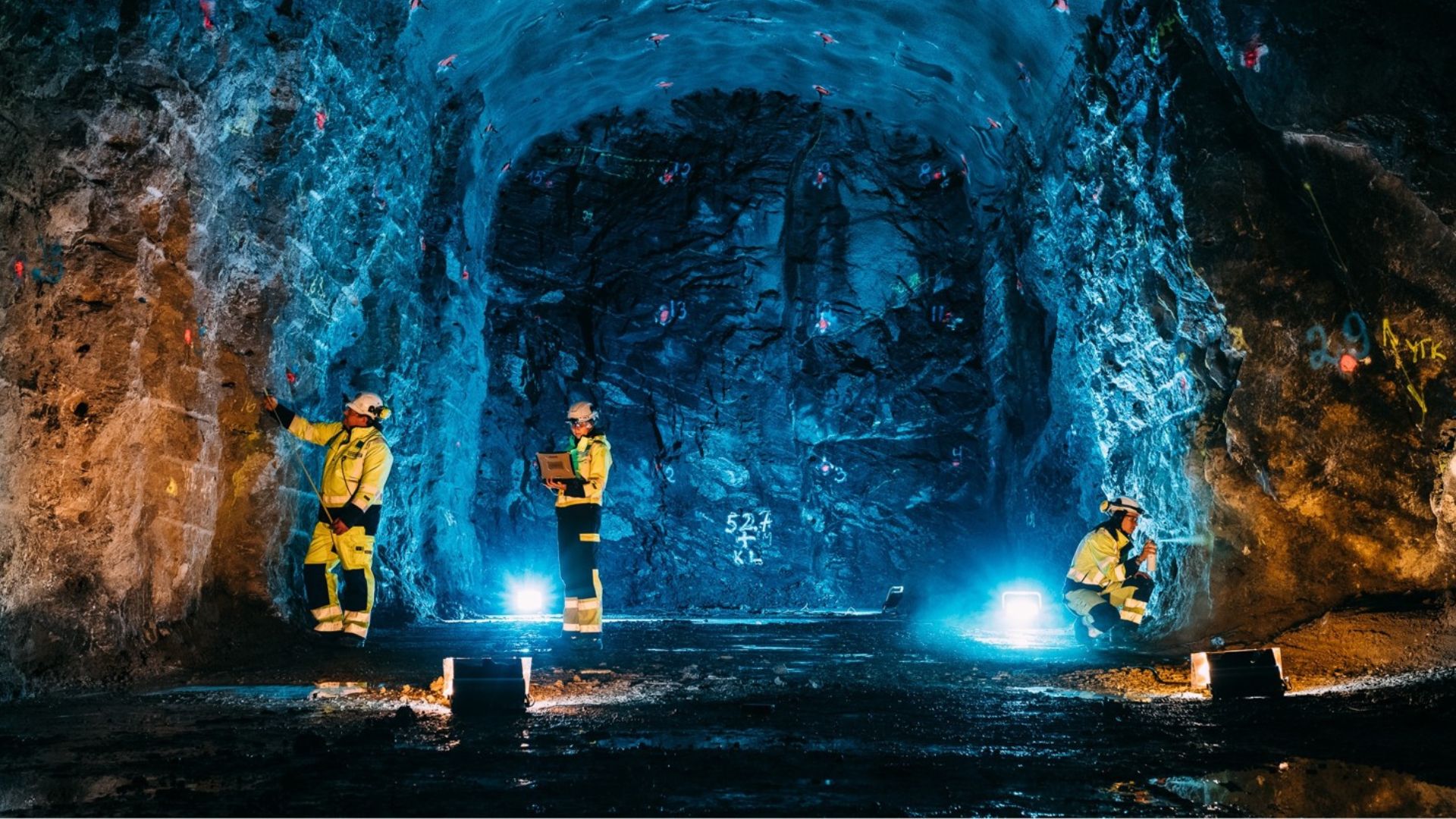
Finland’s nuclear safety regulator, STUK, issued a favorable safety review on August 4 for a deep geological repository located in Olkiluoto. The report evaluates the encapsulation plant and underground storage tunnels constructed by nuclear waste firm Posiva. This regulatory decision clears a major technical barrier for the project. The Finnish Government will now use this review to decide whether to issue a final operating permit for the facility. Posiva is a joint venture created by power producers TVO and Fortum to manage waste from the Olkiluoto and Loviisa power stations. The site is the world’s first commercial facility built to store high-level nuclear waste inside deep bedrock formations. The facility relies on a multi-barrier containment framework designed to isolate radioactive material for thousands of years. According to Posiva, the facility is designed to safely isolate radioactive material for at least 100,000 years. The disposal process begins above ground, where spent fuel assemblies sit in cooling pools for several decades. This storage phase lowers both the surface temperature and the radioactivity levels of the material. Resistance against chemical corrosion Once the fuel cools sufficiently, technicians transfer the assemblies into an encapsulation building at the surface. Workers pack the fuel rods inside cast-iron structural inserts, which sit within thick copper outer canisters. Copper provides strong resistance against chemical corrosion from surrounding groundwater. Engineers then transport the loaded canisters down into the ONKALO repository. The facility sits inside stable crystalline bedrock roughly 430 meters below the surface. The underground network includes miles of excavated tunnels leading to vertical deposition holes. Workers line each deposition hole with compressed bentonite clay blocks before inserting the copper containers. Bentonite clay expands when it absorbs water, filling small cracks in the surrounding rock. This expanded clay blocks water movement and cushions the containers against natural ground shifts. “Bentonite clay buffer acts as a protective wall, isolating the canister from the surrounding rock,” explained Posiva in a research paper. “The clay will swell in contact with water, fill all empty space and prevent water from moving around the canister.” The inner cast-iron core, outer copper shell, clay buffer, and surrounding rock act together as sequential physical barriers. If one component degrades over time, the adjacent layers continue to block the movement of radioactive particles toward the surface. Safety evaluation for operational readiness STUK based its safety evaluation on computer modeling, structural calculations, and long-term geological data. During the review period, regulators asked Posiva for additional data regarding structural performance and long-term safety under changing environmental conditions. Posiva submitted updated research to satisfy these safety queries. “We consider STUK’s safety assessment to be a highly significant and positive milestone in the operating license process,” remarked Posiva’s President and CEO Ilkka Poikolainen. “Although the safety assessment is a significant milestone and a key part of the operating license process, the development of safety will continue after the operating license phase as well,” added the company in a press release. Posiva is currently running tests on machinery and operational systems across both the surface plant and the underground tunnels. These trial runs check the reliability of automated transfer vehicles, specialized canister welding systems, and clay installation tools. “Our ambitious goal is to achieve operational readiness for the start of final disposal by the end of 2026,” concluded Ilkka Poikolainen. Recommended ArticlesGet the latest in engineering, tech, space & science - delivered daily to your inbox.An active and versatile journalist and news editor. He has covered regular and breaking news for several leading publications and news media, including The Hindu, Economic Times, Tomorrow Makers, and many more. Aman holds expertise in politics, travel, and tech news, especially in AI, advanced algorithms, and blockchain, with a strong curiosity about all things that fall under science and tech.
World’s first nuclear waste repository with 100,000-year lifespan secures major approval
Full Article
Original Source
Read the full article at Interestingengineering →KhanList aggregates and links to publicly available news content. We do not host full articles from third-party sources. Always verify important information with original sources.