
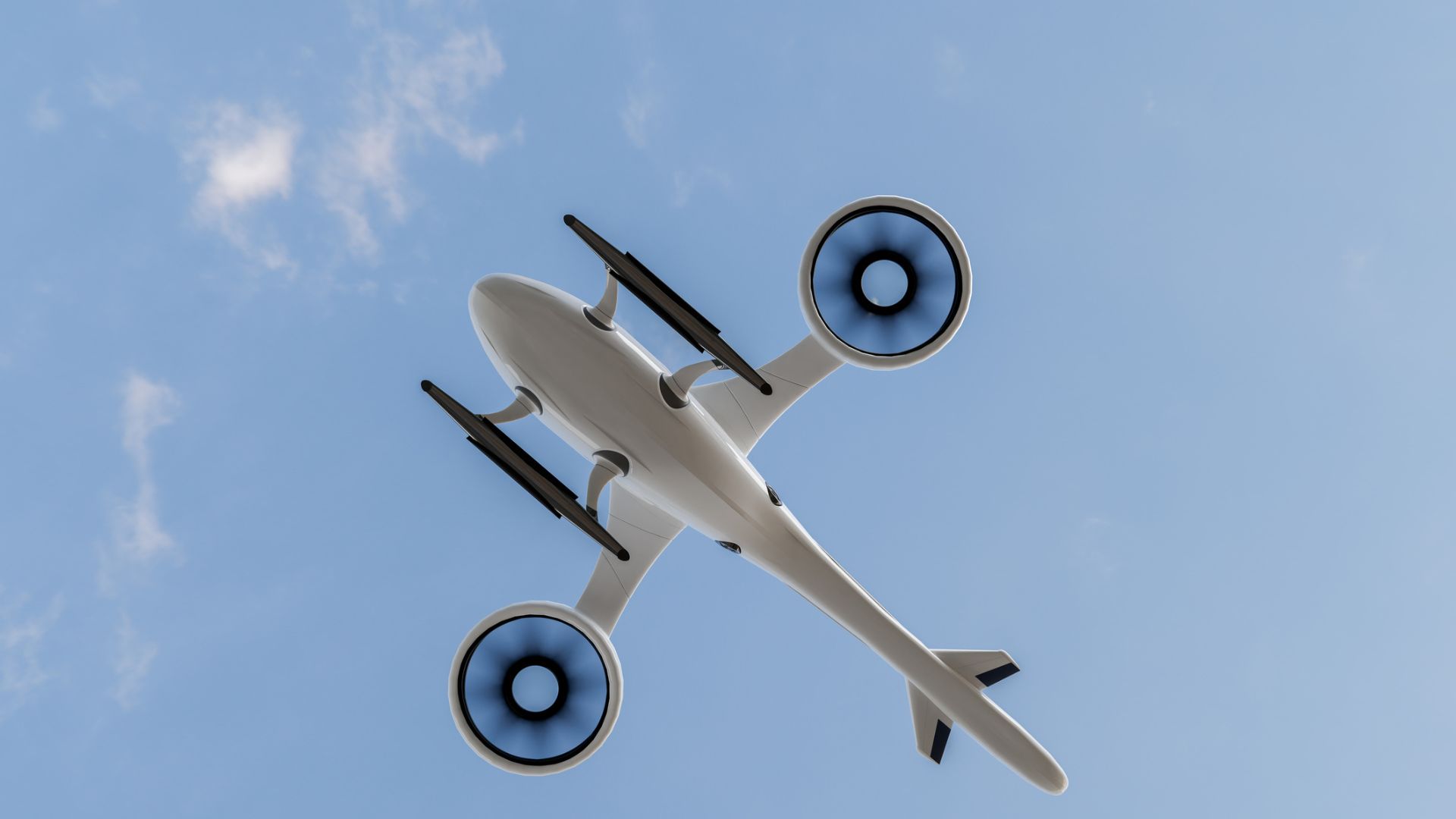
In electric aviation, failure is not an option when you are thousands of feet above the ground. CATL has taken a major step toward making passenger-carrying flying cars a everyday reality by solving one of the sector’s most terrifying hazards: battery fire propagation. Reportedly, the world’s largest battery maker announced that its high-density aviation battery system successfully passed a rigorous thermal runaway verification test. It is the “world’s first prismatic cell aviation battery” with an energy density of 350 watt-hours per kilogram (Wh/kg). This density is said to be roughly 50 percent higher than standard electric vehicle batteries. Higher energy density allows batteries to pack more power into the same space, directly extending a vehicle’s range per charge. Safety breakthrough To stress-test the pack under extreme conditions, CATL intentionally forced two neighboring cells to fail at the same time in various critical spots, such as the dense center and outer corners. Despite this severe double-ignition scenario, the battery structure contained the heat and prevented fire from cascading to nearby cells, demonstrating remarkable structural isolation. The entire production, inspection, and testing phase was supervised by designated representatives from the Civil Aviation Administration of China (CAAC). That regulatory oversight might create a direct path toward commercial airworthiness certification for eVTOL (Electric Vertical Takeoff and Landing) aircraft. Thermal runaway occurs when a single failing cell overheats and triggers a chain reaction across an entire battery pack. In passenger aircraft, where weight limitations prevent heavy armor and emergency landings are far more complex than pulling over to the side of the road, preventing this cascading fire risk is the ultimate prerequisite for commercial flight safety. Mass production & deployment China is actively advancing its “low-altitude economy” by positioning itself as a global leader in commercial eVTOL development. With current regulations allowing passenger operations below 1,000 meters, the sector is rapidly scaling up. CCID Consulting projected that seven major manufacturers will begin product deliveries before the end of the year. CATL confirmed the system is ready for mass production. The company said that its advanced production lines operate at 95% automation, using thousands of checkpoints to guarantee strict quality control. It will debut on passenger eVTOLs built by AutoFlight, a Shanghai-based manufacturer in which CATL made a massive investment. The two companies previously collaborated on a floating vertiport to create a sea-air mobility network. A vertiport is a vessel integrating takeoff pads with solar energy storage. “The aviation battery system is ready for mass production and will be first applied to our Autoflight flying vehicles,” CATL stated. “We will work with our partners and relevant research institutions to continuously overcome technical challenges and build safe and reliable products for drone makers and users.” The aviation development reinforces CATL’s dominance as it expands beyond land vehicles into maritime and aerial transport. Holding a 39.9% share of the global EV battery market with 242.7 GWh installed in the first half of the year, the giant is betting that solving sky-high safety demands will cement its lead in the next era of zero-emission mobility.Recommended ArticlesGet the latest in engineering, tech, space & science - delivered daily to your inbox.Mrigakshi is a science journalist who enjoys writing about space exploration, biology, and technological innovations. Her work has been featured in well-known publications including Nature India, Supercluster, The Weather Channel and Astronomy magazine. If you have pitches in mind, please do not hesitate to email her.
World`s first: CATL set to mass-produce 350 Wh/kg prismatic cell aviation battery
Full Article
Original Source
Read the full article at Interestingengineering →KhanList aggregates and links to publicly available news content. We do not host full articles from third-party sources. Always verify important information with original sources.