
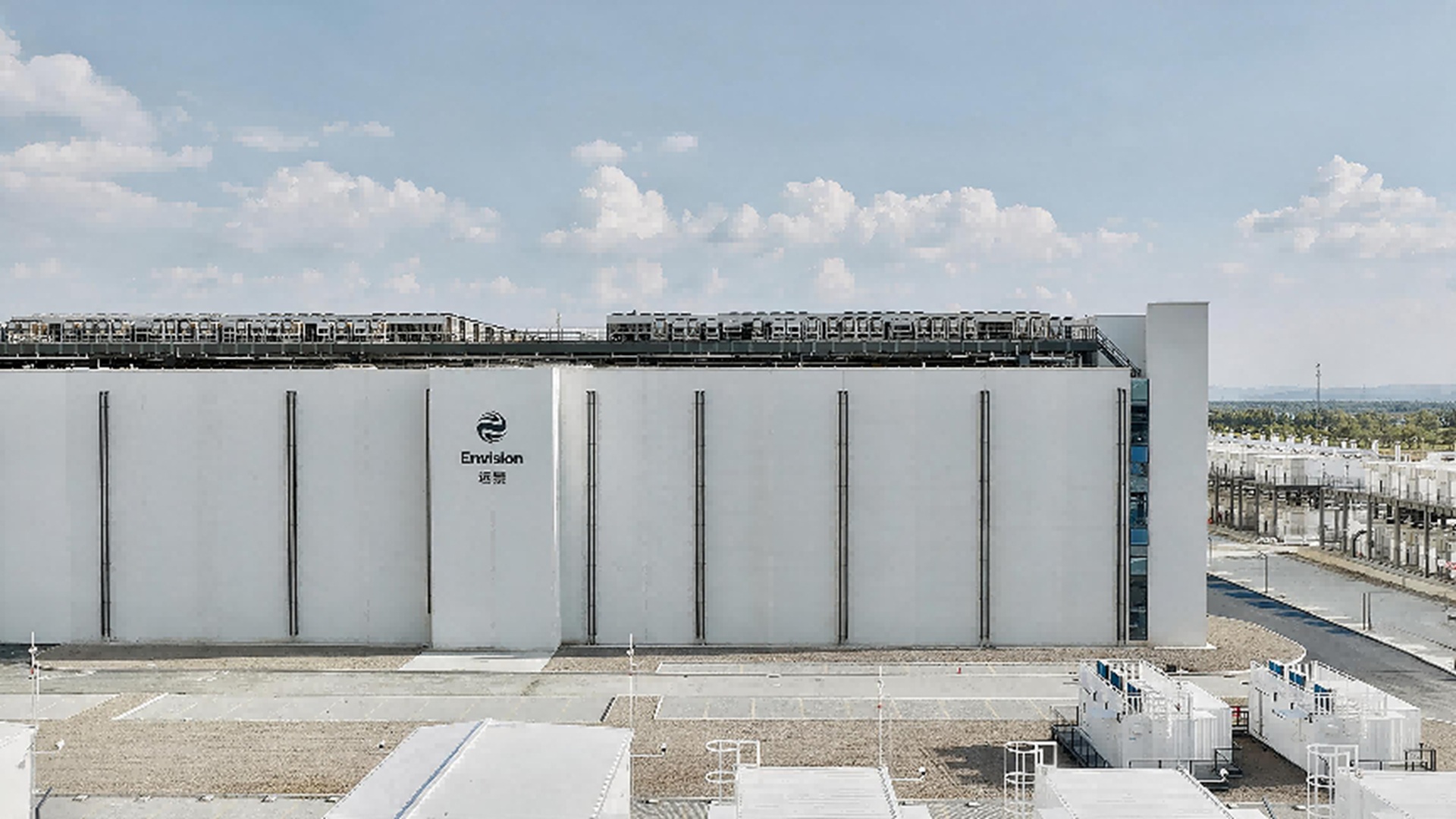
A Chinese green tech company has recently made history with the launch of the world’s first commercially deployed, fully integrated 800-volt direct current (DC) power system at a massive artificial intelligence (AI) data center. Shanghai’s Envision Energy announced the technology on Monday, November 2. It is currently powering live computer workloads at the company’s Galaxy AI data center campus in Ulanqab, Inner Mongolia, China. The platform combines solid-state transformers, battery energy storage, as well as smart controls to deliver electricity from the grid to computing equipment. As per company representatives, it could cut energy loses, lower infrastructure costs, and support more powerful AI servers within the same space. Kevin Huang, Envision Energy’s senior VP, pointed to the technology’s potential. “AI data centers need power systems that coordinate renewable energy, energy storage, and the grid to meet computing demand,” Huang explained. Powering AI servers As AI data centers expand, they require more electricity to run. Reports show that global data center power demand could surge by 160 percent by 2030. Moreover, research suggests data centers alone could require as much as 68 gigawatts (GW) of capacity worldwide by 2027, roughly equivalent to California’s power grid. But delivering that power efficiently remains a massive challenge. Traditional data center power systems utilize multiple conversion stages to deliver electricity from the grid to servers. These stages require additional equipment, cables, and space. To address these challenge, Envision came up with a new system that can convert electricity directly from a 10-kilovolt (kV) medium-voltage input to an 800-volt DC power system. It reduces the need for extra equipment and copper cables, leaving more room for computer hardware. To maintain a stable electricity supply, the firm integrated solid-state transformers with battery energy storage. The batteries can also respond to sudden changes in power demand within seconds and provide backup power for several minutes. At the same time, Envision’s Dubhe Controller, coordinates both the transformers and the batteries through its Dubhe Energy Foundation Model. As a result, the system can respond to rapid changes in electricity demand within milliseconds. Targeting more power Envision’s Galaxy AI data center campus began operations in August 2026. It has a planned capacity of three gigawatts (GW). Once fully developed, the facility is expected to support up to one million AI accelerators operating simultaneously. Huang said the system uses renewable energy to power AI workloads. “This is a critical step in turning power-compute coordination from a strategic vision into an operational reality,” he concluded in a press release. In the future, the company aims to source more than 80 percent of the campus’s electricity through direct renewable energy connections. The power architecture could serve as a reference for other data centers as the industry moves toward 800-volt DC infrastructure. “Already operating commercially ahead of wider industry adoption, the system provides a reference for the industry’s transition to 800V DC,” the firm stated. It also aims to expand the technology via its Mission Gobi initiative. It targets five GW of green AI data center capacity across desert regions worldwide by 2030.Get the latest in engineering, tech, space & science - delivered daily to your inbox.Based in Skopje, North Macedonia. Her work has appeared in Daily Mail, Mirror, Daily Star, Yahoo, NationalWorld, Newsweek, Press Gazette and others. She covers stories on batteries, wind energy, sustainable shipping and new discoveries. When she's not chasing the next big science story, she's traveling, exploring new cultures, or enjoying good food with even better wine.
World’s first 800V DC power system for data centers kicks off operations in China
Full Article
Original Source
Read the full article at Interestingengineering →KhanList aggregates and links to publicly available news content. We do not host full articles from third-party sources. Always verify important information with original sources.