
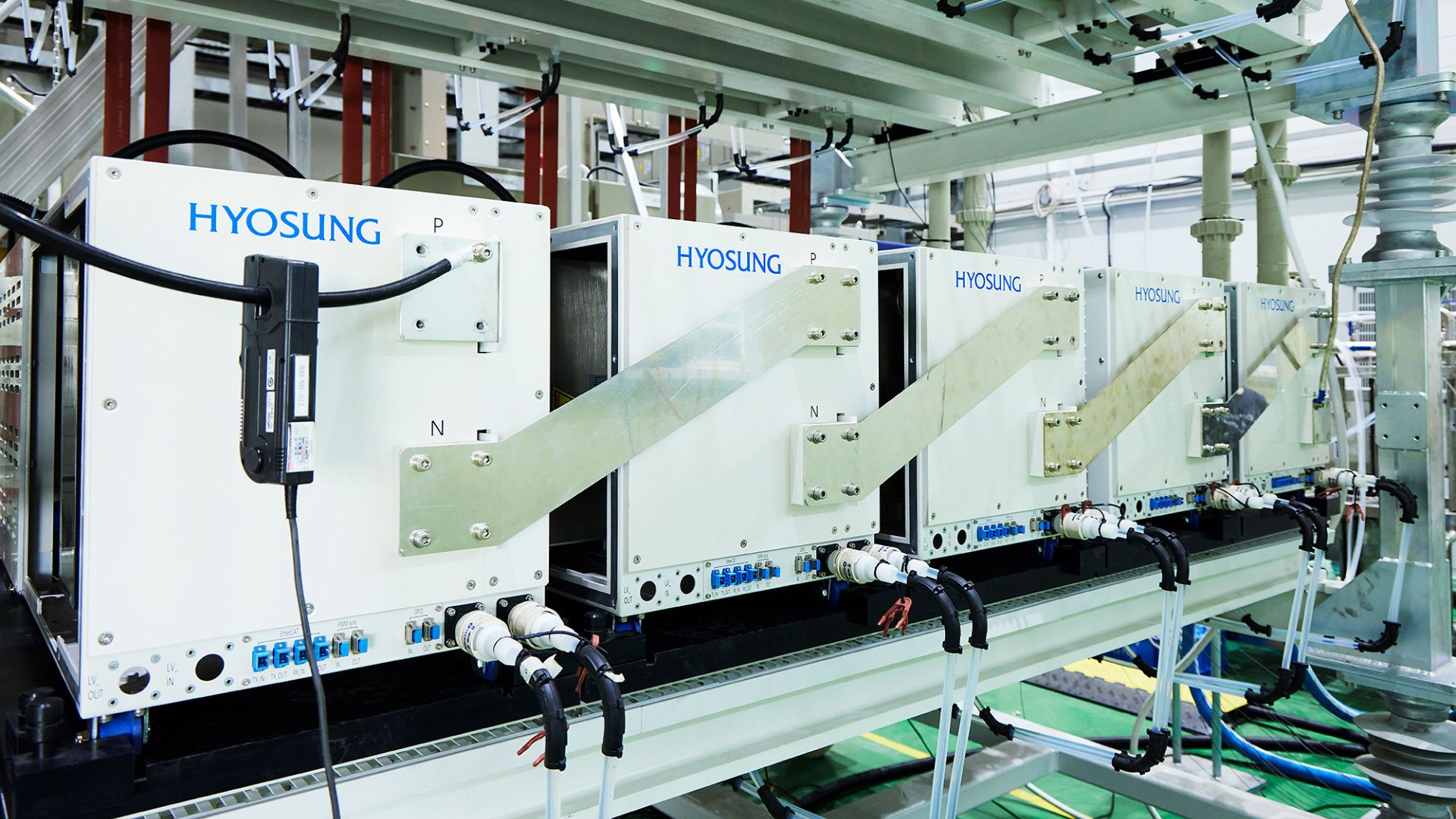
The rapid expansion of US data centers is creating a power problem that conventional grid equipment may struggle to solve. Hyosung Heavy Industries says it has developed a 22.9kV-class solid-state transformer (SST) aimed at the next generation of power networks. The South Korean power equipment maker developed a 1.05MVA SST in 2022. It says the system can connect directly to urban distribution networks. The technology could become increasingly relevant as American utilities face rising loads from data centers and aging infrastructure. Solid-state transformers enter Unlike conventional transformers, SSTs use power semiconductors to actively control electricity. That gives operators tighter control over voltage and current across the grid. The technology also retains electrical isolation functions found in traditional transformers. Its digital control capabilities could make SSTs useful for future distribution systems with more complex power demands. Hyosung describes the 22.9kV market as an emerging segment. Large data centers require substantial amounts of electricity, creating demand for equipment capable of handling higher distribution voltages. Global SST demand could grow by more than 40% annually, according to market research cited by Hyosung. However, high-voltage systems remain difficult to commercialize. Power semiconductors alone do not solve that challenge. Engineers must also manage thermal loads, insulation, switching behavior, and complex power-control requirements. Data centers drive demand US data centers are adding pressure to regional electricity networks as operators race to expand computing capacity. That growth has pushed grid connections and power availability closer to the center of data center planning. Hyosung Chairman Hyun-Joon Cho described power infrastructure as increasingly tied to national security. He said the company wants to become a long-term partner for the US grid. The strategy also involves expanding manufacturing inside the United States. Hyosung Heavy Industries has established domestic production capabilities for transformers and circuit breakers. That footprint could help the company target American utilities and data center developers seeking locally manufactured power equipment. New grid bottleneck Traditional transformers still dominate electricity networks worldwide. Yet the demands placed on those networks are changing quickly. Data centers can concentrate enormous electrical loads in relatively small areas. Their growth also creates stricter requirements for power quality and grid stability. SSTs could address some of those challenges through faster electronic control. Their ability to actively manage electrical characteristics gives engineers more flexibility than passive transformer designs. Hyosung now plans to push its high-voltage SST technology toward demonstrations and commercialization. The company is entering a field where only a limited number of manufacturers are pursuing systems at these voltage levels. The race will ultimately depend on more than developing a working transformer. Manufacturers must prove that these systems can operate reliably at scale and compete with established grid hardware. Hyosung’s early 22.9kV development gives it a starting position as US power demand enters a new phase. The technology could become one piece of a much larger effort to upgrade the infrastructure feeding America’s data centers.Get the latest in engineering, tech, space & science - delivered daily to your inbox.Aamir is a seasoned tech journalist with experience at Exhibit Magazine, Republic World, and PR Newswire. With a deep love for all things tech and science, he has spent years decoding the latest innovations and exploring how they shape industries, lifestyles, and the future of humanity.
World’s first 22.9kV solid-state transformer developed to electrify US data centers
Full Article
Original Source
Read the full article at Interestingengineering →KhanList aggregates and links to publicly available news content. We do not host full articles from third-party sources. Always verify important information with original sources.