
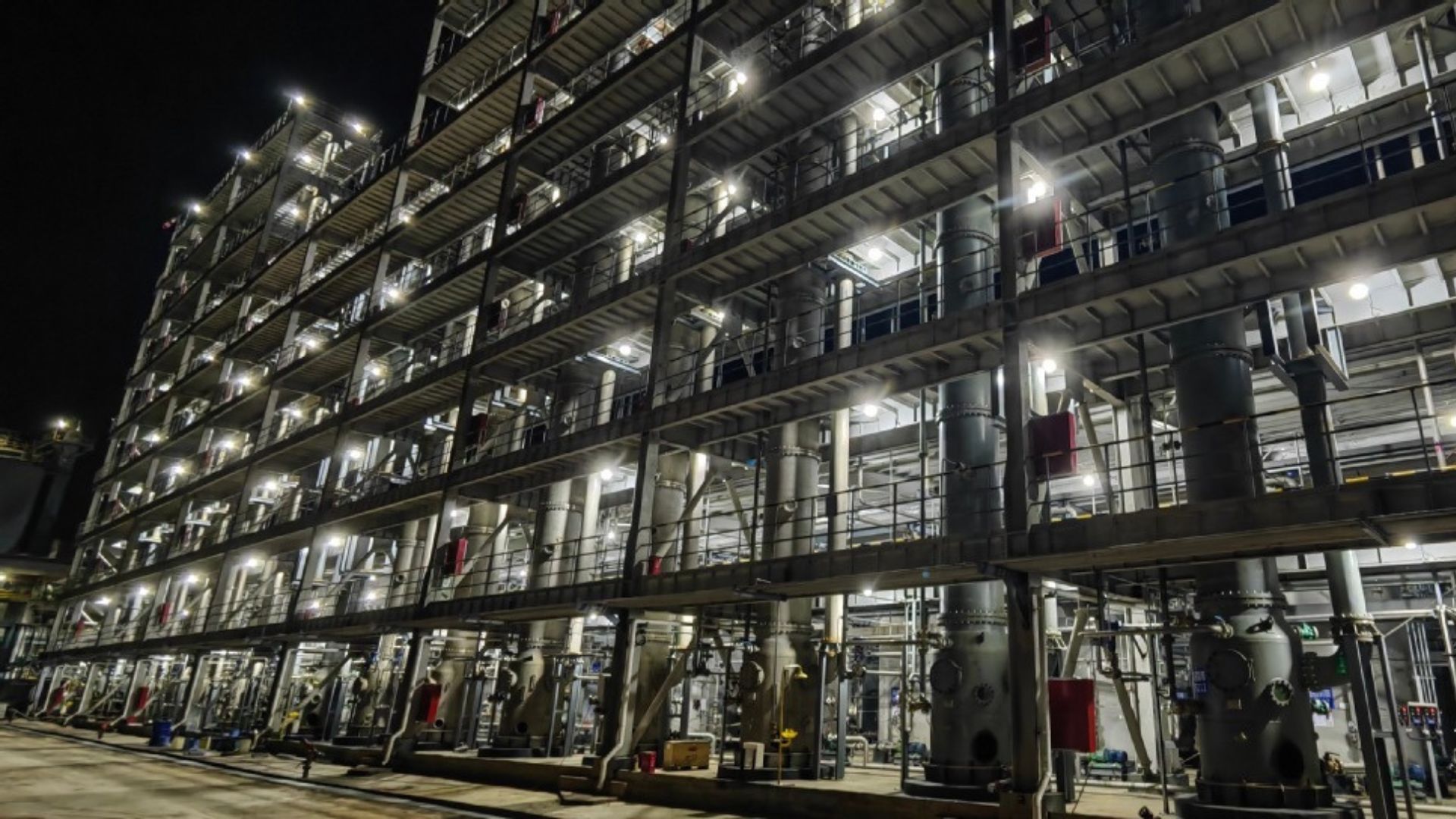
China secured supply chain dominance and established rubidium as a strategic resource by extracting high-value elements from its lithium waste. Institute of Process Engineering (CAS), alongside Ganfeng Lithium, has launched the world’s first 500-tonne annual capacity production line in Jiangxi province to extract rubidium and cesium from lithium mining waste. The institute successfully deployed a 17-tower industrial extraction unit that ran smoothly from its initial launch. Both end products, cesium carbonate and rubidium carbonate, emerge at over 99.9 percent purity and are already being sold in commercial batches. Rubidium and cesium are highly important rare metals for tech. These rare metals anchor the advanced hardware like atomic clocks, aerospace navigation, biomedical research, solid-state batteries, and quantum computing networks. Rubidium and cesium rarely exist in large amounts as independent minerals in the Earth’s crust. These elements hide in low concentrations inside lithium ores and salt-lake brines. Miners struggle to recover them because their low grades complicate standard chemical extraction. The complex chemical bonds make separation costly and difficult. Eventually, the firms dumped the valuable slag into waste piles and wrote off the metals inside. But not anymore, with this new method that uses a 17-tower extraction system and no roasting tanks. The new design uses 17 extraction columns across four core processing sections to handle tasks that previously required over 70 conventional tanks. One column delivers the separation efficiency of up to 15 regular stages. This setup slashes solvent consumption by 40 percent and cuts the equipment footprint by more than half. As a result, the streamlined facility runs continuously and is fully automated, with significantly lower resource needs. It works through differential counter-current extraction. The South China Morning Post reported that the line recovers more than 98 percent of the available cesium and over 95 percent of the rubidium. Cutting overseas dependency China possesses extensive rubidium and cesium reserves locked inside specialty lithium ores and salt-lake brines. An earlier study pointed to domestic reserves of 1.16 million tonnes of rubidium oxide and 140,000 tonnes of cesium oxide. From a strategic perspective, this development resolves a major vulnerability in domestic supply chains. Although China possesses nearly 40 percent of global rubidium reserves embedded in lepidolite deposits, it lacks commercially viable pollucite reserves for cesium. Beijing has mostly imported raw cesium ore from Canada, Australia, and Zimbabwe. But now, China can insulate its high-tech sector through the recovery of both metals from domestic industrial runoff. Combined with existing operations, the country now commands a domestic capacity of roughly 3,000 tonnes of rubidium salt equivalent per year. This strategy replicates China’s long-standing approach to rare earths: combining massive domestic mineral processing with proprietary extraction technology to drive production costs well below those of foreign competitors. As next-generation tech like perovskite solar cells and quantum networks scale up, demand for these niche metals will explode.The demonstration line shows that low-grade, associated rubidium and cesium resources can be processed industrially through clean, high-efficiency extraction. This achievement validates a scalable technical design for broader commercial expansion across the industry.Get the latest in engineering, tech, space & science - delivered daily to your inbox.Mrigakshi is a science journalist who enjoys writing about space exploration, biology, and technological innovations. Her work has been featured in well-known publications including Nature India, Supercluster, The Weather Channel and Astronomy magazine. If you have pitches in mind, please do not hesitate to email her.
World-first 17-tower system to extract rare metals from lithium waste unveiled
Full Article
Original Source
Read the full article at Interestingengineering →KhanList aggregates and links to publicly available news content. We do not host full articles from third-party sources. Always verify important information with original sources.