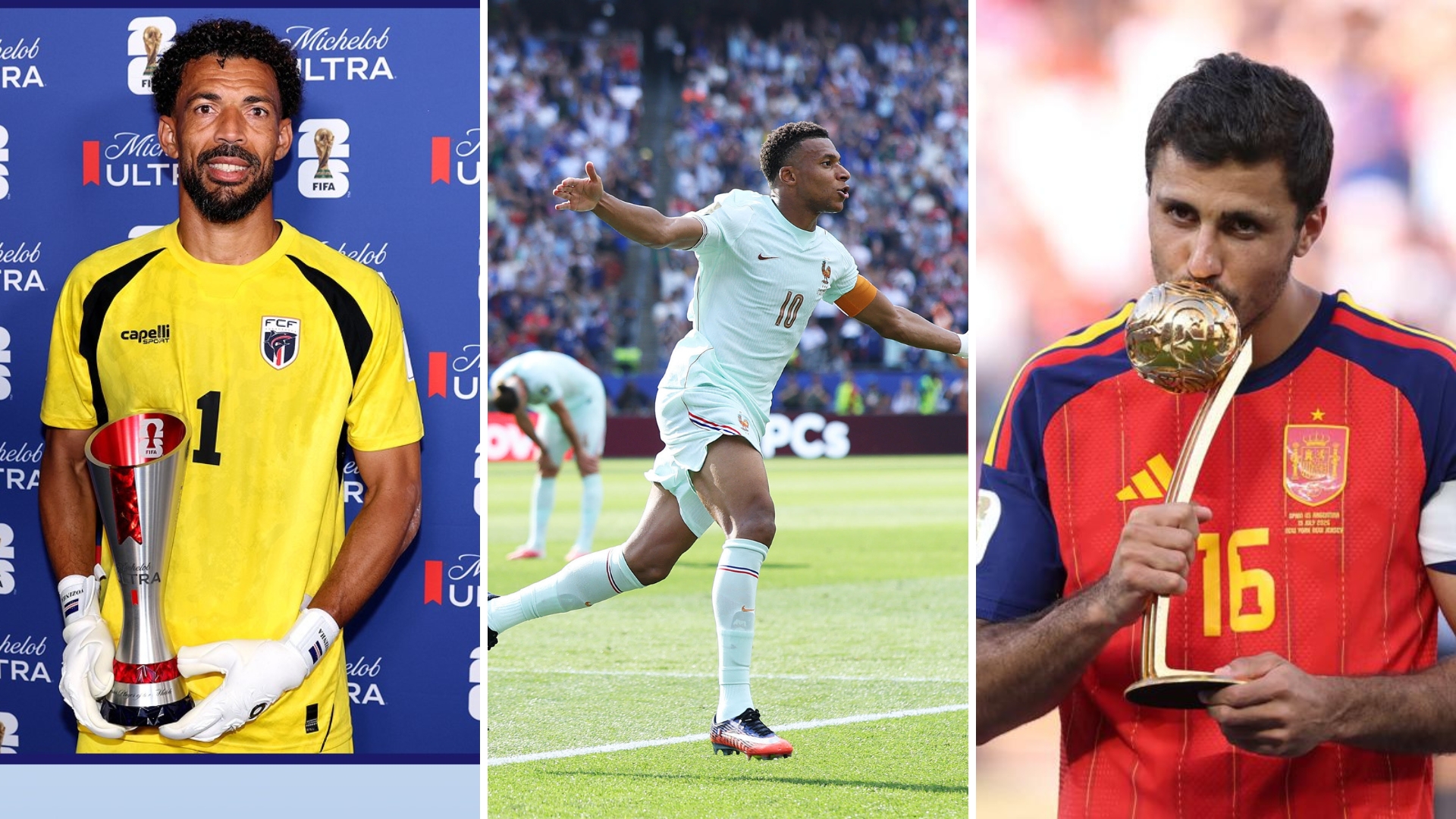
For more than 100 minutes on 19 July, Ferran Torres watched the World Cup final from the margins. Spain pushed Argentina across the field and created nearly all the opportunities, but the goal that would transform their superiority into history refused to come. Neither Torres nor Nico Williams had started the match. Introduced from the bench, they combined for the breakthrough in the 106th minute: Williams created the opening, and Torres provided the finish. One pass. One goal. One World Cup. When the final whistle sounded at the New York New Jersey Stadium, Spain were champions for the second time, defeating holders Argentina 1-0 after extra time and reclaiming the trophy they last won in 2010. Spain’s substitutes supplied the energy that finally settled a contest in which Argentina created virtually nothing during regulation time. Torres became the hero of the final, but the tournament produced several different forms of heroism. Some players returned from serious injuries. Others broke records without winning the trophy. Some carried small nations into football’s biggest conversation, while others became unforgettable through one goal, one save or one extraordinary night. Beyond FIFA’s official awards, this selection recognises the players whose resilience, tactical importance, decisive interventions or symbolic significance shaped how the first 48-team World Cup will be remembered. Rodri [Credit: FIFA Media]Rodrigo Hernández Cascante, known as Rodri, did not score in the final, nor did he provide the winning assist. Yet Spain’s football consistently passed through him. The midfielder controlled the tempo, protected the defence and allowed the more adventurous players around him to take risks. His authority was even more remarkable because of the journey that preceded it. Less than two years before the tournament, Rodri ruptured knee ligaments and endured a long recovery before returning to lead Spain. He went on to receive FIFA’s Golden Ball as the competition’s best player and completed 790 passes—the most recorded by a player in a single World Cup. After receiving the award, Rodri described his triumph as an outcome he had not expected during the darkest period of his recovery. His return gave Spain more than a midfielder: it restored the organiser around whom their possession, pressing and defensive balance could operate. Rodri was the point at which Spain’s ideas became a functioning system—a superstar at the centre of a team, but not a team constructed to serve one superstar. World Cup finals often create heroes from the established names expected to dominate. The 2026 edition turned two substitutes into history-makers instead. Spain struggled for more than 90 minutes to convert their superiority into a goal. Argentina defended deep, disrupted the game’s rhythm and appeared capable of forcing the contest towards penalties. Spain coach Luis de la Fuente then turned to Williams and Torres, whose introduction demonstrated the depth that separated the champions from most of the competition. Williams brought fresh pace against an Argentine defence beginning to tire. Torres found spaces that had not been available earlier. Their combination finally broke the deadlock in the second period of extra time, with Torres converting Spain’s 20th attempt of the match. Football history does not always reserve its decisive moments for the most celebrated names. Torres scored the goal; Williams created it. Together, they embodied the strength of a squad whose alternatives could decide the biggest match. Spain’s attacking fluidity attracted much of the attention, but their triumph was anchored by defensive discipline. Goalkeeper Unai Simón won the Golden Glove after keeping seven clean sheets in eight matches, the most by a goalkeeper in a single men’s World Cup. Spain conceded only once throughout the tournament. Spain often protected Simón by pressing immediately after losing the ball and preventing opponents from developing sustained attacks. When that structure was breached, he provided calmness and reliable decision-making. In front of him, 19-year-old Pau Cubarsí helped construct attacks from the back while holding his own against elite forwards. FIFA named the Barcelona defender the tournament’s Best Young Player. He completed 566 passes, underlining his importance to Spain’s attempts to build from defence. Together, Simón and Cubarsí demonstrated that possession could not win a World Cup without defensive security. Simón represented experience and calmness under pressure; Cubarsí represented a generation that may sustain Spain’s success for years to come. France failed to reach a third consecutive final, but Kylian Mbappé still altered World Cup history. The French captain scored 10 goals to win the Golden Boot. His two strikes in the third-place playoff took his career World Cup tally to 22, making him the competition’s all-time leading scorer at just 27. Mbappé reached the mark in his third World Cup, having scored four times in 2018, eight in 2022 and 10 in 2026. Yet his response highlighted the limits of individual records when collective success remains out of reach. “I would have preferred not to be the all-time top scorer and to be playing tomorrow’s match,” Mbappé said before the final. “It’s good in terms of legacy, but today it’s not the first thing on my mind.” That tension defined his tournament. He was its most devastating goalscorer but not its champion. No competition has defined Mbappé’s international career more clearly than the World Cup, and his record may still be far from its final total. Football appeared ready to grant Lionel Messi one last World Cup fairytale. At 39, the Argentina captain scored eight goals and provided four assists as the defending champions reached a second successive final. His late interventions repeatedly helped Argentina survive difficult knockout matches. His influence was no longer based on constant acceleration but on intelligent positioning, energy conservation and moments of clarity when his team needed them most. The final, however, offered him little room for one last decisive contribution. Spain restricted his space, denied him service in dangerous areas and prevented Argentina from registering an attempt during the regulation 90 minutes. Their first effort arrived in the 116th minute, when they were already behind and playing with 10 men. Messi left the pitch in tears after his third World Cup final. Argentina coach Lionel Scaloni described his tournament as unbelievable, praising a captain who had played every minute of the knockout phase at 39. What may prove to have been Messi’s final World Cup appearance ended with a runners-up medal. Yet defeat did not erase the achievement. Four years after leading Argentina to the title in Qatar, he carried the defending champions to another final near the end of his career. Although the coronation did not come, the journey remained remarkable. Before the tournament, few casual observers would have identified Josimar José Évora Dias, known as Vozinha, as a potential World Cup hero. The 40-year-old goalkeeper was representing an island nation, appearing at the competition for the first time. Cape Verde’s opening assignment was against Spain, the European champions and one of the leading contenders for the trophy. By full-time, Vozinha had become one of the tournament’s defining personalities. Spain attempted 27 shots, but the veteran made seven saves as Cape Verde secured a goalless draw and their first World Cup point. The performance was not isolated. Cape Verde advanced from their group on their debut, becoming the least populous nation to reach the knockout stage. They then twice came from behind against Argentina before losing 3-2 after extra time in the Round of 32. Vozinha said the campaign demonstrated that Cape Verde’s players could compete at the highest level—an assertion supported by their performances against Spain, Uruguay and Argentina. Their run offered a compelling sporting defence of the enlarged tournament. Cape Verde did not simply add fixtures to FIFA’s expanded field. They brought an unfamiliar story, carried the ambitions of a small island nation and demonstrated the ability of newcomers to unsettle traditional powers. Vozinha and his teammates showed why making room for new participants mattered. Heroism does not always require a journey to the final. Sometimes it is forged in a single evening. For Curaçao, that evening came against Ecuador. Six days after a heavy defeat by Germany, the World Cup debutants needed a response. Goalkeeper Eloy Room provided it. Ecuador kept finding shooting lanes; Room kept ending them. The 37-year-old made 15 saves in a goalless draw—the most recorded in a 90-minute World Cup match—and gave the tournament’s least populous country their first World Cup point. As the pressure intensified, each intervention carried greater significance. Curaçao were no longer merely trying to survive another match; they were protecting the first point in their World Cup history. READ ALSO: World Cup 2026: Spain’s tactical revolution, Rodri’s greatness, other lessons from historic tournament Bukayo Saka’s defining performance came under different circumstances. England had lost their semifinal against Argentina and entered the third-place playoff carrying the disappointment of another failed pursuit of the trophy. Saka turned the consolation fixture into a spectacle. He scored twice in the first half before completing his hat-trick from the penalty spot late in the match as England defeated France 6-4 to finish third—the country’s best World Cup position since winning the competition in 1966. The 10-goal contest also became the highest-scoring third-place playoff in World Cup history. Room defended the goal of a tiny Caribbean nation; Saka shone for one of football’s wealthiest and most scrutinised teams. Both demonstrated that heroism can emerge even after the main ambition has faded. FIFA’s individual awards provide the official account: Rodri won the Golden Ball, Mbappé claimed the Golden Boot, Simón took the Golden Glove, and Cubarsí was named Best Young Player. But awards cannot fully explain why a World Cup endures in the memory. Torres and Williams decided the final from the bench. Messi carried Argentina towards one last possible coronation. Room gave Curaçao their first point. Saka transformed disappointment into celebration. Vozinha became the face of Cape Verde’s historic campaign and of the opportunities created by the enlarged tournament. Spain departed North America with the trophy. But the history of the 2026 World Cup belongs to all of them.
World Cup: Rodri, Mbappé, Vozinha and other heroes who defined 2026 tournament
Full Article
Original Source
Read the full article at Premiumtimesng →KhanList aggregates and links to publicly available news content. We do not host full articles from third-party sources. Always verify important information with original sources.