
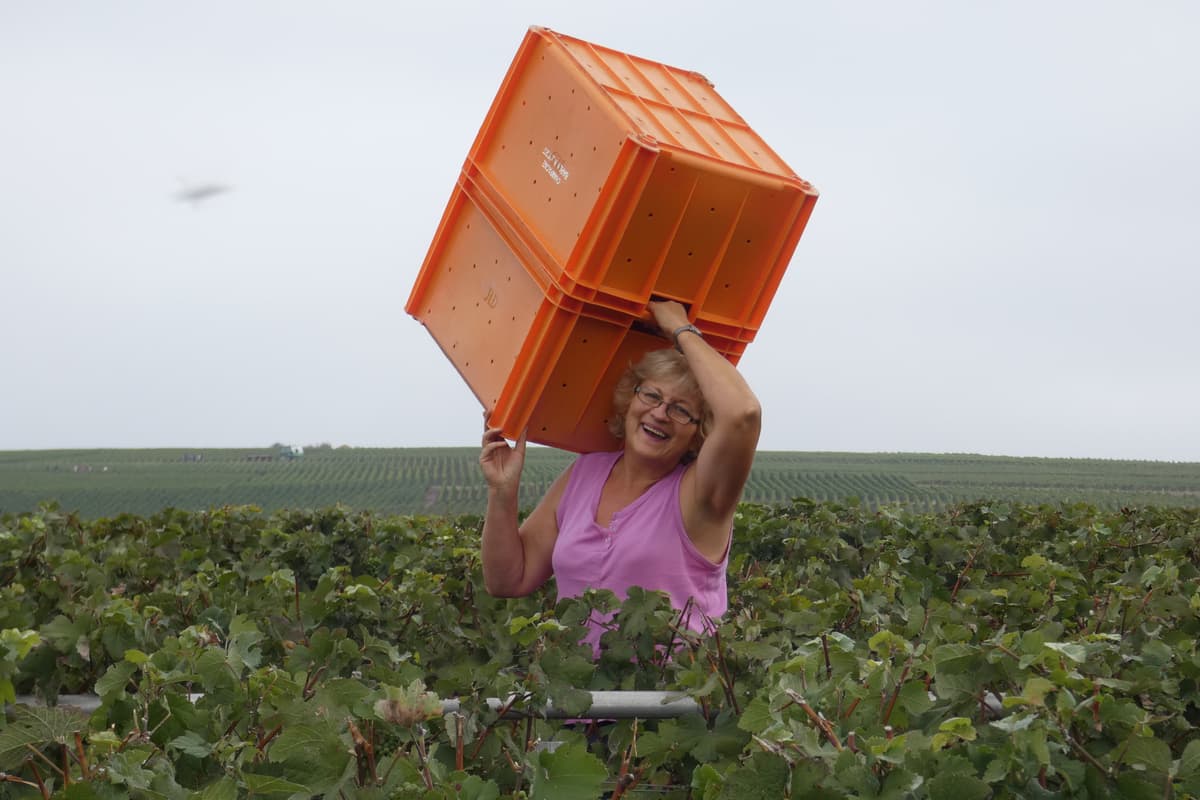
Somewhere in Britain, a bottle of champagne is waiting for somebody to get engaged. Another, bought for a birthday ending in zero, has survived several birthdays ending in other numbers. Relatives, unless exceptional, generally get prosecco.This is flattering to champagne and not entirely helpful to Champagne, which has attached its wine so successfully to life’s exclamation marks that the popping cork has become almost shorthand for good news. There are, inconveniently, considerably more Tuesdays than engagements.World Champagne Day has its own pleasing absurdity. It was devised in 2009 not by a Champenois, but by Californian wine educator, Chris Oggenfus, before Champagne sensibly adopted it. Perhaps it took an outsider to notice that the world’s most famous sparkling wine might occasionally benefit from being drunk rather than revered.Read MoreThe market is hardly collapsing, although nobody in Reims is behaving recklessly. Britain remains one of Champagne’s most important export markets, while shipments this year have proved steadier than some of the gloomier headlines suggest.Cristal at Alex Dilling at Hotel Café RoyalDavid PearceThe vineyards are changing more dramatically. Severe spring frost, intense summer heat and drought made 2026 Champagne’s earliest harvest on record, with picking beginning in some vineyards on 6 August, nearly a month ahead of the traditional mid-September harvest and around a fortnight earlier than 2025. The grapes, it seems, are in rather more of a hurry than the customers. I learnt one example of how Champagne is adapting whilst being serenaded by a harpist at Alex Dilling at Hotel Café Royal during a celebration of Cristal’s 150th anniversary, which is not an especially austere environment in which to contemplate climate change.In the warm 2018 vintage, Louis Roederer cellar master, Jean-Baptiste Lécaillon broadened the usual Cristal palette, drawing on more plots and more Chardonnay than normal. Nothing about Cristal 2018 (£238, thefinestbubble.com) tastes remotely corrective: it is taut and luminous, with citrus, white flowers and a saline finish. Even Cristal, apparently, sometimes has to change to remain Cristal.The other question is less climatic: when are we meant to drink the stuff? Reims has Sacré Burger, where serious grower champagne accompanies burgers and fried chicken, while London acquired Milk Burger on Westbourne Grove this month. I understand the chemistry. Acidity, bubbles, salt and fat are splendid conspirators, and fried chicken with champagne can be indecently good. What I cannot embrace is burger juice travelling from fingers to the bowl of a decent glass. There are limits to democratisation.More seriously, putting champagne beside a burger makes it informal, not necessarily accessible. A brioche bun achieves little if the first interesting glass still requires a glance at the bank balance. The greater opportunity is a glass worth ordering on impulse, poured by somebody able to explain why it suits the food without beginning at the Cretaceous period.The wines themselves are becoming less obedient. Taittinger Folies de la Marquetterie (£68, thefinestbubble.com) and incidentally the champagne at my wedding a decade ago, remains the maison’s oaky secret weapon, broader and more Pinot-led than the familiar Taittinger profile, with ripe orchard fruit, brioche and a gently smoky richness. I have therefore been conducting unusually long-term research.Palmer & Co La Réserve Nature (£60, fortnumandmason.com) takes the opposite route, managing zero dosage without tasting punitive, all brisk citrus, chalk and salted almond, while Lelarge-Pugeot Tradition (£47.18, strictlywine.co.uk) brings biodynamic farming and Meunier together in a supple mix of apple, plum and warm bread, without leaving the impression that pleasure has somehow compromised the principles.Further south in the Côte des Bar, siblings Lucie and Sébastien Cheurlin make l’Elégante Blanc de Blancs 2017 (£54, gnarlyvines.co.uk) an oak-aged Chardonnay with hazelnut, yellow plum and brioche rather than another impression of lemon squeezed over chalk.Ludovic du Plessis and Douglas BlydeJack CharltonThen there is Telmont, the ‘sleeping beauty’ which its charismatic president, Ludovic du Plessis, has been enthusiastically waking with organic conversion, lighter bottles, no gift boxes and, most inconveniently, no air freight. Leonardo DiCaprio has been a minority investor since 2022, although there is a pleasing consequence to his maison’s environmental zeal: he can be among the last to encounter a new cuvée in America because even Hollywood does not get a plane.Réserve de la Terre Rosé N°002 (£79.95, thewhiskyexchange.com) is made from organic fruit and tastes of blood orange, cherry and spice, with enough savoury grip to take it well beyond aperitif territory, giving pink champagne more useful employment than waiting for 14th February. DiCaprio called Telmont’s approach ‘the taste of the future’ when he invested; du Plessis has spent rather more time making sure the future arrives deliberately.Champagne Drémont-MarroyPRESS HANDOUTWomen, Waiting and West SussexWho gets pours matters too. The racy, mirabelle plum-scented Drémont-Marroy Le Triau Extra Brut (£52, ladyofthegrapeswines.com) is bright and dry, with citrus peel and a lightly chalky finish. It is made by Mélanie Drémont and imported directly by Carole Bryon of Lady of the Grapes, a former graphic designer whose Covent Garden and London Bridge restaurants put female winemakers at the centre of the list throughout the year rather than rediscovering them every March.At London Bridge, Le Triau is particularly good alongside the gougères, whose light choux shells release a decidedly messy Époisses custard. Fingers may be involved, although unlike the burger I am prepared to make an exception. The restaurant currently pours Le Triau by the glass, which is precisely the sort of low-commitment route into better champagne the category needs.Time may be champagne’s most expensive ingredient. Bruno Paillard Blanc de Blancs 2015, Présence (£95, wanderlustwine.co.uk) appeared roughly a decade after harvest, tasting finely evolved rather than elderly, with lemon curd, toasted almond and a long, chalky freshness. Its label was interpreted by Jeff Kowatch, a Californian-born painter long based in Brussels.California, having already given us World Champagne Day, turns up again here by way of the artist. Kowatch’s abstractions owe something to Rothko and Brice Marden, while his layered glazing looks back towards Rembrandt and Flemish painting. It is an apt collaboration for a wine built slowly, with capital sleeping underground while the rest of us got on with our lives.Competition, meanwhile, is arriving from closer to home. Nyetimber Blanc de Blancs 2018 (£58, shop.nyetimber.com) comes from Chardonnay grown in West Sussex and Hampshire, tasting cool and precise, with green apple, lemon cream and toasted hazelnut, while Nyetimber itself comes from Gay Street, where Stuart and Sandy Moss planted the classic Champagne varieties in 1988. In those early days, Stuart once went damp in the eyes when I asked him for his autograph, which says something about how improbable England’s present confidence once seemed.I last tasted Nyetimber at Tivoli, Copenhagen’s unusually civilised theme park. Make of that what you will.More tellingly, the Champenois are investing here themselves. Taittinger has established Domaine Evremond in Kent, while Pommery is producing English sparkling wine in Hampshire. When people who already own vineyards in Champagne start spending French money on English earth, it is probably safe to stop calling English sparkling wine promising. The French have moved beyond complimenting us, which is when one should start paying attention.Nyetimber EstatePRESS HANDOUTChampagne hardly needs another genuflection to its prestige. It needs opening. Serve serious bottles at around 10C in a proper white-wine glass rather than freezing them into silence, then put them on the table with sashimi, Parmesan, turbot, roast chicken, Comté, caviar, or something fried, preferably eaten with cutlery if the glass is good.I once knew of a regional television presenter who, after a heart attack, remortgaged his house so that he and his wife, who had triumphed over cancer, could drink champagne every day. This is not financial advice. It is, however, a fairly decisive rejection of saving the good bottle for later.Not every Tuesday requires champagne, which would be ruinous and eventually tiresome. But on Friday 23 October, take the bottle you have been keeping for something, chill it, find a decent glass and remove the foil before inventing another reason to wait. If nothing else happens that evening, the wine has supplied the occasion.
World Champagne Day 2026: stop saving the good bottle
Full Article
Original Source
Read the full article at Standard →KhanList aggregates and links to publicly available news content. We do not host full articles from third-party sources. Always verify important information with original sources.