
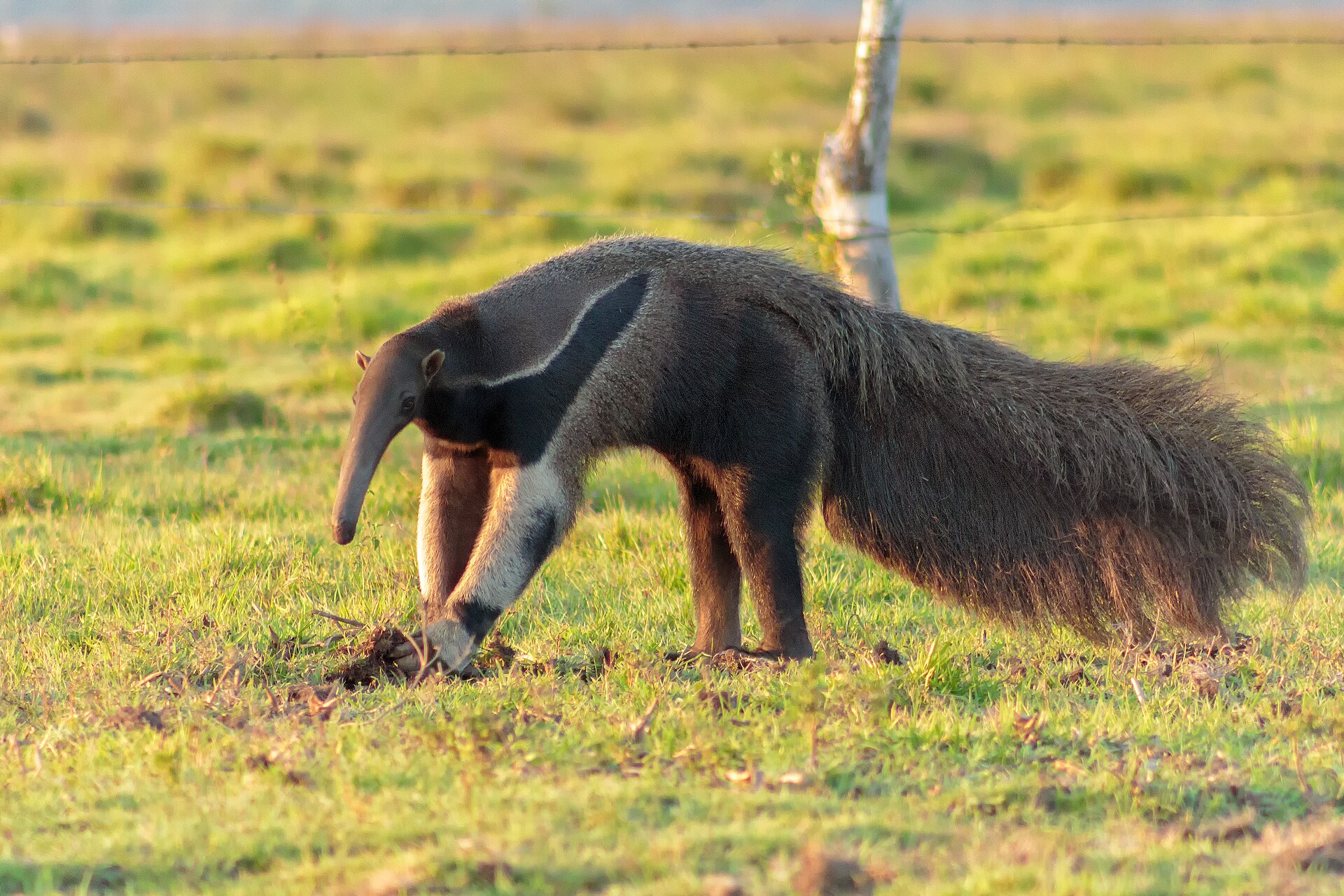
World Anteater Day falls on Nov. 19, in recognition of the tube-nosed, ant- and termite-eating animals living across Central and South America. Closely related to sloths, anteaters generally live in trees. The largest species, the giant anteater (Myrmecophaga tridactyla), lives on the ground, though, where it rips open anthills and termite nests with its razor-sharp claws and slurps up the insects with its long, sticky tongue. The species is listed as vulnerable on the IUCN Red List. Giant anteaters have disappeared from parts of their range due to habitat destruction and hunting, but habitat restoration and rewilding efforts are helping their return in some of their former range. A giant anteater’s return in Argentina offers a case for letting nature restore itself In 2025, a giant anteater returned to the Alma Guaraní reserve in Argentina’s Gran Chaco region for the first known time since 1986, reported Mongabay contributor Sean Mowbray. Habitat degradation in the Gran Chaco due to agricultural expansion and forest loss had reduced ant abundance by 30-50% compared to well-preserved areas, directly affecting the giant anteater. Alma Guaraní Natural Reserve, which covers approximately 6,400 hectares (about 15,800 acres), has been the site of volunteer-led restoration work for more than a decade. In some areas, volunteers actively planted native trees; in others, they used fences to allow the land to regenerate naturally, free from incursions by livestock, dogs, and hunting and fishing activity. A network of 20 camera traps found that the giant anteater mostly remained in the passively restored areas. However, experts say it’s too early to say if the anteater’s return is the start of the species’ recovery or a one-off, and emphasize the need for continuous monitoring. Rewilding in Argentina helps giant anteaters return to south Brazil In August 2023, Fábio Mazim and his team were surprised by the unmistakable long snout and bushy tail of a giant anteater ambling in the footage of a camera set in Brazil’s Espinilho State Park. “We shouted and cried when we saw it,” Mazim told contributor Sarah Brown. “It took a few days to grasp the importance of this record. A sighting of a giant anteater was never, ever expected.” Giant anteaters were last seen alive in this region of Brazil in 1890. Between the August 2023 sighting and the publication of Brown’s story in February 2024, there were another 11 sightings. The scientists say it’s not clear whether it was the same individual each time, but they conclude it likely ventured across the border from Iberá Park in northeastern Argentina, where a rewilding project has released around 110 giant anteaters. How to tell if anteaters are stressed out For younger readers, Mongabay Kids presents a Mongabay video about how scientists are using tiny heart monitors to study how anteaters and other species in Brazil are affected by changes in their environment. Banner image of a giant anteater (Myrmecophaga tridactyla), by Fernando Flores via Wikimedia Commons (CC BY-SA 2.0). Credits Topics
World Anteater Day: Rewilding and restoration offer hope for enigmatic species
Full Article
Original Source
Read the full article at News →KhanList aggregates and links to publicly available news content. We do not host full articles from third-party sources. Always verify important information with original sources.