
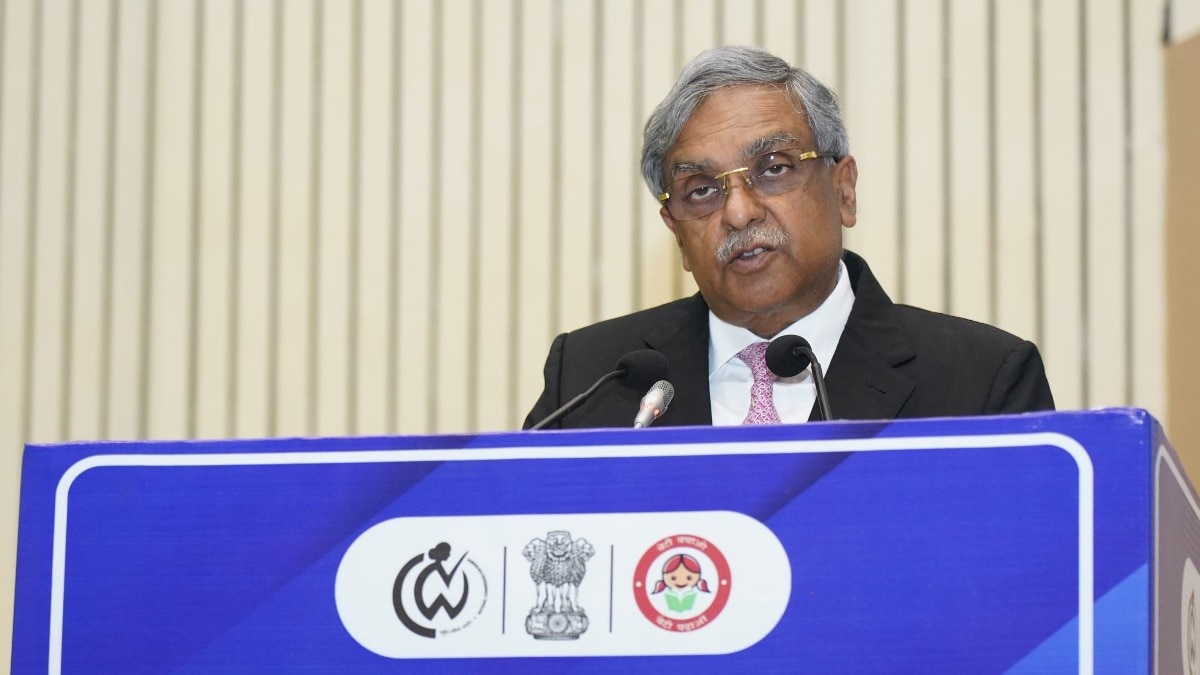
Senior-most Supreme Court judge Justice Vikram Nath on Wednesday said the voice of a woman speaking about fear, violence or distress must not be overlooked or normalised and said women should know that they will be heard and protected by law.He was delivering the valedictory address at the national conference of protection officers organised by the National Commission for Women.Justice Nath also praised protection officers appointed under the Protection of Women from Domestic Violence Act for helping women in distress get justice. He said the support system must ensure that women can live with dignity, security and the freedom to make choices about their own lives."A daughter should not grow up believing that silence is the price of preserving a family and a son should not grow up believing that the reputation of a family depends upon a woman's willingness to endure. There is a point at which adjustment ceases to be part of sustaining a relationship and becomes an expectation that a woman endure what she should not have to," he said. Justice Nath, who is next in line to become the Chief Justice of India next year, said recognising that line and ensuring that the law responds when it is crossed is an important part of addressing domestic violence. He said changing this understanding may take time, but it begins with the choices made in families and institutions today."When a woman first speaks of fear, violence or distress, that voice must not be overlooked or normalised. She should know that she will be heard, that the law will respond, and that she will have the support she needs to live with dignity, security and the freedom to make choices about her own life," he added Justice Nath further said that women in India are equal citizens entitled to the full protection and promise of the Constitution, and said it is the responsibility of all to ensure that this promise is realised in their everyday lives.Justice Nath, who is also the Executive Chairman of the National Legal Services Authority, said judges see women from different social and economic backgrounds facing domestic violence every day in court. He said they may be highly educated, financially independent and socially privileged, or they may have limited education and no independent means of support."Yet, the pressure to adjust, to remain silent and to preserve the marriage can exist across these differences. And often, that pressure comes from the woman's own family. She may be asked to tolerate what is happening because the marriage must be saved, because the children will suffer or because the family's reputation is at stake," he said.He added that when a woman speaks about violence, those closest to her should first try to understand what she is experiencing and offer support and safety, rather than ask how she can adjust to it.Referring to data, Justice Nath said the latest National Family Health Survey offers an important starting point, with NFHS-6 for 2023-24 recording a decline in reported spousal violence from 29.2 per cent in NFHS-5 to 22.3 per cent."We should certainly recognise this decline. At the same time, even a figure of 22.3 per cent tells us that domestic violence remains a significant reality in the lives of Indian women," he said.He added that statistics have limitations because they reflect what has been reported and measured, not what remains unspoken. Citing research, he said formal help-seeking remains limited among women facing intimate partner violence, and the gap between experiencing violence and reaching the formal justice system is one of the most important challenges."Our ultimate measure of success cannot be only how many complaints have been registered. The more important measures to judge the improvement are whether women are actually safer, whether they know where to go, whether they are able to leave if they so choose and whether the protection granted to them actually reaches them," he said.Justice Nath said it is important to remember that domestic violence is not confined to matrimonial relationships, and that the law recognises violence within different domestic relationships, including between parents and children, siblings, and others who share or have shared a household, as well as relationships in the nature of marriage."It is also significant that the definition of domestic violence is not confined to physical violence. The Act recognises sexual abuse, verbal and emotional abuse and economic abuse. This was an important legislative recognition for its time because it acknowledged that domestic violence does not always present itself in the form that we instinctively recognise as violence," he said.NCW chairperson Vijaya Rahatkar, who also spoke at the event, said women often get relief in domestic violence cases but face problems in implementation of court orders and have to return to court for execution.She urged the court to take note of the lack of implementation of orders and ensure compliance so that women in distress get relief. In his address, Justice Nath underlined the need to hear women when they speak, strengthen support systems and ensure that legal protection reaches them in practice.- Ends
Women's silence cannot be price of saving family: SC judge on domestic violence
Full Article
Original Source
Read the full article at Indiatoday →KhanList aggregates and links to publicly available news content. We do not host full articles from third-party sources. Always verify important information with original sources.