
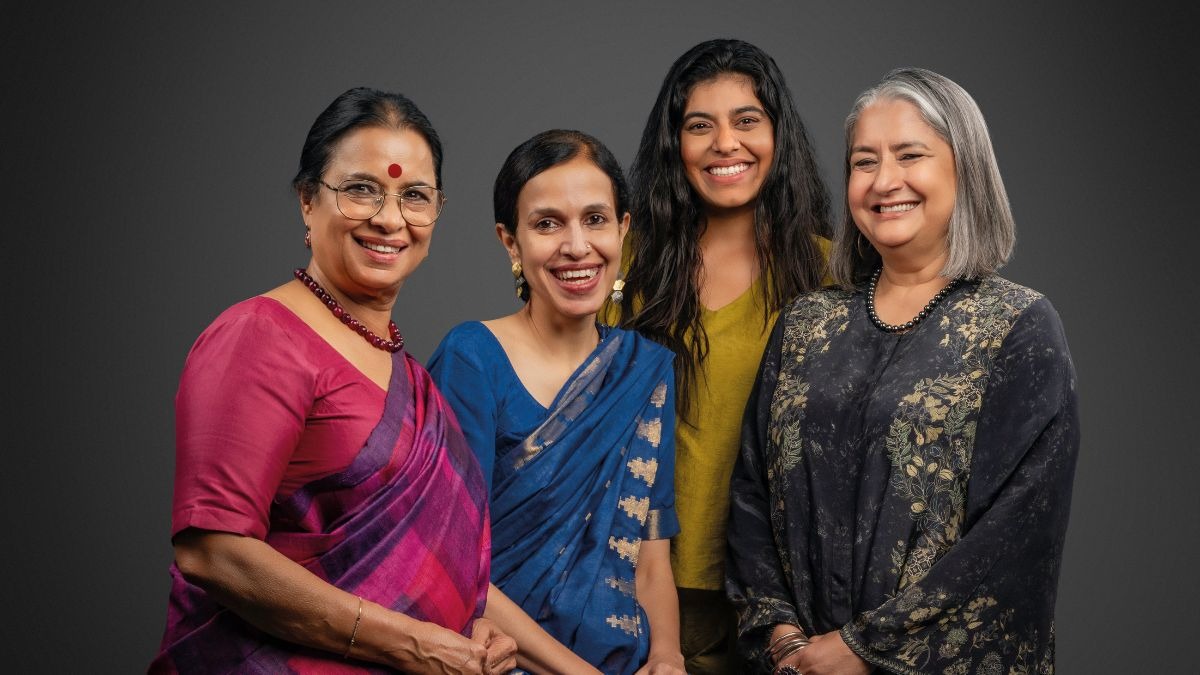
The India Today Woman Summit 2026 raised an uncomfortable question: what is consent in everyday life and why do women struggle to exercise it?India knows the word ‘consent’. Increasingly, it knows the principle, too. But the session titled ‘Why consent matters at home, work and everywhere else’ at the India Today Woman Summit 2026 in New Delhi asked a more uncomfortable question: what does consent actually look like in everyday life—and why is it still so difficult for women to exercise it?The session saw speakers Ranjana Kumari, director of the Centre for Social Research, New Delhi; Niyati Sharma, founder and executive director of the Pratisandhi Foundation, an organisation working in India to provide sex and consent education; Smita Bharti, social activist, playwright-director and executive director of NGO Sakshi; and Prof. Madhavi Menon, director, Centre for Studies in Gender & Sexuality, Ashoka University, examine the gap between awareness and agency. For Kumari, the starting point was autonomy. “Consent is actually authority over self,” she said. But that authority, she argued, is undermined from childhood. Girls are taught not to laugh too loudly or question too much or necessarily choose what they study; even whom they marry is often treated as a family decision rather than an individual choice. That conditioning has consequences. Kumari pointed to the gap between women saying no and having that refusal respected. She argued that unequal power within relationships and workplaces continues to make consent difficult to exercise. At work, hierarchy, economic dependence and the fear of losing a job can effectively take consent away. “You have control over your own body,” she said. “Anybody trying to enter that space is violating.” Menon complicated the familiar “yes means yes, no means no” formulation. Consent, she argued, is not as simple as imagining ourselves to be perfectly self-aware, always-certain individuals. People can be unsure. They can change their minds. “I should be able to say I don’t know. I should be able to say I changed my mind,” she said. The point, she suggested, is to create a culture in which changing one's mind does not become a failure or a crisis.Menon also challenged the idea that sexuality is purely private. From birth, society assigns gender, prescribes behaviour and polices women's choices. She cited the example of a woman who, after being heavily trolled online, began thinking twice about what she wore. “Where is her consent?” Menon asked, arguing that autonomy is shaped by the social world around us.For Sharma, the answer begins early. Drawing on her work with children, parents and teachers, she argued that consent cannot be reduced to a single workshop or a lesson about safe and unsafe touch. It has to be an ongoing conversation because children encounter different situations and power dynamics as they grow. “There is no one lesson to say, ‘Okay, now you know everything, go home, one and done’,” she said.Sharma highlighted a striking gender divide in her work with young people. Many girls arrive understanding that boys and men often do not ask because they hold power; many boys, meanwhile, say they simply assumed that this was how things worked because nobody had ever told them they could ask. The digital world adds another complication, with anonymity sometimes making young people feel their online actions carry few consequences. Sharma argued for talking about consent through respect, empathy and kindness rather than presenting it solely as a list of red lines.Bharti brought the discussion back to the larger social ecosystem. Consent, she said, “is never in isolation”. It exists within families, workplaces, peer groups and social expectations. Yet society has repeatedly created spaces where “no” is interpreted as rejection, humiliation or being difficult.The panel also challenged the disproportionate responsibility placed on women. Kumari pointed out that girls are often raised to surrender and accommodate while boys are raised with entitlement. But she also saw reason for optimism: younger generations are beginning to challenge those scripts, asking, “Why me? Why not him?”The responsibility, the speakers agreed, begins at home. An audience member asked who should teach boys to say “no”. Kumari's answer was unequivocal: “Who else than the father and the mother?” Yet the panel also cautioned against turning consent education into another burden for women. Children learn as much from watching relationships around them as from what adults tell them.The discussion ultimately returned to agency. Women need to recognise their right to make choices, but that agency cannot flourish in an ecosystem shaped by fear, dependency and unequal power. As Kumari put it, the surrounding ecosystem has to change so that women can exercise their agency freely.Bharti offered perhaps the most succinct conclusion: “If no is rejection, it is going to be boundaries erased. If no is information, it’s going to be boundaries respected.”The challenge, then, is bigger than teaching people to say no. It is creating families, workplaces and institutions where a “no” does not need to be justified, softened or feared—and where another person's boundary is understood as exactly what it is: theirs to set.KEY TAKEAWAYSRanjana Kumari“Consent is actually authority over self. It’s autonomy.”“You have control over your own body.”“Women have to learn that they have agency. That’s the most important thing.”Prof. Madhavi Menon“I should be able to say I don’t know. I should be able to say I changed my mind.”“The idea of consent simply does not exist” as an image of an always-certain, all-knowing self.“The myth that sex and gender are private is what is causing a lot of the problem.”Niyati Sharma“There is no one lesson to say, ‘Okay, now you know everything, go home, one and done’.”“Consent is very contextual it has to be an ongoing conversation.”“Kids learn just as much from watching us as they do from what we say.”Smita Bharti“Consent is never in isolation. It’s not in a vacuum.”“We have not built rooms where ‘no’ can be accepted.”“If no is rejection, it is going to be boundaries erased. If no is information, it’s going to be boundaries respected.”Subscribe to India Today Magazine- EndsPublished By: Akshita JollyPublished On: Aug 26, 2026 18:42 IST
Women's consent: India knows the word, but does it know the meaning?
Full Article
Original Source
Read the full article at Indiatoday →KhanList aggregates and links to publicly available news content. We do not host full articles from third-party sources. Always verify important information with original sources.