
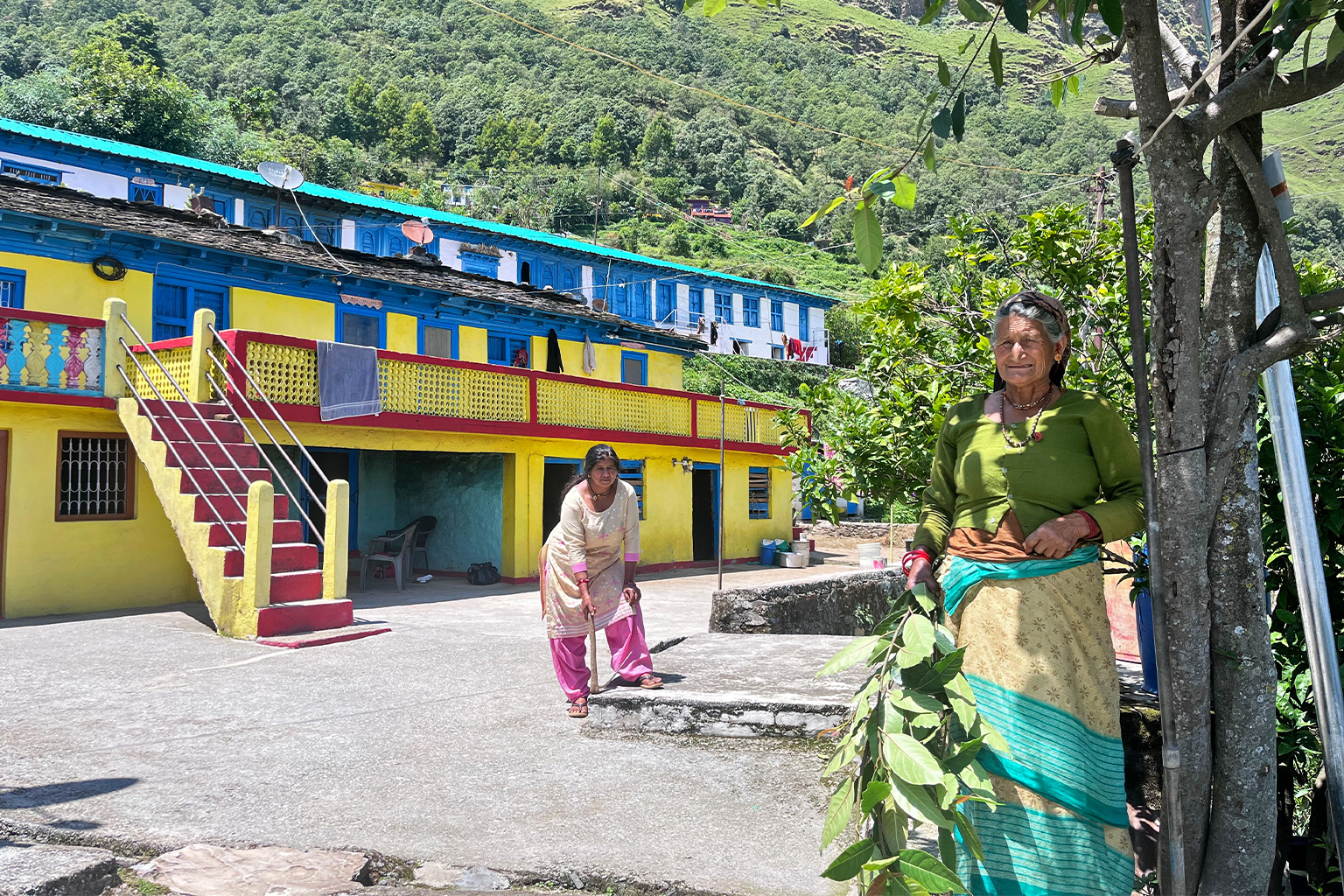
In the Indian Western Himalayas, women are the primary first responders to escalating forest fires. They risk their physical safety to protect homes and livelihoods despite receiving little formal support or equipment and no pay, reports contributor Swati Thapa for Mongabay. Uttarakhand is the most fire-prone state in India’s Western Himalayas. High-elevation warming exceeds global rates there, extending the wildfire season into the winter and hinting at bigger ecosystem-level changes. More than 71% of the state is forested, supplying the region with essential drinking water, firewood, and fodder for cattle. Climate change is both increasing fire risk and impacting local agriculture, such that men are migrating to cities for work, leaving rural women behind to manage farming, livestock, and fire defense. Kavya Pandey, a researcher at the Centre for Wildlife Studies in Bengaluru, has studied extensively the relationship between women in Uttarakhand and forest fires. Pandey notes that a traditional gender role for women is collecting firewood, so they’re often in the forest for hours and, by default, on the frontlines when forest fires start. Men are occasionally hired as paid seasonal fire watchers, and while authorities also call on women to help, they’re rarely paid for the work and don’t receive protective gear. “If a woman sees fire anywhere, and she does not have a phone, she calls out to others by ululating or whistling, and all the women go together to snuff the fire,” said Kamla Devi, head of the Marhmanley village van panchayat, a community-managed forest council. Armed primarily with household sickles, women cut green branches to make jhapa, or makeshift fire brooms. “When the flames are not too high, we use jhapa to beat back the fire,” said Asha Devi, a resident of Bhetuli village. “If they are [high], we clear a fire line instead; some of us push the fire back toward the already-burnt ground, while others use their sickle to pull away dry grass and twigs so it has nothing left to catch on.” The physical toll is significant. Women battle fires wearing flammable synthetic nylon sarees, often suffering burnt hands, singed eyebrows, and foot injuries. “We are all coughing our lungs out; during that time, our eyes are bloodshot, irritated by all the smoke, and it’s hard to breathe in the thick air,” said Tulsi Devi, a resident of Ayarpani village. But community-led prevention has worked in places where women hold genuine authority. Roughly 95% of forest fires in India are human-made, so Kamla has organized community women to stop fires before they start, keeping Marhmanley free of major blazes for three consecutive years. “Before, people burned brush haphazardly, but now we insist on planning. We show them where and how to set small, controlled burns,” Kamla said. Read the full story by Swati Thapa here. Banner image: Kamla Devi, left, and Lila Devi with the tools they use to beat back forest fires. Image by Swati Thapa for Mongabay. Credits Topics
Women shoulder the burden of expanding wildfires in rural India
Full Article
Original Source
Read the full article at News →KhanList aggregates and links to publicly available news content. We do not host full articles from third-party sources. Always verify important information with original sources.