
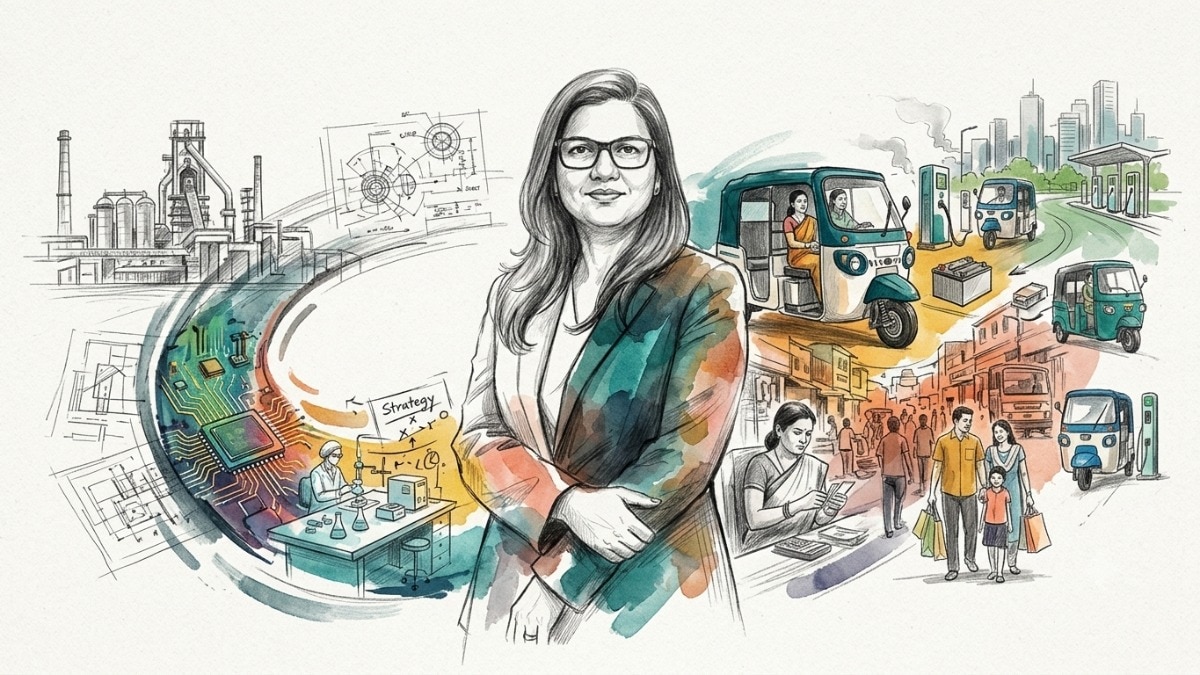
"I have met women drivers who hugged me and said our vehicle had changed their lives."For Suman Mishra, Managing Director and CEO of Mahindra Last Mile Mobility, moments like these explain why the electric vehicle business matters. A vehicle is not just a product for someone who drives it for a living. It is a source of income, a way to support a family and, potentially, a route to a better future.That understanding has shaped how Mishra approaches one of India's biggest mobility transitions. When she took charge of the business in 2021, electric vehicle adoption was still at an early stage. The pandemic had hit the earnings of many customers, particularly in the passenger segment. Mahindra, meanwhile, had a larger internal combustion engine portfolio and limited resources to deploy.She could not afford to pursue every opportunity at once. "The most important realisation was that we had to make sharper choices. We could not be everything to everyone. We decided to back electric mobility wholeheartedly because we believed it represented the future of the category and offered the strongest long-term growth opportunity," she says.But the decision to back EVs came with a bigger responsibility. Building a vehicle was only the beginning. Drivers needed affordable finance, reliable servicing, charging support and confidence that the new technology would help them earn a better living. (Photo: The Earthshot Prize) "Looking back, that was probably the defining decision: not just to bet on EVs, but to recognise that we had to help create the conditions for adoption."The bet has since translated into more than 400,000 electric last-mile vehicles sold, including over 100,000 in a single year, according to the company's Earthshot profile.The company is now working towards one million electric vehicles on India's roads by 2031.THE BUSINESS BEHIND THE VEHICLEMishra's understanding of the EV transition is rooted in the economics of everyday driving."Drivers judge an EV by one thing: what they take home at the end of the day. Lower running costs matter, but so do affordable finance, reliable performance and service they can count on. EV adoption works only when the driver trusts that an entire ecosystem is behind them,” she says.It is a perspective that takes the conversation beyond battery range, charging speeds and vehicle sales. For a driver who depends on a three-wheeler to feed a family, a breakdown or an expensive loan can undo the savings promised by an electric vehicle.That ecosystem now includes more than 900 sales and service outlets, financing partnerships and access to over 10,000 public charging points, according to Mahindra's Earthshot finalist profile. Mahindra's EV ecosystem now includes more than 900 sales and service outlets, financing partnerships and access to over 10,000 public charging points. (AI-generated image) Customer feedback, Mishra says, has influenced both product design and support services. The Mahindra UDO includes features such as Reverse Throttle, Hill Hold Assist and Creep function to reduce the stress of a full day's driving. It also offers a better seat, more space and improved suspension.Through UDAY NXT, the company offers owners Rs 20 lakh accidental insurance and financial counselling.For Mishra, however, the most meaningful feedback has come directly from women drivers."I have met women drivers who hugged me and said our vehicle had changed their lives. That makes the responsibility very real. We are supporting a family's income."The company has also trained 500 women to drive and repair electric three-wheelers, with some moving into independent, income-generating work.For a sector where women have traditionally had limited representation, this adds another dimension to the livelihood argument.That is also why Mishra does not see the company's target of one million electric last-mile vehicles by 2031 as merely a sales number."It's a million vehicles earning a living for drivers and their families, and a lot less pollution in our cities," she says. "I have met women drivers who hugged me and said our vehicle had changed their lives. That makes the responsibility very real. We are supporting a family's income," says Suman Mishra. (AI-generated image) FROM ROURKELA TO ELECTRIC MOBILITYMishra's connection with manufacturing began much before she entered the automobile industry. Growing up in Rourkela, Odisha, she saw how the steel plant shaped the city and its economy."The steel plant created jobs, supported families and gave the city a sense of progress. Manufacturing was not an abstract idea; its impact was visible every day."Her mother, a college principal passionate about literacy, gave her another perspective. As a teenager, Mishra sometimes accompanied her to nearby communities to teach adults to sign their names.Those experiences shaped an outlook that continues to inform her work: "Industry creates opportunity, while education and inclusion help people access it."After studying computer engineering at NTU Singapore, she pursued an MBA at Michigan Ross. Her career took her through Cipla and McKinsey before she moved into different roles across the Mahindra Group.Each experience taught her something different. McKinsey helped her structure complex problems, Cipla showed her what it takes to bring products to market, and Mahindra gave her exposure to strategy, transformation and capital allocation. After studying computer engineering at NTU Singapore, Suman Mishra pursued an MBA at Michigan Ross. Her career took her through Cipla and McKinsey before she moved into different roles across the Mahindra Group. (Photo: The Earthshot Prize) But the biggest shift came when she moved from strategy into operating roles."As a strategy professional, I believed that if you got the strategy right, the rest would follow. What I learned is that strategy is only a small part of the equation. Most frameworks are available to everyone. The real differentiator is people."That lesson became particularly relevant in electric mobility, where technology, infrastructure, customer behaviour and business economics have to work together.A WOMAN IN A MALE-DOMINATED INDUSTRYMoving into automobiles was not an obvious next step for someone with Mishra's background. But she says the opportunity mattered more than the industry label."Electric mobility was a chance to be part of a once-in-a-generation shift driven by technology, sustainability and changing customer needs. It was also an opportunity to lead a business and build something at scale."The fact that automobiles have traditionally been male-dominated did not weigh heavily in her decision."I've always believed that interesting opportunities are worth pursuing irrespective of who has traditionally occupied those roles."Her professional move also came at a demanding time personally. When she joined the Mahindra Group, her daughter was just nine months old. Her husband was building his entrepreneurial venture, and the family had to coordinate responsibilities around two demanding careers."I learned very early that there is no perfect balance between career and family. There are only choices, trade-offs and priorities that shift over time." Building an EV was only the beginning. Drivers needed affordable finance, reliable servicing, charging support and confidence that the new technology would help them earn a better living. (AI-generated image) She credits her supportive family, particularly her husband, for giving her the confidence to take on bigger responsibilities. The experience also shaped her understanding of inclusion at work."Inclusion is not just about representation; it is about creating an environment where people feel heard, respected and supported through different life stages."A MILLION EVS WILL NEED MORE THAN VEHICLESThe next phase of Mahindra's electric last-mile mobility business will require the wider ecosystem to keep pace with its product ambitions.Mishra says the company is adding eight new products and expanding capacity. But more vehicles will not automatically translate into more EV adoption."A driver won't switch unless they can get finance at a fair rate, find a charger when they need one and get the vehicle serviced quickly."This is also what she hopes Earthshot recognition can help unlock. For her, the value lies not simply in visibility or sales, but in bringing the right people together to address the barriers drivers face."What I'd like from Earthshot is access. It gets policymakers, financiers and partners into the same room, and I want some of them to commit to making EV ownership easier for drivers."Her ambition, ultimately, is to make electric mobility work for the people who depend on it every day. The number of vehicles sold will matter, but it will not be the only measure of success."For us, sales are a result. The real test is whether the air is cleaner and drivers are earning better."- Ends
Women said her EV changed their lives. Now this Mahindra CEO wants to change mobility
Full Article
Original Source
Read the full article at Indiatoday →KhanList aggregates and links to publicly available news content. We do not host full articles from third-party sources. Always verify important information with original sources.