
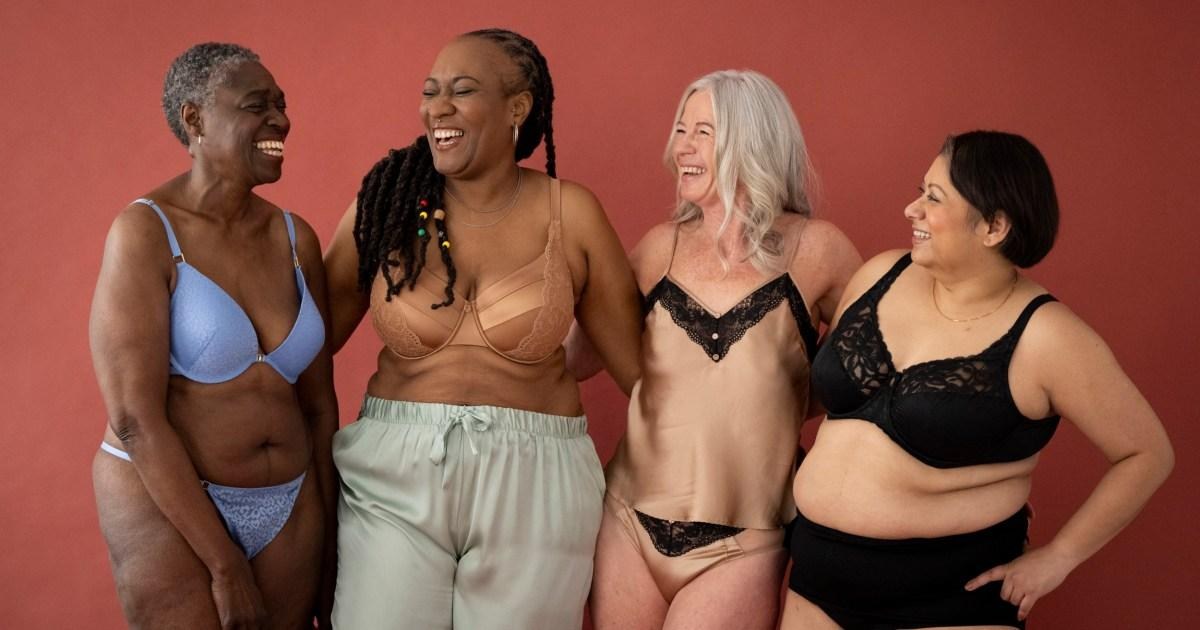
It’s a victory for women in The Netherlands (Picture: Getty Images) From periods to sweating, women have long been made to feel shame over their own bodies. And that’s perfectly exemplified in the Dutch word for labia, schaamlippen, which literally translates to ‘shame lips’. For around 300 years, women in The Netherlands have had to use this term to describe a perfectly normal, natural part of their anatomy. It means that the phrase ‘shame lips’ is not only talked about in biology lessons in school, but at medical appointments too. For years, campaigners from the Schaamteloos (Shameless) movement have been lobbying to to replace schaamlippen, with the more neutral vulvalippen. And finally, they’ve achieved their goal. ‘Language shapes how we see ourselves,’ (Picture: Shutterstock / Yaroslav Astakhov) The leading Dutch dictionary, Dikke van Dale, has officially agreed to add the term ‘vulvalippen’ (‘labia’) to its upcoming online edition. Speaking to Metro, Shari Klein, co-founder of Schaamteloos, said: ‘I advocated for this word change because we shouldn’t be ashamed of any part of our body. ‘Our Dutch language needs a very much needed update and we made that change by campaigning and simply using the word more. Ask Metro Use AI to go deeper into the stories you care about – powered by Metro and trusted publications. ‘I hope this language change helps shape a shame free society and more countries and languages will follow in our steps.’ Why is this important? Pharmacist and healthcare lawyer, Thorrun Govind, tells Metro that the way we speak about women’s bodies ‘really matters’. She says: ‘We can be surprisingly uncomfortable talking about periods, menopause, breasts, vulvas and other parts of female anatomy. That can feed into shame or embarrassment. ‘Using the right words and being able to talk about women’s health openly, is part of changing that.’ She adds that talking about women’s anatomy clearly supports ‘health literacy’ — being able to access and understand health services, and make informed decisions to get the right care you need. It’s a sentiment Dr Alka Patel, also agrees with. It’s a step towards getting rid of the shame surrounding the female body (Picture: Getty Images) She tells Metro: ‘Repeatedly attaching a word meaning ‘shame’ to a normal part of female anatomy has the potential to reinforce an emotional association with shame or embarrassment. ‘In healthcare, that is very relevant because embarrassment can affect whether a woman talks about her body, examines it, or seeks help when something changes. ‘Changing language doesn’t change anatomy, but it can change the emotional meaning attached to it and the behaviour that follows.’ Wider changes across Europe The campaign in The Netherlands is part of a growing movement across Europe to improve terminology surrounding female health. In 2018, journalists in Germany, Gunda Windmüller and Mithu Sanyal, similarly started a petition to change ‘Schamlippen’ to ‘Vulvalippen.’ Whilethe word has yet to be adopted by the German dictionary, it has been used in conversations, school textbooks, and women’s magazines. How we refer to female body parts is vital (Picture: Shutterstock / BlurryMe) Gunda has expressed her hope that the Dutch change will inspire German reform too. Similarly, in 2009, a new word for ‘hymen’ was added to the academic dictionary in Sweden. Previously, the word mödomshinna had been used, which literally translates to ‘virginity membrane or ‘maidenhood skin’. The new term, ‘slidkrans’, means simply, ‘vaginal corona’. Britain has seen similar campaigns too. Podcaster Nicola Denson-Elliott started a petition to replace the ‘misogynistic’ word ‘hysterectomy’ (surgical removal of the womb) with ‘uterectomy,’ in June 2026. It currently stands at 1,180 signatures, but needs 10,000 to get a government response. Calls for new terminology surrounding childbirth and fertility have been made in recent years in the UK (Picture: Shutterstock / Lee Charlie) She said that hysterectomy is linked to the diagnosis of hysteria, which was banned in 1980. Other terms, such as referring to a vaginal birth as a ‘normal’ or ‘natural’ birth, compared to other births such as C-sections, have similarly been criticised for valuing vaginal births over others. Terms such as ‘incompetent cervix’, a cervix that dilates prematurely during pregnancy, and ‘hostile womb,’ a womb which struggles to host sperm and implant an embryo, have also faced criticism. Do you have a story you’d like to share? Get in touch by emailing MetroLifestyleTeam@metro.co.uk Deals of the Day This new Cricut gadget turns your favourite photos into stickers in minutes From kitchen hatches to burgundy walls – the biggest home trends for 2027 Oodie’s cosy blanket sale has arrived just in time for Christmas shopping Save over £700 on Simba's top-rated mattresses in this limited-time sale Topman’s new-season collection has arrived and prices start at just £10 Arrow MORE: Man who masturbated for nearly 10 hours describes penis as ‘wounded soldier’ Arrow MORE: The three-word phrase women use during sex that makes men ‘feel like a failure’ Arrow MORE: My date could only orgasm while clutching onto me – it was a turn off The Slice Your free newsletter guide to the best London has on offer, from drinks deals to restaurant reviews.
Women in Europe won’t have to talk about their ‘shame lips’ anymore
Full Article
Original Source
Read the full article at Metro →KhanList aggregates and links to publicly available news content. We do not host full articles from third-party sources. Always verify important information with original sources.