
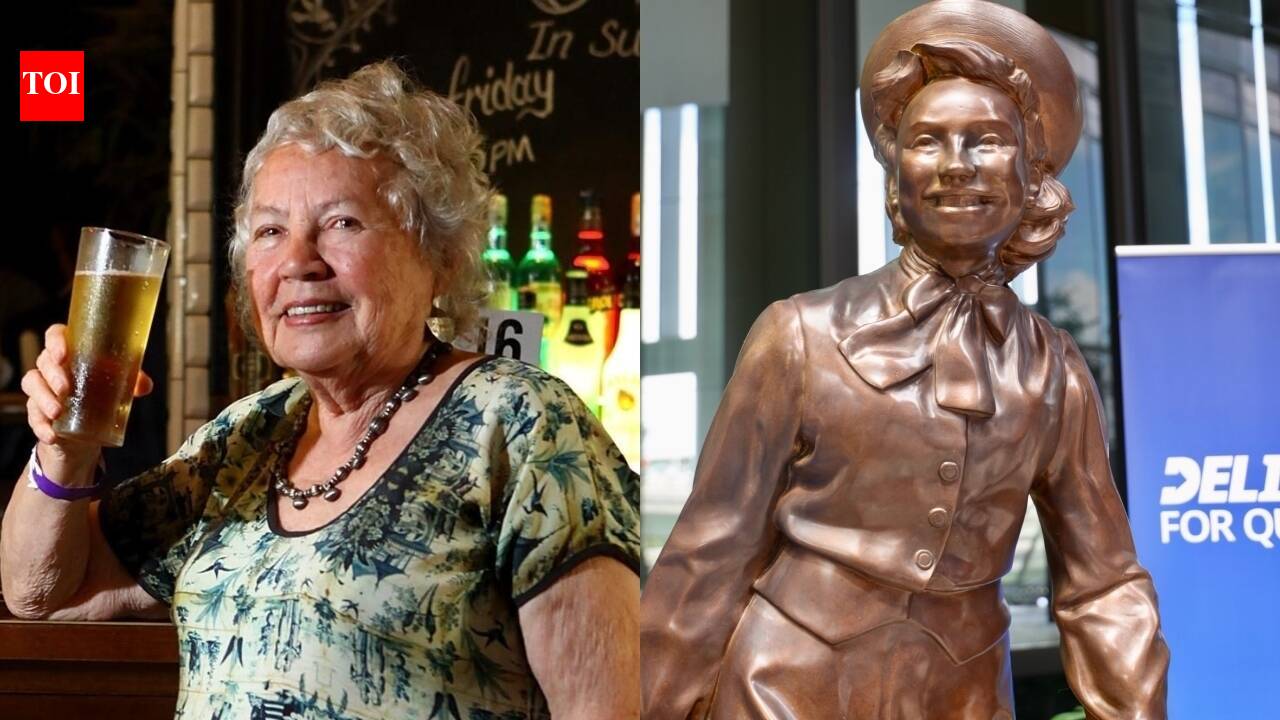
Pic credit: Instagram/ david_crisafulliMerle Thornton AM, who famously chained herself to a Brisbane bar in 1965 to challenge the ban on women drinking in public bars, has been honoured with a life-sized statue in the city. Weighing more than 300 kilograms, the statue now stands outside 1 William Street in Brisbane, immortalising the activist, academic and author whose campaigns helped advance women's rights, according to the ABC. Thornton died in August 2024, aged 93, but her fight for equality went well beyond that landmark pub protest.She took chains and padlocks to the barPic credit: Instagram/ david_crisafulliWomen were barred from drinking in Queensland's public bars in the 1960s. Merle Thornton wanted to change that. She was fed up with watching women being excluded simply because of their gender. In March 1965, Thornton and her friend Rosalie Bogner walked into the Regatta Hotel carrying dog chains and padlocks. They fastened themselves to the public bar and asked to be served alcohol. The protest became a defining moment in Australia's feminist movement and helped bring about a change in the law in 1970, allowing women to drink in Queensland's public bars. At the time of the protest, she told the Australian broadcaster why they had decided to take action: "Well, it's not that we think this is the most important issue of discrimination against women."She acknowledged that there were more pressing issues than women being barred from public bars but believed the protest was something they could make a quick difference on. "There are many more important issues like the equal pay issue, but it's something we thought we could make a quick impact on." Her reasoning was simple: women should have the freedom to choose for themselves. Nobody was going to force women into bars, she argued, but they should be free to go.Marriage ended careersPic credit: Instagram/ david_crisafulliThe pub wasn't the only place where women faced discrimination. Their careers were also at stake. Once a woman got married, she had to give up her career in the public service. Thornton also campaigned against the Commonwealth marriage bar, a rule that forced women out of the public service once they married. Women who married were treated as having resigned, whether or not they wanted to leave. "Mum was an activist by nature. I think it was in her blood and bones, so we didn't know a different person," Merle's daughter, actor Sigrid Thornton, once said.The marriage bar was abolished in 1966 for the Commonwealth (Australian) Public Service and in 1969 for Queensland's public sector.Minister for Women Fiona Simpson pointed to the scale of the workforce that the policy once affected and added that there were "a lot of reasons" to thank Merle Thornton. "About 68 per cent of Queensland's public service is now made up of women, and that opportunity would be far smaller without the changes Thornton pushed for," Simpson told the broadcaster.The life-sized statue in BrisbanePic credit: Instagram/ david_crisafulliThe statue, designed by Brisbane artists Courtney Pederson and Charles Robb, now stands outside 1 William Street in Brisbane. A photograph of Thornton on her way to her first job as a graduate clerk in Sydney in the 1950s was used as the reference for the statue. "It is directly relevant to the work she did with the marriage bar … within hours of starting her new job, she discovered the world was unfair and particularly unfair for women," Merle's son Harold Thornton told the broadcaster. The image was digitally recreated, 3D-printed in plastic, cast in sand and poured in bronze. The finished work weighs more than 300 kilograms and took five months to complete.Statues of women are rare in Queensland, with those honouring women far outnumbered by statues of male leaders. In Brisbane, only a handful of women have been honoured in this way, including Queen Victoria, trade union organiser Emma Miller and Irene Longman, the first woman elected to the Queensland Parliament.
Woman who chained herself to bar over drinking ban honoured with Brisbane statue
Full Article
Original Source
Read the full article at Timesofindia →KhanList aggregates and links to publicly available news content. We do not host full articles from third-party sources. Always verify important information with original sources.