
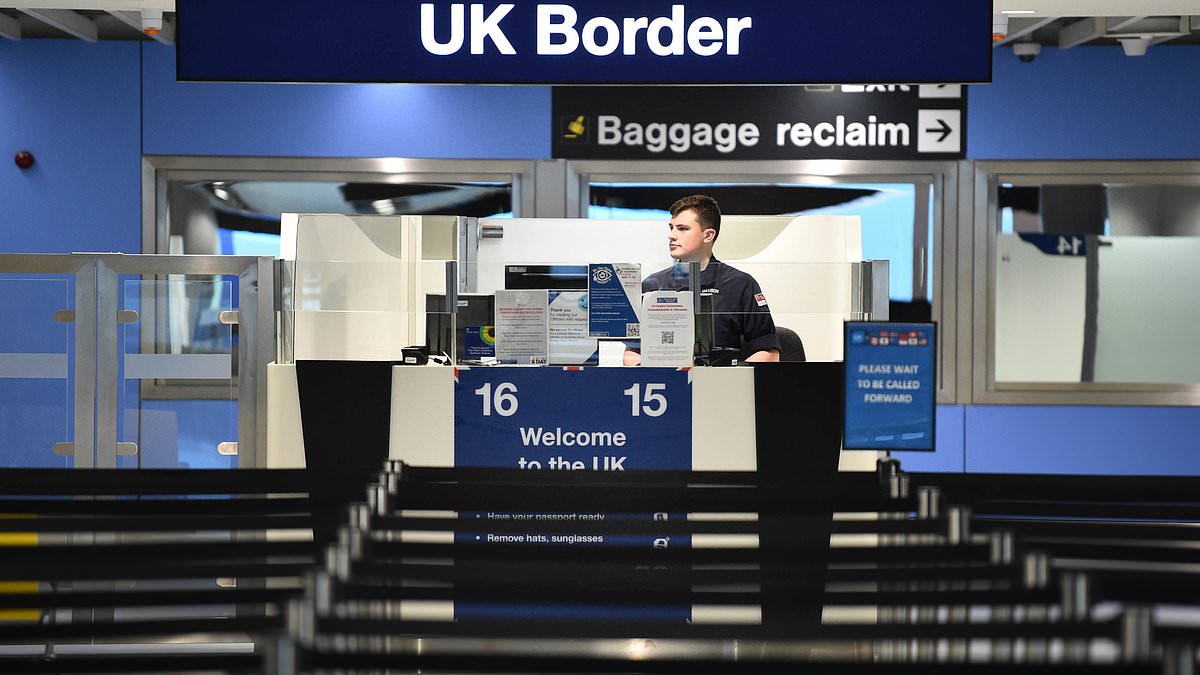
See more Daily Mail on Google - save us as a Preferred Source Published: 08:42 EDT, 24 August 2026 | Updated: 08:45 EDT, 24 August 2026 A woman with the right to live in the UK was stopped from boarding a flight home – after the Home Office mistook her for her identical twin sister.Nidia Webb, who hails from a European country, was granted settled status in the UK as part of the post-Brexit settlement scheme, giving her the right to stay following the end of EU free movement.But she was stopped from boarding a plane back to the UK from Spain earlier this month after the Home Office's digital 'eVisa' system confused her with her identical twin sister.It was convinced she did not have the right to be in Britain and Ms Webb, who has lived here for eight years, was stranded abroad as the plane took off without her.She was only able to identify the error after spending hours on the phone to civil servants who realised the system had made a mistake.The Home Office said it was sorry, and promised to rectify the issue – only to send the confirmation that it had been fixed to her twin sister's email address.She was left in the dark about the situation until she was eventually cleared to board another flight home, paid for out of her own pocket.She is yet to be reimbursed by the Home Office for the extra flight after her travel insurer said it would not pay out. A woman with the right to live and work in the UK was blocked from returning home due to an issue with the Home Office database (pictured: the UK border at Manchester Airport) Nidia Webb was given an electronic visa as the Home Office moved away from physical documents such as the Residence Permit card (pictured) 'I had no idea the issue had been corrected until I was allowed to board my flight home,' Ms Webb told Politico, which first reported the story.'Had I not spent hours on the phone trying to resolve the matter, I have no idea how long I could have remained stranded abroad.'The saga highlights ongoing headaches with the Home Office's eVisa system. Ministers gave eVisas to EU citizens with settled status as they worked towards doing away with physical documents such as the Residence Permit cards altogether – in favour of a digital system that was meant to save money and reduce fraud.But campaigners say the system is fraught with issues, not least mixing up one person's immigration status with another. Civil servants told Ms Webb that the twin mix-up was a 'known issue'. The full rollout of the eVisa system was also delayed by three months at the end of 2024, forcing the Government to allow foreign nationals to use expired documents to prove their immigration status until it was up and running. And in 2024, it was reported that more than 76,000 people had names, photos and their immigration status mixed up within the Home Office's database, known as the Person Centric Data Platform.Monique Hawkins, acting CEO of EU citizens' rights group the3million, told Politico she was aware of 'many cases' of immigration status being 'entangled' with the wrong eVisa.She added: 'We regularly see people not only denied boarding, but also compensation, as carriers and the Home Office play a blame game shifting responsibility between each other.'The Home Office says it has identified and fixed the issue Ms Webb encountered and that she would be contacted by staff directly over the situation. A spokesman said: 'Over 10 million people have already successfully used eVisas to prove their immigration status.'As we expand our digital system, we are committed to data accuracy and ensuring that the safeguards in place to support eVisa users are accessible to anyone reliant on the digital system. 'In the rare cases where errors are identified, the majority of cases are resolved within 24 hours.'
Woman granted UK settled status is left stranded in Spain after Home Office database mixes her up with identical twin sister
Full Article
Original Source
Read the full article at Dailymail →KhanList aggregates and links to publicly available news content. We do not host full articles from third-party sources. Always verify important information with original sources.