
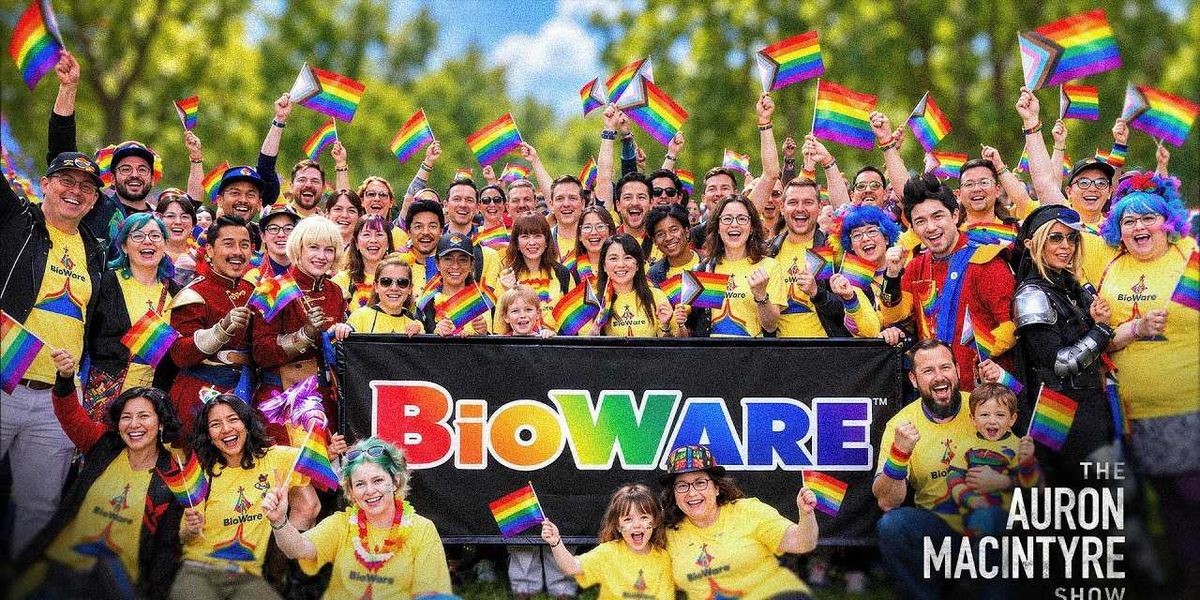
From Target’s 2023 Pride Month merchandise, to Bud Light’s disastrous collaboration with Dylan Mulvaney, to Cracker Barrel’s 2025 logo modernization, “go woke, go broke” has repeatedly been proven true.But does that mean the progressive propaganda failed?According to BlazeTV host Auron MacIntyre, it’s not that simple.“Even though much of the woke content was very cringe and often failed financially, what if it had a bigger impact on us socially?” he asks.On a recent episode of “The Auron MacIntyre Show,” Auron and his guest, social scientist and online political commentator Aydin Paladin, discussed this query. Auron explains that many conservatives dismissed the woke movement on the premise that “the marketplace wins.”“People will vote with their dollars; they’ll vote with their attention, and companies will be forced to respond to financial incentives. And so, even if there’s some kooky message getting cooked up by the progressive left in Hollywood, ultimately, once that fails, they’ll have to come back to good old-fashioned, slightly less subversive media narratives,” he says, explaining the thinking of people who assumed that wokeness had a short shelf life.While wokeness did largely fail in a financial sense, it succeeded in other ways, Paladin says.In her recent video “The Disturbing Psychology of Hollywood’s Moral Collapse,” she argued that Hollywood and related entertainment spent over a decade pushing progressive messaging and produced many commercial failures, and that audiences rejected a lot of the most overtly “woke” films and games — yet many of the underlying ideas still became normalized in the broader culture through narrative persuasion.“When you talk about funding from big companies like Disney, from companies like Black Rock that back up these media entertainment companies, well, at the end of the day, it didn’t really matter whether or not it succeeded financially,” she tells Auron. “Little nuggets of information could have ended up in people’s minds permanently anyway. It’s way harder to forget something that you’ve already learned.”“People want the world explained to them. They can’t experience everything around them,” Auron says.When it comes to topics like sexuality, race, and even history, “whoever gets to set the frame of the discussion ... gets to define it going forward,” he explains.Hollywood, he and Paladin argue, filled that role of being the first to introduce certain topics. Its decade-long push of progressive messaging in entertainment succeeded in making certain ideas feel like ordinary background assumptions, even when the individual films and shows flopped commercially.Paladin gives the example of the late-90s/early-2000s sitcom “Will and Grace.”“There’s been significant research that’s been done on people’s attitudes towards homosexuals and lesbians and their exposure to ‘Will and Grace’ because that was kind of the first big show where there was gay representation on TV where it wasn’t supposed to be inherently negative,” she says.“If that’s your first exposure [to homosexuality] and it’s a positive exposure, well, then you’re going to be more likely to maintain that positive attitude towards [homosexuals], and the same thing happens with information.”To hear the full conversation, watch the episode above.Want more from Auron MacIntyre?To enjoy more of this YouTuber and recovering journalist's commentary on culture and politics, subscribe to BlazeTV — the largest multi-platform network of voices who love America, defend the Constitution, and live the American dream.
Woke went broke, but that doesn’t mean it failed
Full Article
Original Source
Read the full article at Theblaze →KhanList aggregates and links to publicly available news content. We do not host full articles from third-party sources. Always verify important information with original sources.