
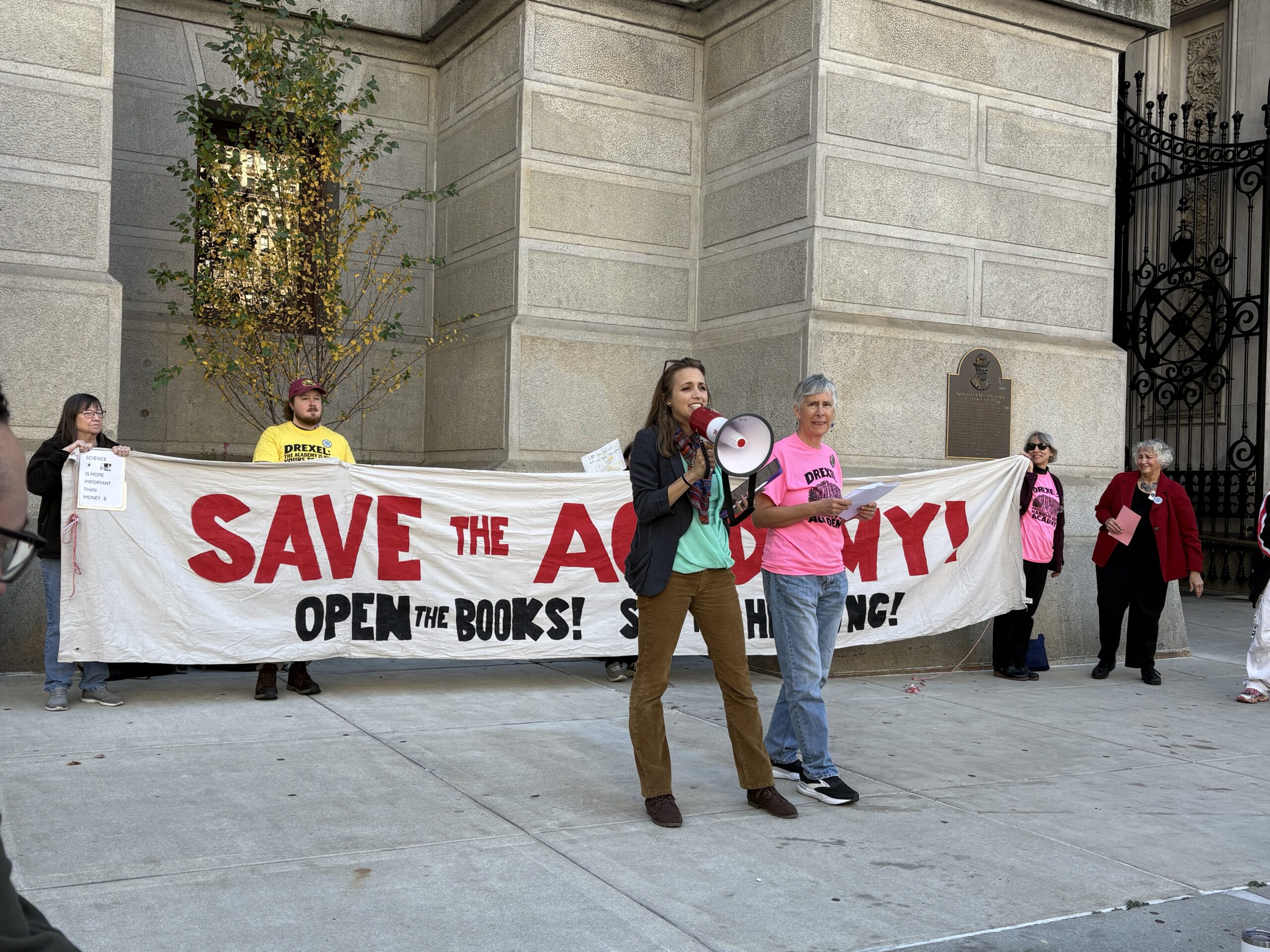
PHILADELPHIA (CN) — While the Philadelphia City Council sought on Monday to better understand why the oldest natural history museum west of the Atlantic shuttered last month, representatives for the city’s mayor could not be found, announcing they would not appear just minutes before the hearing was set to begin.Founded in 1812 with its museum opening in 1828, the Academy of Natural Sciences is the oldest natural science research institution across the Americas.On Sept. 1, however, Drexel University — which has maintained a close formal affiliation with the academy since 2011 — announced the museum would close its doors by the end of month, ending a nearly 200-year existence.Shortly after the announcement, the William Penn Foundation, a Philadelphia-based grant foundation, proposed a year’s worth of funding as a bridge to finding ongoing support and developing a long-term plan for the museum; Drexel has not accepted the offer.Backlash to the sudden shutdown was swift. Museum advocates accused Drexel of seeking to sell the academy’s building — a lucrative plot on Philadelphia’s Benjamin Franklin Parkway — and have demanded city interventionThe City Council obliged, authorizing the council’s Committee on Legislative Oversight to examine the closure and consider possibilities for continuing public access to the museum.Monday’s hearing was set to bring together mayoral representatives, Drexel and academy leadership, and museum advocates to provide clarity as to how the closure was allowed to occur, and how the museum could be revived.The problem? The representative for Philadelphia Mayor Cherelle Parker — Patricia Wellenbach, who serves as deputy mayor for strategic and philanthropic initiatives as well as senior adviser to the Academy of Natural Sciences — informed the City Council at the last minute that she wasn’t showing up.Instead, Wellenbach provided brief written testimony for the hearing and said her testimony would not be appropriate, as she cannot speak on behalf of Drexel or the academy.Councilmember Jeffery Young Jr. disagreed in dramatic fashion, ripping the testimony in half in front of the hearing’s audience to roaring applause before castigating Parker for declining to send any representation.“To tell taxpayers that someone who is on loan to the academy on the taxpayers’ dime is not the right person to come talk to us — I call BS on that,” Young said. “I think that is a disrespect to the Philadelphians as someone who is paid by the taxpayers.”Young continued, announcing plans to subpoena administrative officials in following sessions — plans that committee chair Isaiah Thomas said would be approved.Representing Drexel President Antonio Merlo, the university’s executive director of operations Melissa Richman told the committee Drexel could not find a likely future for the museum at its current location.“These steps, taken jointly by the academy and Drexel’s leadership, to close the museum were neither abrupt nor hasty,” Richman said before facing a rain of boos from audience members. “The reality confronting the academy and Drexel leadership was undeniable: the current operating model was quietly devouring the academy from within.”While Richman expressed the university’s purported plans to find a new home “for the public to engage with the academy and its collection,” Thomas questioned the university’s motives, noting Drexel never contacted the City Council for financial aid regarding the museum despite having done so for other budget shortfalls in recent years.“We love to step up to the plate when our institutions are at a time of need and spend taxpayer dollars in ways that taxpayers want to see their dollars,” Thomas told Richman. “Convince me that it was an accident that you didn’t come to us this time, and that this is not a land grab for business.”In response, Richman stated that Drexel has been discussing the issue with representatives for both Parker and Pennsylvania Governor Josh Shapiro — claims that could not be further investigated by the committee, as no representatives for Parker were present.Still, Councilmember Quetcy Lozada continued attacks on the university’s lack of communication with city leaders“When Drexel has been in financial instability, or there has been financial questions, Drexel has never had a problem to come to us and say, ‘This is what is happening, this is how we need help, and we need you to back us up,’” Lozada said. “And now, in a situation like this, that’s what should have occurred."Speaking to academy board of trustees chair Suzanne Biemiller, the committee sought answers as to how much the academy would need to reopen the museum.Biemiller’s answer — that the museum’s fiscal year 2025 operating costs amounted to about $3.6 million — was so stunningly low that the committee granted her several minutes to verify the math.“If it can cost taxpayers $3.6 million to keep that open — when we as a city have a $7 billion budget, and we contribute millions of dollars to other cultural institutions in the city — I think that’s something that was very, very doable,” Young told Biemiller.“We have the appetite, and we have the capacity to be able to protect and save arts and culture in the city of Philadelphia,” Lozada added, before turning to Drexel’s representatives. “It just needs to be prioritized by those who are leading those causes. And with numbers like the ones you just shared with us, it doesn’t show us that you care about arts and culture.”Further criticizing Drexel, Councilmember Anthony Phillips bashed Merlo for failing to appear before the committee — an absence Richman attributed to academic accreditors visiting the university concurrent to the hearing.“I think he thinks we’re not smart, and if he does think we’re smart, he doesn’t care about how people perceive [him],” Phillips said. “He’s not being perceived very well right now … The fact that he’s not reached out to any Philadelphia City Council member, or even had some meetings with these individuals that are here today, it shows who he is.”In addition to critiques over Drexel’s handling of the academy’s financial needs and its perceived disrespect for the City Council, Councilmember Nina Ahmad suggested Drexel’s use of charitable assets for a now-nonpublic institution may actually run afoul of the law, adding that the City Council would follow up to investigate potential legal concerns.Representing advocates for the museum’s reopening, Paul Steinke, executive director for the Preservation Alliance — a Philadelphia-area nonprofit dedicated to preserving the region’s historic resources — emphasized the importance of maintaining the city’s educational and research establishments.“Paleontologists, biologists, oceanographers, ornithologists — lots of career trajectories that I can’t even pronounce — they come here to Philadelphia to do research because the Academy of Natural Sciences is a world-class institution,” Steinke told the committee. “And if Philadelphia wants to stay a world-class city, it needs to support its world-class institutions.”Subscribe to our free newslettersOur weekly newsletter Closing Arguments offers the latest about ongoing trials, major litigation and rulings in courthouses around the U.S. and the world, while the monthly Under the Lights dishes the legal dirt from Hollywood, sports, Big Tech and the arts.Additional Reads
With nation’s oldest science museum on the brink, where is Philly’s mayor?
Full Article
Original Source
Read the full article at Courthousenews →KhanList aggregates and links to publicly available news content. We do not host full articles from third-party sources. Always verify important information with original sources.