
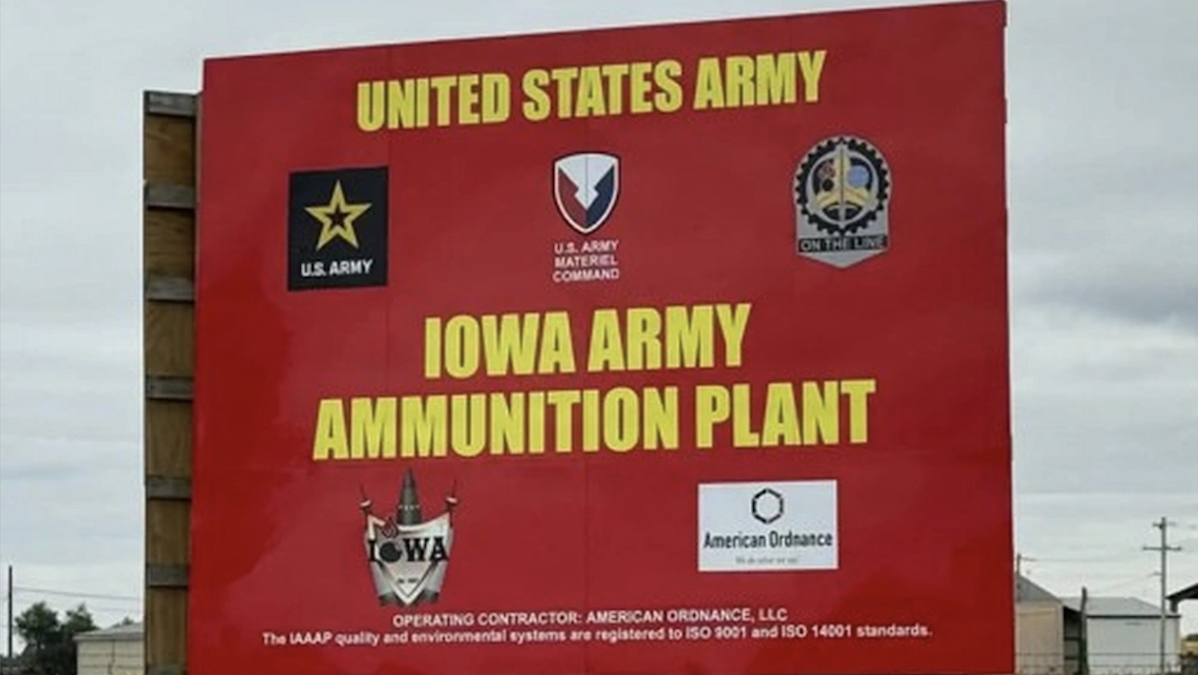
Lead azide held at the Iowa Army Ammunition Plant in Middletown, Iowa will be detonated on Monday, 23 November. Credit: Lori McFate/U.S. Army, Public Domain Research & Developments is a blog for brief updates that provide context for the flurry of news regarding law and policy changes that impact science and scientists today. Scientists and Iowa residents are planning to independently monitor lead levels in the air and soil in the days before and after a planned detonation of lead azide, a military explosive, near Middletown, Iowa on Monday. The stockpile of lead azide, held at the Iowa Army Ammunition Plant in Middletown, has been deemed unsafe to transport by the U.S. Army. The Environmental Protection Agency (EPA) granted an emergency permit to the U.S. Army based on the explosion risk, saying that the condition of the lead azide “presented an imminent and substantial threat to human health and the environment.” “These are tough circumstances to plan sampling campaigns under.” Maps released by the U.S. Army this week showed that a plume of lead-containing dust could travel roughly 100 miles from Middletown in the hours after the detonation. However, new official maps of the plume were not updated following an announcement that the detonation, originally scheduled for Friday, had moved to Monday. “In-place detonation allows for minimal human interaction with the containers of waste lead azide, enables the Army to conduct the treatment activity during favorable weather conditions, and allows the Army the opportunity to provide prior notifications to the potentially affected surrounding communities,” the EPA stated. The public was notified of the original date of the detonation on 15 November and the rescheduled date on 19 November. That’s left scientists and communities with just days to make plans to monitor the plume’s impacts. “These are tough circumstances to plan sampling campaigns under,” said University of Iowa environmental scientist David Cwiertny, who is leading an effort to track lead levels in the environment both before and after the detonation. “But we’ll do what we can.” Monitoring Plans Cwiertny’s team will sample the affected area for lead contamination on Monday using air quality sensors, topsoil samples, and wipes of dusty surfaces. They plan to share their findings with the community as soon as they can, Cwiertny said. The Army Corps of Engineers is also collecting soil samples before and after the explosion for about 150 residents who have requested it, The New York Times reports. “In an unprecedented event with so many unpredictable factors, we believe that having more independent data is always better for public transparency and for public health.” “We’re doing all of this to add to the public record, not because we have any real doubt in the official monitoring that’s planned by the EPA or the Army,” Cwiertny said. “In an unprecedented event with so many unpredictable factors, we believe that having more independent data is always better for public transparency and for public health.” Shannon Bartelt-Hunt and Kaycie Lane, environmental engineers at the University of Nebraska-Lincoln, are coordinating a community science initiative to gather some of these soil samples for analysis. In a post on LinkedIn, Bartelt-Hunt asked residents in the blast radius to collect one cup of topsoil before and after the event and send the samples along with location information to be analyzed. “People are very, very concerned about not having information about what’s happening in their community,” Bartelt-Hunt said. “This is a place where we could offer our expertise.” Crowdsourced science is a critical piece of monitoring when there is such little time to plan, she added. “It’s probably one of the only ways that we can gather [information] when there are these time-critical observations that we’re trying to make.” Iowa residents are also making their own plans to sample the soil. In the Reddit community r/Iowa, users discussed plans to take their own soil samples in preparation for potential lawsuits that result from lead exposure from the detonation. Doing so “could be incredibly important a few days or a few years down the road,” wrote one user. Agricultural Impacts Iowa State University Extension is also recommending that farmers collect soil samples as soon as possible to “establish a baseline for liability purposes,” according to local radio station Ottumwa Radio. “Since lead already is naturally in the soil, a baseline needs to be established,” Patrick Wall, a beef production specialist at Iowa State University, wrote in an email to Eos. The Iowa Department of Agriculture and Land Stewardship recommends that producers contact the U.S. Army to request baseline testing for soil and forage (vegetation eaten by cattle) or consider collecting these samples themselves. —Grace van Deelen (@gvd.bsky.social), Staff Writer These updates are made possible through information from the scientific community. Do you have a story about how changes in law or policy are affecting scientists or research? Send us a tip at [email protected]. Text © 2026. AGU. CC BY-NC-ND 3.0Except where otherwise noted, images are subject to copyright. Any reuse without express permission from the copyright owner is prohibited.
With Little Time Before Lead Azide Detonation, Iowa Scientists and Residents Assemble Monitoring Plans
Full Article
Original Source
Read the full article at Eos →KhanList aggregates and links to publicly available news content. We do not host full articles from third-party sources. Always verify important information with original sources.