
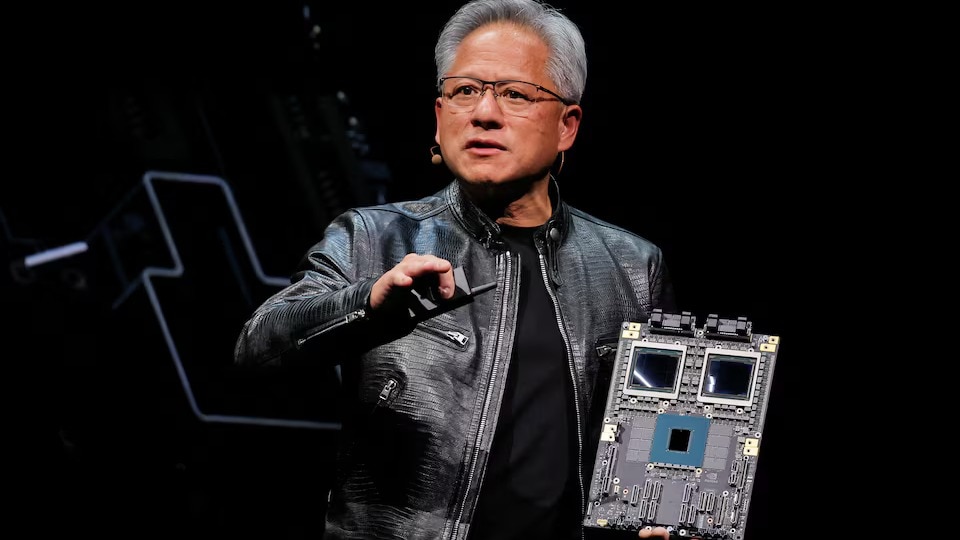
Jensen Huang is no longer the CEO of Nvidia. Nvidia has fired the very man who founded the company and led for 33 years turning it from a graphics card manufacturer to the AI behemoth that it is today. To give you some context, Nvidia is so big, its chips and technologies are being treated as a US national treasure precious enough to be part of geopolitical strategy decisions. The Nvidia board had probable cause. Jensen was caught having multiple affairs one of which involved a woman who is a Chinese spy suspect. But the timing of his sudden ouster is raising questions about whether (or not) it was politically motivated. Should that be the case, it raises more questions, like, who stands to benefit with Jensen gone?Word on the street is Jensen’s exit might benefit one or more AI labs making closed AI models. By closed AI models we mean AI models that are proprietary and are accessible via licensing for which people pay a fee. OpenAI, Anthropic and Google (DeepMind) are some closed AI companies. On the other hand, Open AI companies like China’s DeepSeek let anybody and everybody use their AI models for free (people are charged when they build on top and make sizeable income). Business Insider has quoted the CEO of a leading AI startup, who remained anonymous, as saying, “People really need to understand that the 'Cold War' going on here is that Nvidia was on a titanic collision course with the labs.”Jensen and US AI labs have not been seeing eye to eye for some time. Though the “titanic collision” statement does not specify the name of the labs, it is safe to assume that they are of the closed type, some of which have been advocating against China’s rise in AI. Under Jensen’s leadership, Nvidia had been pushing for open AI models and urging the US government to loosen trade restrictions on AI chips with China. Both positions put Jensen particularly at odds with Anthropic and its CEO Dario Amodei, whose company has built its business around powerful closed AI models and has taken a much tougher stance on chip exports to China. With Jensen out of Nvidia, AI labs in the US – including Anthropic – have one less – very powerful – voice of resistance to deal with.Jensen Huang's open-weight AI push was a challenge for AnthropicOne of the biggest differences between Jensen’s Nvidia and Anthropic has been their approach to AI models. Anthropic develops closed AI models, which benefit them financially, including models like Claude's Fable and Opus offerings. Jensen’s Nvidia, meanwhile, was increasingly backing open-weight AI models that businesses can download, modify and run on their own infrastructure. This difference matters because open-weight models give companies an alternative to paying AI firms such as Anthropic for access to their models. Businesses can take an existing open model, customise it with their own data and tools, and run it according to their requirements. That could eventually reduce their dependence on closed AI services that may cost them a lot of money even as usage turns token-based pushing even larger companies to rethink their budget.Nvidia under Jensen was not just talking about this shift. It developed its own family of open models called Nemotron and has been backing startups working on alternative AI systems. The company has also been looking to strengthen the open AI ecosystem through its investments and partnerships in startups and neoclouds. Jensen had made his position clear at a Fireworks AI conference in San Francisco on November 3. “By taking an open frontier model, adapting it and providing it with your domain knowledge, your access, your specialised tools, and the proper evaluation, you should be able to create a super intelligence essentially,” Huang told Fireworks CEO Lin Qiao on stage. “And I think those times are here,” he added.For Nvidia, this approach also made business sense. More companies adopting open models would mean more demand for the chips needed to train and run them. For AI labs like Anthropic, however, the growing availability of capable open alternatives could create pressure on its business model, which relies on developing and selling access to its own AI systems.This is particularly important as Anthropic prepares for an IPO that could reportedly value it at around $1.4 trillion. And investors will be looking at whether Anthropic can turn its expensive AI development and services into a sustainable business. A world where businesses increasingly rely on open models could make that task more difficult, experts say.Jensen and Dario also disagreed on doing business with ChinaThe disagreement between Jensen and Dario was not limited to open-weight AI. The two also had very different views on whether the US should continue selling advanced AI chips to China.Dario has repeatedly argued that Washington should impose strict restrictions on the sale of powerful AI chips to China. To the extent that he even compared selling advanced AI chips to China with providing nuclear weapons to North Korea, “It’s bit like selling nuclear weapons to North Korea”, he said while speaking at the World Economic Forum in Davos.Jensen, on the other hand, has taken a different position. He has argued that cutting China off from American chip technology could encourage Chinese companies to develop their own competing hardware and AI ecosystem. In his view, keeping American technology available in the Chinese market also helps maintain the country's influence in the global AI industry.Now, one could say that behind both these arguments, there is money involved. Selling chips to China means more business and profits for Nvidia, while not selling them could put Anthropic in a safer position as it competes with Chinese AI companies in the global market.There is no evidence that Anthropic, or any other AI lab had anything to do with Jensen's sacking. Also, his exit does not automatically mean Nvidia will abandon its open-weight AI strategy or change its position on China. The company's future direction will also depend on its board and the leadership that follows. But as they say, there is no smoke without a fire and so, with Jensen gone, these questions and conspiracy theories will be flying around until someone comes along and blows the whistle.In related news, Jensen has expressed his willingness to return as CEO if Nvidia's board believes his comeback would be in the company's best interests. The board however seems adamant to not bring him back for now. But these things are never set in stone. With plenty of support pouring in both from within and outside of Nvidia, many people will be hoping for a Steve Jobs-like comeback for Jensen. Whether that happens, only time will tell.- Ends
With Jensen out of Nvidia, who stands to benefit? Experts say it is AI labs like Anthropic
Full Article
Original Source
Read the full article at Indiatoday →KhanList aggregates and links to publicly available news content. We do not host full articles from third-party sources. Always verify important information with original sources.