
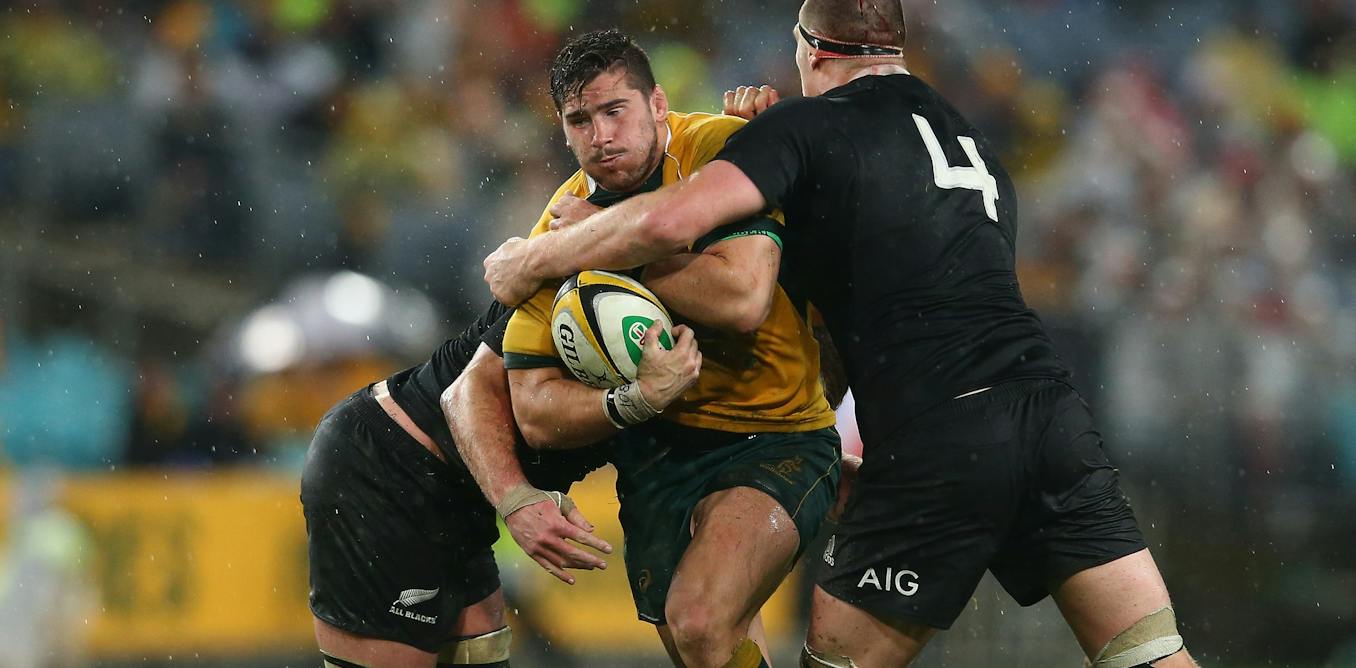
Former Wallaby Nathan Charles, who overcame cystic fibrosis to play elite level rugby, has revealed he has also been recently diagnosed with motor neurone disease (MND). It follows the recent diagnosis of high profile rugby league player Jai Arrow, who captured national attention with his MND diagnosis, and the recent passing of former Australian rules football player Geoff Ablett, who died of the disease. With another high profile athlete revealing his MND diagnosis, a familiar question returns: are there any links between repeated impacts to the brain and the risk of MND? What is MND and how does it progress? MND is a progressive disease that affects specific nerve cells, called motor neurones. These allow signals between the brain and muscles to control movement. Read more: Why does motor neurone disease take so long to diagnose? And can it be treated? In MND these nerves become damaged and die, affecting muscles that weaken and waste away. Consequently, functions we take for granted such as movement, speaking, swallowing, chewing and breathing are eventually lost. Early symptoms can vary from person to person and can appear suddenly. They progressively get worse, with most people facing paralysis and death within two to five years. However, a small minority (around 10%) may live longer, as we saw with former Australian rules player and coach Neale Daniher, who lived with MND for 13 years, and theoretical physicist Stephen Hawking who lived with the disease for 55 years. Charles, who played four Tests for the Wallabies in 2014, was diagnosed with MND on September 13 after experiencing symptoms for about eight months. In revealing his diagnosis, he said: It has been extremely challenging and overwhelming, and at times quite cruel […]. I am already greatly impacted by it. I get around with mobility aids and struggle with many daily tasks. Putting on shoes and socks is a challenge. It is important to note the disease is rare, with about 2,800 people living with MND at any given time in Australia. There is no cure but various medications and teams of different health professionals working together are being trialled to slow the progression and manage symptoms. Is there a risk of MND in those who play contact sports? With the recent media attention on a number of contact sport athletes being diagnosed with the disease, it is quite natural to wonder about the association of contact sports and MND risk. Familial MND, where the disease is inherited through families due to specific gene mutations, occurs in about 10% of all cases. Sporadic MND, which occurs with no clear family history, is most often seen in people aged 50-70 years. Researchers are investigating if multiple subtle risk factors contribute to trigger the disease. One of those triggers is whether there are associations between repetitive sub-concussive head impacts and the increased risk of MND. Read more: Little hits in sports may be just as dangerous as concussions – and can lead to brain damage It’s difficult to say whether such blows to the head cause MND. However, emerging research indicates a higher risk among those with significant exposure to concussive and sub-concussive impacts, such as participation in contact sports. The research to date suggests while general physical activity does not elevate risk, elite sport participation has been associated with a four to 15-fold increased risk of MND. A 2022 study of former Scottish international rugby union players found these athletes were around 15 times more likely to be diagnosed with MND than men of similar age and background in the general population. Recent studies in former NFL players reported athletes were 4.5 times more likely to die of MND. Reviews of the research literature have reported sports such as soccer, where heading of the ball has raised concerns, have an elevated risk of nearly two-fold. The need for more research While research to date paints a solemn picture, current evidence is limited and points to an association between head impacts and an increased risk of MND, rather than one causing the other Moreover, there is also currently no relevant MND research that has been undertaken in rugby league and Australian rules football players – two sports where concerns about the damage of brain injury are rising. One way we can start to understand possible associations is to screen for the risk through sport, alongside other suspected exposures that might increase someone’s risk of MND, such as smoking, air pollution and blue-green algae. We need to ask patients who are tested for possible MND if they have ever played contact sports, and if so, at what age did they start, the number of years they played, what level(s) did they play at (professional, club, amateur) and history of concussions. When we see the news of high-profile athletes diagnosed with MND, it serves as a reminder that not only do we need to support those with the disease, but we need to also ensure our sports are safe to play. The cost of us watching these sports should not borne by those who put their brains on the line for our enjoyment.
With a former Wallaby’s ‘cruel’ diagnosis, is there a link between contact sports and MND?
Full Article
Original Source
Read the full article at Theconversation →KhanList aggregates and links to publicly available news content. We do not host full articles from third-party sources. Always verify important information with original sources.