
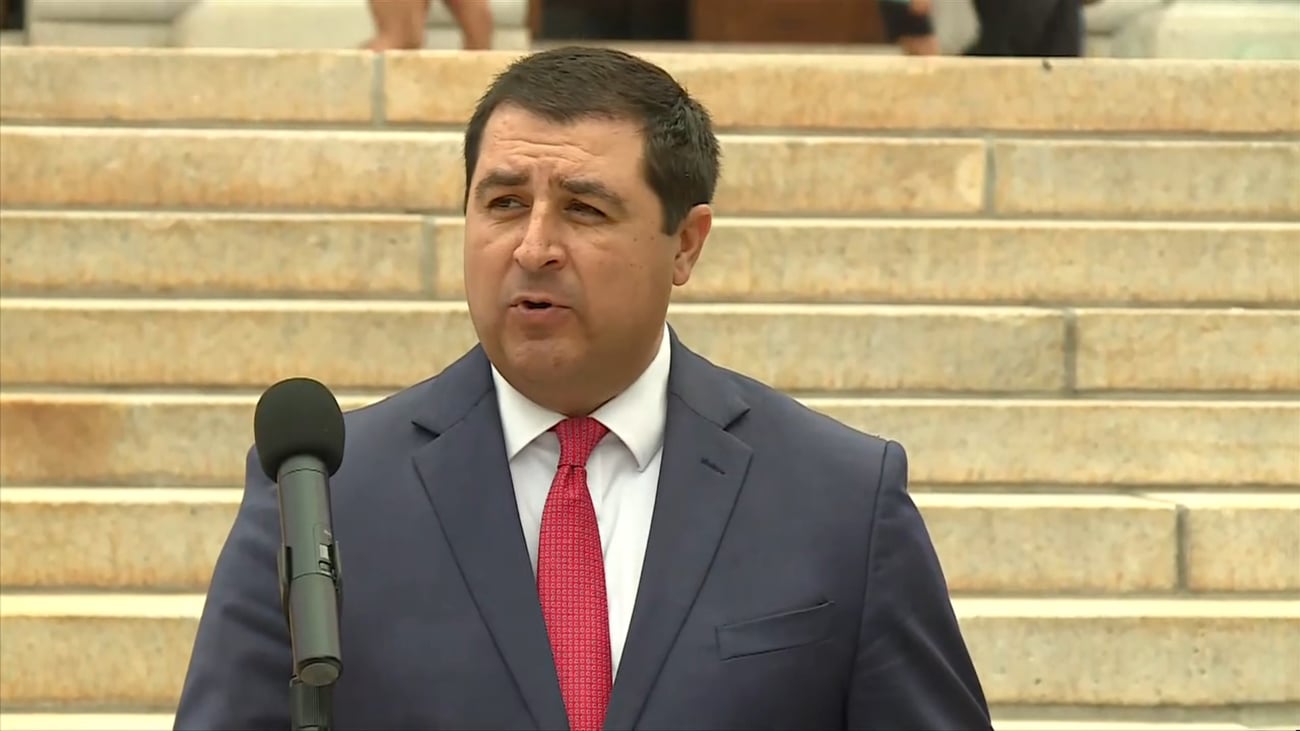
Wisconsin Attorney General Josh Kaul sued the Legislature again, seeking more control over certain state-involved settlement decisions less than a year after success on a similar case before the state Supreme Court.MADISON, Wis. (CN) — A Dane County Circuit Court judge on Thursday accused the attorney general’s office of wasting judicial resources with piecemeal suits against the Legislature in an attempt to wrestle back control over state-involved settlements.“We all know there doesn’t have to be absolute identity between the causes of action for a claim preclusion to apply … it’s a core function of the court to preserve the resources of the court and have things ruled on when they could be, right?” said Dane County Circuit Court Judge Stephen Ehlke.Attorney General Josh Kaul has been battling for years against a package of lame duck laws passed in 2018 after he was elected but before he took office that shifted many of the Democrat’s powers to the Republican-controlled Joint Committee on Finance.Much of the package is focused on civil suits involving the state. The committee was given final approval power of settlements and control over the resulting funds until recently, when Kaul was twice vindicated by the Wisconsin Supreme Court.In June 2025, the state’s top court returned final say on civil suits to the attorney general after finding the lame duck policy violated the separation of powers. The justices sided with Kaul again in July, ruling he can deposit uncommitted settlement funds into a general fund his office controls. However, the finance committee retained veto power over those settlements.Kaul filed the latest hybrid challenge in April, which carves out two categories of cases where the finance committee’s power to veto civil suit resolutions violates the separation of powers.On Thursday, the parties convened to debate whether this latest case is too similar to Kaul I, decided in June 2025, and why the attorney general didn’t bring these arguments then before the Wisconsin Supreme Court.“The claim preclusion doctrine forecloses this successive lawsuit, where the attorney general and governor could and should have asserted the theories they bring here — at the absolute latest — when they filed their hybrid lawsuit in Kaul I,” Troutman Pepper attorney Misha Tseytlin said in a brief representing the Legislature.Assistant Attorney General Hannah Jurss argued that claim preclusion doesn’t apply to this case in the same way it would otherwise because of the nature and significance of separation of powers claims.Even if it does apply, she insisted this lawsuit and Kaul I involve completely different interests: “The very fact that the Legislature is here arguing that Kaul I isn’t controlling here tells us that this is a different case.”Ehlke did not appear convinced by either argument, even suggesting her view would eviscerate claim preclusion. He questioned why her office did not bring up the veto power in Kaul I, when final settlement approval was on the table.In that case, Kaul successfully challenged a policy requiring him to wait to settle state-involved civil suits until they could be approved by the finance committee.The state Supreme Court unanimously found the Legislature cannot both establish the scope of the attorney general’s litigation powers and assume the execution of those powers itself.Kaul said in a statement after the opinion was published that it “finally puts an end” to the Legislature’s involvement in the resolution of certain civil suits.Ehlke did not decide on the issue of claim preclusion in Thursday’s hearing, but he did order limited and focused discovery on the second category of cases laid out in the complaint.“No matter what I do this case is going up, so why not take some time to get a more fulsome record developed for the Court of Appeals or Supreme Court?” Ehlke said.Ehlke found the shared powers between the executive and legislative branches are too interwoven in cases where the state is a defendant, and he needs more information before ruling.Jurss opposed discovery, pointing out the attorney general has endured the encroachment on his constitutional authority for eight years now. She asked Ehlke to decide her motion for judgement on the first category of cases in the meantime.Ehlke indicated that he would take that request in addition to the claim preclusion issue under advisement and issue a ruling at a later date.After discovery, the motion for judgment will be automatically transformed into a motion for summary judgment. Tseytlin indicated he would file his own summary judgment motion at that time.The attorney general’s office could not be reached for comment on the decision not to litigate the veto issue earlier.Subscribe to our free newslettersOur weekly newsletter Closing Arguments offers the latest about ongoing trials, major litigation and rulings in courthouses around the U.S. and the world, while the monthly Under the Lights dishes the legal dirt from Hollywood, sports, Big Tech and the arts.Additional Reads
Wisconsin judge grills attorney general over duplicative lawsuits
Full Article
Original Source
Read the full article at Courthousenews →KhanList aggregates and links to publicly available news content. We do not host full articles from third-party sources. Always verify important information with original sources.